Welcome to The Story Corner blog
Dive into the heart of imagination and learning with The Story Corner's blog. Here, we share news about our latest children's story releases, insights into self-publishing, and support for fellow creators. Join us as we explore conscious children's stories and other topics that inspire young minds. For mothers, fathers, educators, grandparents, caregivers, and children alike, our blog is your corner for inspiration, imagination, and a love for reading.
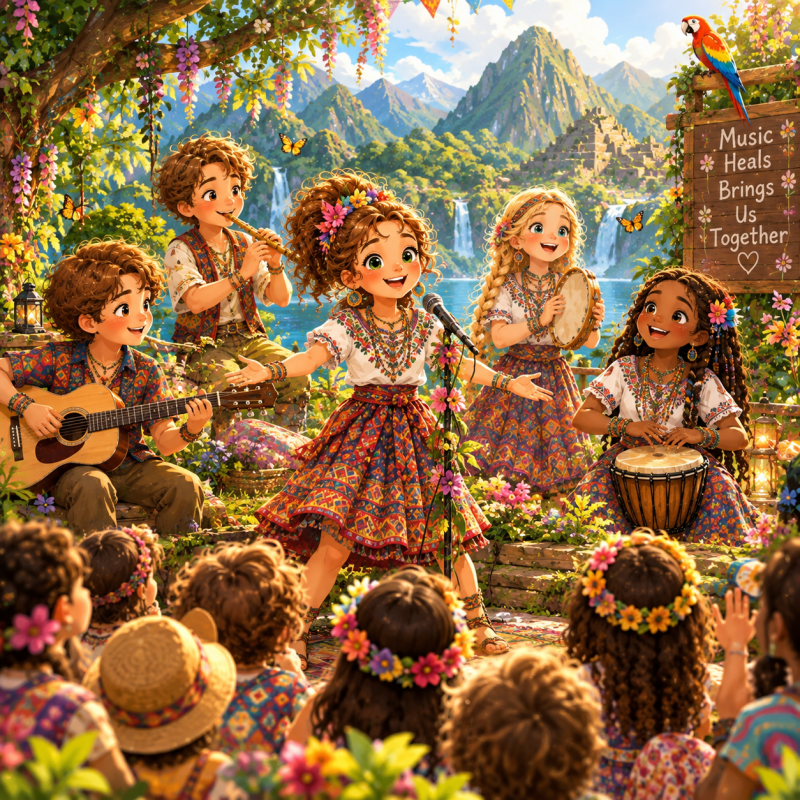
Have you ever wondered…
What makes you uniquely YOU?
Every child is born with something special inside them…
A gift waiting to be discovered.
Perhaps it’s the gift of music…
The joy of dancing…
The magic of creating… of painting or building
Or the ability to bring happiness, kindness and light into the lives of others through some form of creative expression.
Our gifts come in many different forms, and every single one of them has the potential to make a difference in the world.
What Is Your Gift? is an uplifting children’s story that invites young hearts to explore their creativity, celebrate their individuality, discover their God-given gifts and embrace the beautiful qualities that make them who they are. 🌱✨
Because you don't have to be like anyone else to shine…
You were created to be uniquely YOU!
And when you discover your gifts, nurture your passions and share them with the world, you open the door to a life filled with purpose, joy and possibility.
So, let your imagination soar…
Follow what makes your heart sing…
And never be afraid to share the special gifts God has placed within you.
Because the world needs what only YOU can bring.
What Is Your Gift
Is a beautiful invitation to discover the creative gifts within, celebrate the joy of being self expressed, as children share shine their light with the world.
Pick up a copy today for the little people you care about in your life, to share a message of Gods promise
Discover What Is Your Gift ...
Now available across all leading platforms.
Amazon,Apple Books, Kobo, Bookshop.org and Barnes & Noble
Because every child has a gift…
What's yours?
https://www.amazon.com.au/dp/B0H4M3NNM3 👈
https://www.the-story-corner.com/our-stories 👈
📣 🥁 OFFICIAL BOOK LAUNCH! 🥁 📣
🎨🎶✨ WHAT IS YOUR GIFT? ✨🎶🎨
Today is the day! 💛📚🎉
After months of dreaming, creating and bringing this special story to life, The Story Corner is delighted to officially launch What Is Your Gift? 🌈✨
What Is Your Gift? — a fun, playful story that inspires children to explore their God-given gifts, talents, skills and abilities, discovering how they can use them to serve others, care for the Earth and help their local communities thrive. 🌏💫
Every child has a seed of goodness within them, waiting to grow. 🌻 Through creativity, nature-inspired play and positive community connections, this story encourages children to discover their value, embrace their individuality and develop a deeper sense of meaning, purpose and belonging.
💛 A story of self-discovery.
🎨 A story of creativity.
🌈 A story of cultivating value.
✨ A story of purpose and possibility.
📚 A story celebrating the gifts within every child.
WHAT IS YOUR GIFT? is an invitation for children to look within, explore their interests, follow their curiosity and discover the special things that make them who they are. 💛
Whether through art, music, dance, movement, imagination or other creative pursuits, children are encouraged to explore the many ways they can express themselves, develop their abilities and find joy in doing what they love. 🎨🎶💃
Every child has something unique to offer. By recognising and nurturing their individual strengths, children can grow in self-awareness, confidence and appreciation for the beautiful differences that make each person special. 🌻✨
Through this story, children are invited to celebrate their creativity, trust their developing sense of self and discover how their gifts can become a source of joy, connection and meaningful contribution to their families, communities and the wider world. 🌍💛
Most importantly, What Is Your Gift? reminds children that their gifts are worth discovering, developing and sharing — and that they don't need to be like anyone else to make a difference. Every child has their own unique way of shining! 🌟
Imagine a world where children are encouraged to discover their gifts, nurture their passions, celebrate one another's talents and grow into confident, compassionate, heart-led leaders who use their abilities to bless the world around them. ✨🌎💛
WHAT IS YOUR GIFT? IS OFFICIALLY HERE! 🎉📖🎨
✨ Available now via The Story Corner and leading online platforms. ✨
📚 Discover the story here:
https://www.amazon.com.au/dp/B0H4M3NNM3 👈
https://www.the-story-corner.com/our-stories 👈
With Love 💛
Rose
🌈🎨✨
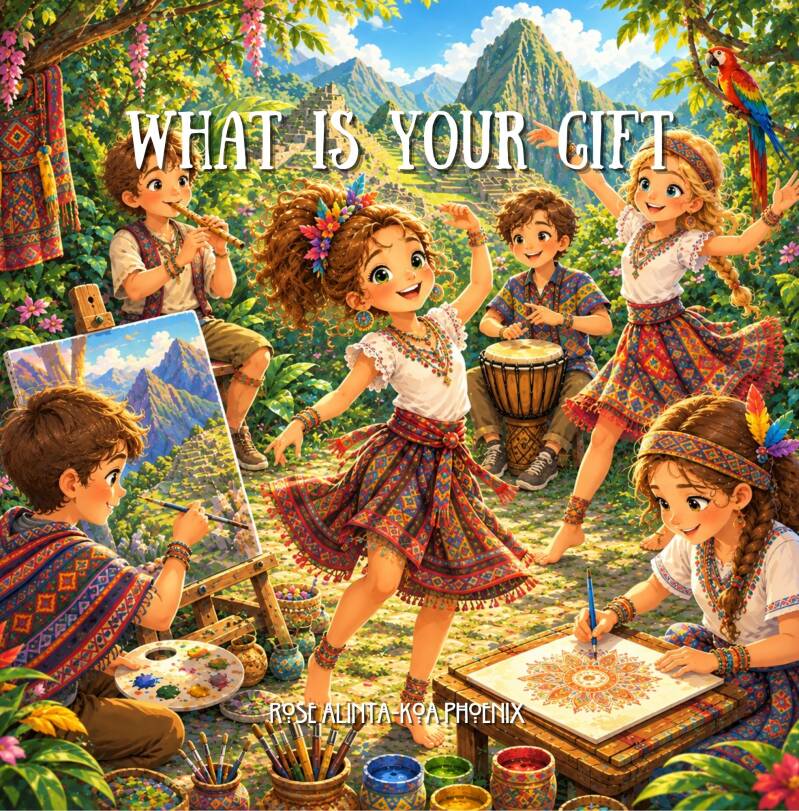
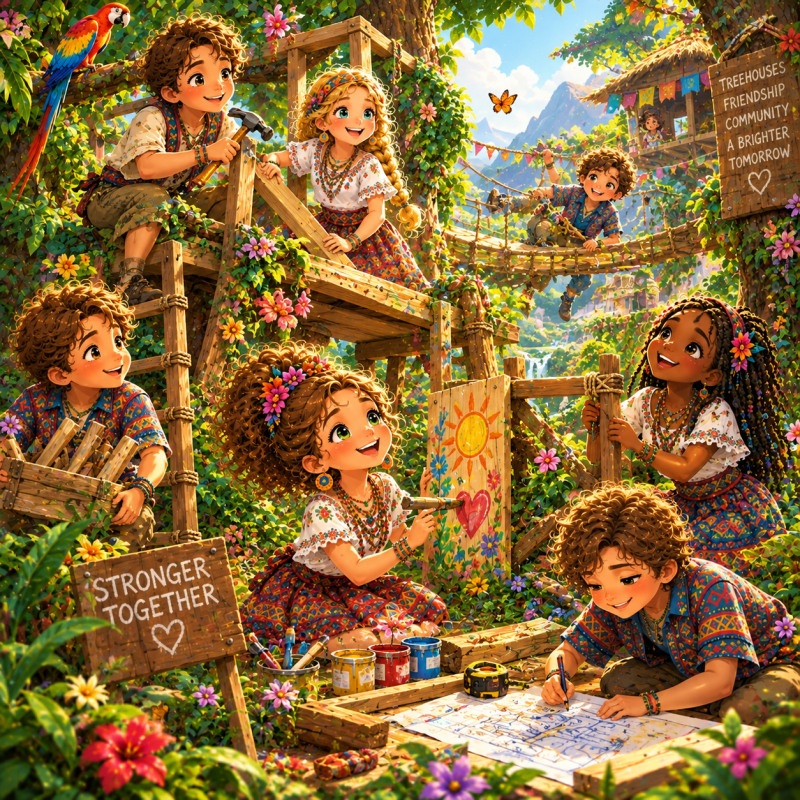
🌟📚✨ IT’S TIME FOR THE BIG REVEAL! ✨📚🌟
💛 We’ve been growing something special here at The Story Corner, and the moment has finally arrived to share the name of our latest children’s book!
🥁🥁🥁 DRUMROLL, PLEASE! 🥁🥁🥁
🌈🌻 INTRODUCING… 🌻🌈
✨📖 WHAT IS YOUR GIFT? 📖✨
💫 Every child has something special within them — unique gifts, God-given talents, creative abilities and beautiful qualities waiting to blossom.
How do we help our children discover what makes them divinely unique through their creativte abilities to serve community? How do we encourage them to develop their gifts, grow in character and use their abilities to make a positive difference in the world? 🌍💚
🌱 What Is Your Gift? is a fun, playful and heart-centred story that inspires children to explore their gifts, express themselves creatively, connect with nature and discover how they can serve God, care for the Earth and help their local communities thrive.
💖 A story about discovering purpose, celebrating creative expression that supports the growth of a children blossoming into their full potential.
🎨🌿 Through creativity, nature-inspired play and positive community connections, this story plants seeds of kindness, confidence, responsibility and meaningful contribution in the hearts of young readers.
Because the world doesn't just need children who know what they're good at — it needs children who discover how to use their gifts for GOOD and take action to make the world a better place. 🌻✨
🌏 A new generation of heart-led leaders begins with the seeds we plant today and how we turture and nourish them with care.
📚 WHAT IS YOUR GIFT? — COMING SOON!
Stay connected with The Story Corner for the official release announcement! 💛
🌐 https://www.the-story-corner.com/
#WhatIsYourGift #BookNameReveal #TheStoryCorner #ComingSoon #ConsciousChildrensBooks #GodGivenGifts #HeartLedLeadership #CharacterDevelopment #CreativeSelfExpression #NaturePlay #EarthGuardians #RaisingKindKids #PurposefulParenting #ChildrensBookLaunch
Something exciting is coming… ✨📚🌿💛
The Story Corner has a beautiful new children’s book on the way! 🌈🌎
We have been creating something full of creativity, purpose and possibility…
A book that inspires children to discover and develope their unique, God-given gifts, talents and abilities. ✨
A book that encourages children to explore their creativity, express themselves wholeheartedly and discover what makes them wonderfully unique as they shine Gods light in the world. 🎨🎶💃
A book that reminds children that their gifts are not just for themselves, but can be shared with others to bring goodness, kindness, joy and positivity into the world. 💛
A book that inspires children to grow in confidence, character and purpose as they learn to serve God, care for the Earth and support their local communities to thrive through new paradigms and ways of living in alignment with God and earths wisdom. 🌱🤝🌎
A book that celebrates the beauty of childhood, the joy of nature-inspired play and the power of creative self-expression to nurture positive behaviour, meaningful connections and a brighter future. 🌻✨
Because every child has something special within them… and when we nurture those gifts, beautiful things can grow! 🌈🌿
Can you guess the name of our new book? 👀📖
📚 Coming soon from The Story Corner…
Watch this space! 🌎💛✨
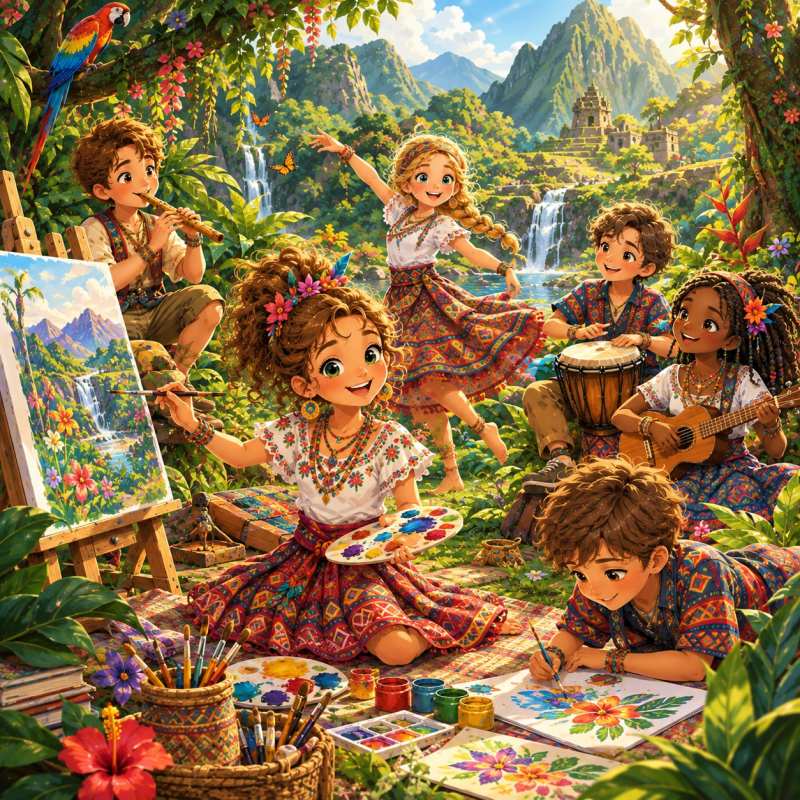
Something exciting is coming…
The Story Corner has a new release coming in 3 days time… watch this space…
How New Earth Supports Children to Come into Alignment with Heaven’s Agenda
New Earth supports children in understanding that they were created with purpose, value and unique gifts, and that their lives can be connected to something greater than themselves. Through faith-based storytelling, children are encouraged to discover God’s goodness and learn how their thoughts, choices, words and actions can reflect His love and light in the world. ✨
The story encourages children to develop a pure heart and a strong inner foundation, learning to choose what is good, true, kind and loving. By nurturing qualities such as compassion, honesty, forgiveness, courage and generosity, children can begin to understand how their character shapes the way they experience life and the way they influence those around them. 💛🌱
New Earth also encourages children to discover and develop their God-given gifts and consider how they can use them to serve others. Rather than seeing their gifts as being only for personal achievement, children are invited to recognise that their abilities can become a blessing when they are shared with their families, communities and the wider world.
Ultimately, the story invites children to align Gods promise, their hearts and God’s greater purpose for their life — growing in faith, wisdom, love and service. 🌎✨ It encourages them to become heart-led young people who are willing to listen, learn, grow and participate in what they believe God is calling them towards, helping to bring more love, peace and goodness into the world. 💛📚🌱


How New Earth Supports Children to Live in Alignment with God’s Blessing
New Earth encourages children to understand that living in alignment with God’s blessing begins with developing a heart that is open to love, goodness, kindness and truth. Through the story, children are invited to recognise that God has given each of them unique qualities and gifts, and that these gifts can help them live a purposeful and meaningful life. ✨
The story encourages children to listen to their hearts, develop their intuition and seek God’s guidance as they grow. By learning to make choices that reflect love, compassion, courage and wisdom, children can begin to understand what it means to live in a way that honours the gifts they have been given and reflects God’s goodness. 💛🌱
New Earth also reminds children that God’s blessings are not simply something to receive, but something that can be shared with others. Children are encouraged to develop their unique soul gifts and use them to serve, support and uplift their families, friends and wider communities. In this way, their gifts can become a blessing to others and a positive contribution to the world.
New Earth inspires children to grow into the greatest version of who God created them to be. 🌎✨ It encourages them to live with faith, purpose and an open heart, trusting that when they develop their gifts, choose love and serve others, they can become part of something greater — helping to bring God’s vision of a more peaceful, loving and beautiful world into being. 💛📚🌱
How New Earth Supports the Development of Divine Qualities Within a Child
New Earth encourages children to discover and nurture the divine qualities within themselves — qualities such as love, kindness, compassion, courage, patience, forgiveness, wisdom and generosity. Through an uplifting story of hope and possibility, children are encouraged to recognise that these qualities are gifts that can grow as they learn, experience life and connect more deeply with God. ✨
The story invites children to look beyond achievement and discover the importance of who they are becoming on the inside. By encouraging children to listen to their hearts, develop intuition and practise heart-based wisdom, New Earth supports them in making choices that reflect goodness, truth, love and compassion. These qualities can become a foundation for how they relate to themselves, others and the world around them. 💛🌱
New Earth also encourages children to share their unique gifts in service to others. Whether their gifts are expressed through creativity, leadership, caring, imagination or helping others, children can begin to understand that what they have been given can become a blessing when it is shared. In this way, children are encouraged to develop qualities such as humility, responsibility, cooperation and generosity.
Most importantly, New Earth reminds children that developing these qualities is a lifelong journey of becoming. 🌎✨ With faith, encouragement and practice, children can grow in wisdom, courage and love as they discover the person God created them to be. Our hope is that New Earth inspires children to allow their inner light to shine — becoming compassionate, courageous and heart-led individuals who bring more goodness into the world. 💛📚🌱

How New Earth Activates Children into Purpose and Meaning
New Earth encourages children to discover that their lives have meaning and that they each have a unique purpose. Through an uplifting story of hope, faith and possibility, children are invited to look within themselves and begin asking important questions about who they are, why they are here. how they can groe in their vlaue and what they can contribute to the world around them. 🌎✨
The story helps children recognise their unique gifts, talents and qualities and see how these can become a meaningful part of their life journey. Rather than keeping their gifts only for themselves, children are encouraged to develop them and learn how they can be shared through kindness, creativity, service, leadership and helping others. 🌱💛
New Earth also encourages children to develop their heart-based wisdom and intuition, helping them become more aware of their inner guidance and the choices they make. By learning to listen to their hearts, seek God’s guidance and act from love, courage and compassion, children can begin to connect their everyday actions with a deeper sense of purpose.
New Earth inspires children to become active participants in creating the future they dream about. 💛 It reminds them that their ideas, choices, gifts and actions matter, and that they can contribute to something greater than themselves. Our hope is that children will grow with a strong sense of purpose and meaning, knowing that they are uniquely created, deeply valued and capable of bringing their own special light into the world. 🌎✨📚


New Earth Inspires the Creative Expression of a Child
New Earth encourages children to dream, imagine and express the beautiful ideas they carry within their hearts. Through storytelling and imagination, children are invited to explore what a peaceful, loving and harmonious world could look like, giving them permission to think creatively and believe that their ideas can contribute to a brighter future. 🌎✨
Creative expression gives children a powerful way to discover and develop their unique gifts. Whether through drawing, painting, writing, music, storytelling, building or simply imagining new possibilities, New Earth encourages children to explore how their creativity can become a meaningful part of who they are and what they have to offer the world. 🎨💛
The story also connects creativity with heart-led wisdom and purpose. Children are encouraged to listen to their hearts, trust their intuition and express what they feel and imagine in authentic ways. In doing so, creativity becomes more than an activity — it becomes a way for children to communicate their ideas, explore their inner world and discover new possibilities.
Most importantly, New Earth reminds children that their imagination matters. 🌱✨ The worlds they dream about today can inspire the choices they make tomorrow. By nurturing creativity, curiosity and courageous self-expression, we can help children grow into confident young people who are willing to dream boldly, share their gifts and help create the beautiful world they envision. 💛🌎📚
New Earth Supports What Grows a Child in Value
New Earth encourages children to understand that their true value is not measured by what they achieve, what they own or how they compare with others, rather is it measured by who they are becoming. It celebrates qualities such as kindness, courage, compassion, honesty, wisdom and a willingness to care for others — the qualities that help children grow into confident and purposeful young people. 🌱✨
The story also encourages children to discover and develop their unique gifts and abilities. Every child has something valuable to contribute, and New Earth helps children recognise that their talents can become even more meaningful when they are shared with others. Learning to use their gifts to help, serve and uplift their community can give children a deeper sense of purpose and belonging. 💛
At the heart of New Earth is the idea that children grow in value when they develop their inner world — learning to listen to their hearts, trust their intuition, develop wisdom, manage their emotions and make choices that reflect love and goodness. These qualities can help children build strong foundations for healthy relationships, positive behaviour and confident leadership. 🌎
Most importantly, New Earth inspires children to become the greatest version of who they were created to be. It reminds them that their lives have purpose, their gifts matter and the way they choose to live can make a difference. 💛✨ By nurturing the qualities that truly matter, we can help children grow not only in what they can do, but in the value they bring to the world around them. 📚🌱🌎


How New Earth Supports Children to Listen to The Wisdom of God
New Earth encourages children to discover that God’s love and goodness can provide a foundation for guidance throughout their lives. Through the story, children are invited to develop a trusting relationship with God and to remember that they can turn to Him for wisdom, comfort and direction as they grow and discover their purpose. ✨
The story encourages children to quiet their minds, listen to their hearts and become aware of their inner wisdom. Through prayer, reflection and developing their intuition, children can begin to recognise the difference between choices that come from fear and those that reflect love, kindness, courage and goodness. 💛🌱
New Earth also helps children understand that they have been given unique gifts and abilities for a purpose. As they discover and develop these gifts, they can learn to seek God’s guidance about how they might use them to serve others, contribute to their communities and become a blessing to the world around them.
New Earth invites children to trust in God’s goodness while taking an active role in their own journey. 🌎💛 It reminds them that guidance is not about having every answer, but about learning to walk forward with faith, listen with an open heart, and grow into the person God created them to be. ✨📚🌱
New Earth Inspires Children to Be Heart-Led Leaders in the World
New Earth encourages children to discover that true leadership begins within the heart. Rather than seeing leadership as power or position, the story introduces children to a way of leading that is grounded in kindness, compassion, courage, wisdom and a genuine desire to make a positive difference in the lives of others. 🌎✨
Through the story, children are encouraged to listen to their hearts, trust their intuition and develop their own inner wisdom. As they become more aware of their thoughts, feelings, gifts and choices, they can begin to understand themselves more deeply and make decisions that reflect their values and the person they are becoming. 💛🌱
New Earth also reminds children that everyone has something valuable to contribute. By discovering and developing their unique gifts, children can learn how to share their talents in ways that help, serve and uplift their families, friends and wider communities. Leadership becomes an opportunity to bring people together, encourage others and contribute to creating a more peaceful and loving world.
Most importantly, New Earth inspires children to believe that their voice, their gifts and their choices matter. ✨ It invites them to grow into courageous, compassionate and purpose-driven young people who lead not from fear or ego, but from love, wisdom and a desire to serve. In doing so, they can begin to see themselves as the heart-led leaders who will help shape the beautiful future they dream of. 💛🌎📚


How New Earth Supports Children to Develop Self-Mastery
New Earth encourages children to begin discovering the powerful relationship between their thoughts, feelings, choices and actions. Self-mastery is about learning to understand ourselves, manage our emotions, make thoughtful choices and respond to life with greater awareness. New Earth encourages children to lean into a biblical understanding of what to read, intuit and believe that will inspire a bright future when we come into alignment with Gods promise and blessing.
The story also introduces children to the importance of listening to their hearts and developing their inner wisdom through a biblical lense. By becoming more aware of their intuition, feelings and inner guidance, children can learn to pause, reflect and make choices that are aligned with their values and the person they are becoming. This helps nurture confidence, self-awareness and a growing sense of personal responsibility. 🌱💛
New Earth reminds children that developing their gifts is a journey that requires practice, patience, courage and perseverance. Rather than expecting themselves to be perfect, children are encouraged to learn from their experiences, overcome challenges and continue growing. Through this process, they can begin to recognise their strengths, understand their areas for growth and take greater ownership of their personal development.
Ultimately, self-mastery is about helping children become heart-led and empowered individuals who can use their gifts wisely and positively to build the New Earth and serve their communities. 💛 New Earth encourages children to develop the inner strength to lead themselves before they lead others — learning to act with compassion, purpose, courage and wisdom as they grow into the greatest version of who they were created to be. 🌎✨📚
How New Earth Can Be Used as a Tool for Teachers, Parents, and Conscious Caregivers
New Earth can be a beautiful storytelling tool for teachers, parents and conscious caregivers who want to create meaningful conversations with children about hope, purpose, faith and the kind of world they would like to help create. Through the story, adults can invite children to explore their ideas about kindness, peace, community and what a beautiful future might look like. 🌎✨
The story can also support conversations about discovering and developing children’s unique gifts. Adults can encourage children to reflect on what they naturally enjoy, what they are good at and how they might use their abilities to help and serve others. These conversations can help children develop a stronger sense of purpose, confidence and belonging.
For educators and caregivers, New Earth can provide opportunities to explore heart-based wisdom, intuition, emotional awareness and self-mastery in an age-appropriate and meaningful way. Children can be encouraged to pause, listen to their hearts, reflect on their choices and consider how their thoughts, feelings and actions can contribute to the wellbeing of themselves and others.
Most importantly, New Earth can become a starting point for helping children dream beyond the present and imagine what is possible. Rather than simply telling children about the future, adults can encourage them to become active participants in creating it — nurturing compassionate, courageous and heart-led young people who understand that their gifts matter and that they have something valuable to contribute to the world. 🌎💛📚✨

How New Earth Supports Children to Lean Into God’s Goodness for Guidance
New Earth encourages children to discover the goodness of God and to understand that they do not have to navigate life alone. Through the story, children are invited to look towards God with trust, knowing that His love, wisdom and goodness can provide guidance as they grow, learn and discover their purpose. ✨
The story encourages children to slow down, listen within and become aware of their hearts, helping them recognise the gentle guidance that can come through prayer, intuition, wisdom and a desire to do what is good, true and loving. Rather than being guided by fear, children are encouraged to develop trust and confidence in God’s goodness as they make choices and face new experiences. 💛🌱
New Earth also reminds children that God has given each of them unique gifts and a meaningful purpose. As they discover their talents and develop their soul gifts, they can begin to ask how these gifts might be used to help, serve and bless others. In this way, children can learn to connect their personal growth with a greater purpose — becoming a positive influence within their families and communities.
New Earth invites children to lean into God’s love, goodness and wisdom as they grow into who they were created to be. 🌎💛 It is a gentle reminder that faith can provide a foundation for courage, compassion and hope, helping children move forward with an open heart and a belief that they have a meaningful role to play in creating a more beautiful world. ✨📚🌱


The Importance of Encouraging Children to Develop Their Soul Gifts to Serve God’s Plan
Every child is wonderfully unique, carrying their own gifts, talents, qualities and ways of seeing the world. Encouraging children to discover and develop these soul gifts can help them understand that they have a meaningful purpose in life. When children learn to recognise what naturally inspires them and where their hearts are drawn, they can begin to understand how their gifts may be used in ways that reflect God’s love and goodness. ✨
Developing a child’s soul gifts is not simply about achievement or success; it is about learning to use what we have been given to bless others. A child who is naturally compassionate may be called to care for others, while another may have gifts of creativity, leadership, teaching, healing, problem-solving or bringing people together. When these gifts are nurtured with love and wisdom, children can discover the joy that comes from sharing what is within them for the benefit of their wider community. 🌱
When children are encouraged to listen to their hearts, develop their intuition and grow in heart-based wisdom, they can become more aware of the ways God may be guiding their lives. Rather than simply asking, “What do I want to be when I grow up?”, children can begin to explore a deeper question: “How can I use the gifts God has given me to serve others and contribute to His plan?” This can nurture purpose, confidence, compassion and a genuine desire to make a positive difference.
Ultimately, encouraging children to develop their soul gifts is about helping them grow into the greatest version of who God created them to be. 💛 Our hope is that children will understand that their gifts are not only for themselves — they are opportunities to love, serve, create, lead and bring light into the lives of others. When children learn to share their gifts with an open heart, they can become a powerful part of building a more loving, peaceful and beautiful world. 🌎✨
How New Earth Supports the Overall Wellbeing of Children
New Earth was created to support children’s emotional, mental, spiritual and social wellbeing by encouraging them to develop a positive vision for their future. Through imagination and storytelling, children are invited to explore feelings of hope, purpose, belonging and possibility, helping them see that they have an important place in the world. 🌎✨
The story encourages children to develop a stronger connection with their inner world by listening to their hearts, recognising their emotions, trusting their intuition and discovering their own heart-based wisdom. These ideas can help children become more self-aware and confident as they learn to understand themselves and make choices that reflect who they are becoming. 💛🌱
New Earth also highlights the importance of connection and community. Children are encouraged to discover their unique gifts and understand how sharing those gifts can help others. By learning about kindness, cooperation, service and leadership, children can develop a greater sense of belonging and recognise the positive impact they can have on the people and world around them.
Ultimately, New Earth aims to nurture children who are hopeful, confident, compassionate and empowered. It encourages them to dream, grow, discover their purpose and believe in their ability to contribute to a brighter future. 🌎✨ Our hope is that every child who experiences New Earth feels inspired to embrace who they are, develop their gifts and grow into the greatest possible version of themselves. 💛📚🌱


Our Latest Children’s Book New Earth Supports Children to Believe and Dream of a Bright Future
New Earth was created to inspire children to believe in the possibility of a bright and beautiful future. Through an uplifting story filled with hope, imagination and possibility, children are invited to look beyond the challenges of today and dream about a world where peace, love, kindness and harmony can flourish. 🌎✨
Inspired by the biblical vision of a new heaven and a new earth, New Earth offers children a message of faith and reassurance — that God has a beautiful plan for the future. It encourages children to imagine what this future could look like and to understand that they can participate in creating a world that reflects goodness, love and peace. 💛
The story also reminds children that they each have unique gifts and an important purpose. By developing their intuition, heart-based wisdom and individual talents, children can discover how their gifts can be shared with others and used to serve their families, communities and the wider world. 🌱✨
Most importantly, New Earth encourages children to dream boldly and believe that their dreams can make a difference. When children are given permission to imagine a better world, they begin to see themselves as capable, courageous and heart-led contributors to the future. Our hope is that New Earth plants a beautiful seed of possibility in every child’s heart — a belief that the future can be bright, and that they can help bring that future into being. 💛🌎📚✨
Why New Earth Matters
New Earth matters because children deserve stories that give them hope for the future. In a world that can sometimes feel uncertain or overwhelming, this story invites children to imagine a future filled with peace, love, kindness and harmony, reminding them that a beautiful world is possible. 🌎✨
It matters because children are not simply observers of the future — they are the future. New Earth encourages them to discover their unique gifts, recognise their strengths and understand that they each have something meaningful to share with their families, communities and the wider world. 🌱💛
It matters because the way children imagine themselves and their world can shape the way they grow. By nurturing imagination, intuition, heart-based wisdom and compassion, we hope to encourage children to become confident, courageous and heart-led young people who are willing to make a positive difference.
Most of all, New Earth matters because it carries a simple message of faith, purpose and possibility: the future can be bright, every child has a purpose, and every gift has the potential to become a blessing to others. 💛🌎📚 Sometimes, creating a better world begins with simply believing that one is possible. ✨


💛 Who New Earth Is For
New Earth is a story created especially for children who love to imagine, dream and wonder about what is possible. It is for curious young hearts who want to believe in a beautiful future and discover that they have something special to contribute to the world. 🌎✨
It is for children who are beginning to discover who they are, what they are good at and what makes their hearts come alive. Through its story, New Earth encourages children to recognise their unique gifts, trust their intuition and understand that their talents can be shared in ways that help and serve others. 🌱💛
It is also a story for families, parents, grandparents, educators and anyone who wants to nurture hope, kindness, imagination and purpose in children. It creates an opportunity to talk together about the kind of world we would love to live in — and how each of us can play a part in creating it.
Most of all, New Earth is for the dreamers, the heart-led and the future changemakers — children who are growing into their greatest possible version and learning that their hearts, gifts and dreams matter. 💛🌎📚 It is an invitation to imagine a better world… and believe that together, we can help bring it to life. ✨
💛✨📖
Why We Wrote New Earth 🌎💛
We wrote New Earth because we wanted to give children a story filled with hope, faith and possibility — a story that reminds them that the future does not have to look like the world we see today. Inspired by the biblical vision of a new heaven and a new earth, we wanted children to imagine a world where peace, love, harmony and community can flourish.
We also wanted to remind children that they have a purpose. Each child carries unique gifts, qualities and abilities that can be developed and shared with others. New Earth encourages children to discover these gifts and understand that they can use them to serve, contribute and make a positive difference within their families, communities and the wider world.
At the heart of the story is the belief that imagination is powerful. When children are encouraged to dream of a beautiful world, to listen to their hearts, trust their intuition and develop their heart-based wisdom, they begin to see themselves as active participants in creating a better future. 🌱✨
Most of all, we wrote New Earth to inspire a generation of heart-led children — children who grow with courage, compassion, wisdom and a deep sense of purpose. Our hope is that this story plants a little seed in every child’s heart: that they are here for a reason, their gifts matter, and together we can help create a more beautiful world.
💛🌎📚


“Then I saw a new heaven and a new earth…” — Revelation 21:1
Imagine a world made new. A world filled with peace, beauty and joy. A world where children can dream, create, explore and discover the gifts God has placed within them.
The Bible gives us a beautiful promise of a future renewed by God. “See, I am creating new heavens and a new earth.” — Isaiah 65:17
Imagine rivers flowing through beautiful gardens… communities living together in peace… music filling the air… children laughing and playing… and people using their gifts to serve, create and bless others. A world where goodness can flourish. Where hearts are filled with hope. Where there is no place for fear, hatred or sorrow.
Revelation reminds us of God's promise: “He will wipe every tear from their eyes. There will be no more death or mourning or crying or pain.” — Revelation 21:4
Introducing The Story Corners latest release New Earth, an uplifting and inspiring children's story, to remind children of why they came to earth, in support of Gods plan for heavens agenda invites children to look beyond today and imagine the beautiful future God has promised. It encourages them to discover their God-given gifts… to grow in wisdom and love… to care for creation… and to become a blessing within their families and communities.
Because when children learn to dream of a world filled with peace, goodness and love, they can begin to carry those qualities into the world they live in today. A promise from Scripture. A vision of hope. A world waiting to be imagined. New Earth. Imagine His promise.
Dream His future. Live His goodness. The Story Corner 21 September 2026 Pick up a copy today for the little people you care about in your life, to share a message of Gods promise Now available Available now across all leading platforms. Amazon,Apple Books,
Kobo, Bookshop.org and Barnes & Noble 👇 https://amzn.asia/d/08KFj3gF 👈 or https://www.the-story-corner.com/our-stories 👈 With Love
📣 🥁 OFFICIAL BOOK LAUNCH! 🥁 📣
🌎✨ NEW EARTH ✨🌎
Today is the day! 💛📚
After months of dreaming, creating and bringing this special story to life, The Story Corner is delighted to officially launch New Earth! 🌎✨
An uplifting and inspiring children’s story created to nurture hope, faith, purpose and possibility, New Earth invites children to imagine a beautiful and peaceful future — and discover the special gifts they carry within themselves to help create it. 🌱💛
Inspired by the biblical vision of a new heaven and a new earth, this story encourages children to listen to their hearts, develop their intuition and heart-based wisdom, share their unique gifts, and grow into compassionate, courageous heart-led leaders who can be a blessing to the world. ✨
💛 A story of hope.
🌱 A story of purpose.
🌎 A story of possibility.
📖 A Story of Prmoise
📚 A story for the children who will help shape our future.
New Eart is where Children are encouraged to discover and develop their own soul gifts as guided by God that i reflected through their unique qualities, talents and abilities they have been given — and to learn how these gifts can be shared in service to others and their wider community. 💛
New Earth encourages children to dream, imagine and participate in creating the world they wish to see.
Through the story, children are introduced to ideas around heart and brain coherence, intuition and heart-based wisdom, supporting them to develop greater self-awareness, inner confidence and a sense of connection with others.
Most importantly, New Earth encourages children to become heart-led leaders — young people who can listen to their hearts, trust their inner wisdom, care for others and use their gifts to make a positive difference in the world.
NEW EARTH is officially here! 🎉📖🌎
✨ Available from now via all leading online platforms. ✨
https://www.the-story-corner.com/our-stories
With Love
Welcome to New Earth… 💛🌎✨


Are You Wondering What the New Earth will look like and feel light?
God’s clarion call wants to tell you all about the New Earth…
It feels like and looks like heaven and something we have never seen on the planet before. It is a promise from God.
Jesus came to me in a dream back in April 2025 and requested to comissioned me to write New Earth, to share Gods promise with the children for a bright future for those in Christ, were peace would reign on the planet for 1000. How can you say no to Jesus in your co-creating with God.
At The Story Corner we are excited to share New Earth with children and families around the world
New Earth, is an invitation for children to discover the promise from God, where God makes everything new and fresh.
To learn more you will need to pick up a copy which will be available for purchase this coming Monday 21st of September
The countdown is on… keep watching this space…
✨👼🌎💛
Only 3 Days to go… until the release of 🌎 NEW EARTH 📚💛
Dear child, do you remember... why you came here?
Was it to serve God's plan, to help usher in the New Earth?
Hopefully reading New Earth will remind you…
Inspired by the Book of Revelation in the Bible and its vision of a new heaven and a new earth, where peace reigns, New Earth offers children a message of hope, purpose and a bright future promised by God.
This story reminds children that they each have a special part to play — discovering and developing their soul gifts, and learning how to share, serve and contribute to their wider community. 🌱💛
New Earth encourages children to imagine and dream a beautiful world into being, while developing heart-based wisdom, intuition and heart–brain coherence, empowering them to grow into compassionate, courageous and heart-led leaders in the world. ✨🌎
Mark it down in your calendar, the release date is next Monday September 21st
Coming 21 September 2026 💛📚✨

📣 🥁 BOOK NAME REVEAL 📣 🥁
…Can You Guess the Name of the Next Story Corner Release?… 🌎✨
Introducing our newest children’s story…
🌎 NEW EARTH 📚✨
A beautiful story of hope, purpose, peace and possibility, inspiring children to dream of a brighter world and discover Gods promise when we come into alignment with the blessing and Heavens Agenda for Earth. 💛🌱
Coming 21 September 2026
📣 🥁 NEW EARTH 🥁 📣
✨ A new story. A new vision. A beautiful future. 🌎💛


🥁 The countdown is on 🥁Only 7 days to go until The Story Corner releases another story of the heart. Commissioned by God to inspire the children to co-create with God the heavenly culture of the New Earth…..
A new children's book for the children of light is coming!
Watch this space and stay.. tuned…
🌎💛📖
Something exciting is coming… ✨📚🌎
The Story Corner has a beautiful new children’s book on the way!
We have been working on something full of hope, purpose and possibility…
A book that inspires children to imagine a beautiful and peaceful world into being.
A book that reminds children that they each have special gifts to share with the world.
A book that encourages children to listen to their hearts, develop their intuition and discover the wisdom within.
A book that inspires children to become brave, compassionate and heart-led leaders…
And to believe that the future can be brighter than they ever imagined. ✨
Coming 21 September 2026…
Watch this space… 🌎💛📖


Something exciting is coming… The Story Corner has a new release coming… watch this space…
💛✨📖
How God Wants You Pure Supports Children to Come into Alignment with Heaven’s Agenda
God Wants You Pure invites children to discover that their lives can be connected to something greater than themselves. Through gentle storytelling and poetic language, the book encourages children to consider what it means to live in alignment with God’s heart and Heaven’s agenda — an agenda centred on love, goodness, truth, peace and the wellbeing of creation.
The book encourages children to recognise that they each have a unique purpose and something meaningful to contribute. Their gifts, creativity, compassion and courage can become expressions of God’s love in the world, helping them understand that their everyday choices can participate in something greater.
Coming into alignment with Heaven’s agenda means learning to choose what brings life and goodness. Children are encouraged to practise kindness, forgiveness, honesty, respect and compassion, while developing an awareness of how their actions affect other people, animals and the natural world.
God Wants You Pure also nurtures the development of heart-led children who can listen inwardly, seek wisdom and allow love to influence their decisions. Rather than simply following the expectations of the world, children are encouraged to develop an inner compass grounded in God’s love and goodness.
God Wants You Pure reminds children that they are part of a greater story. By nurturing love, purity of intention, courage and compassion, children can begin to understand how their lives can become vessels for God’s goodness — bringing more light, peace and love into the world and participating in God purpose for Heaven on earth.
💛✨📖


How God Wants You Pure Supports Children to Live in Alignment with God's Blessing
God Wants You Pure encourages children to recognise that God’s blessing is not simply something we receive, but something we can learn to live in alignment with. Through gentle storytelling and poetic language, children are invited to explore how love, goodness, truth and kindness can guide the way they move through the world.
The book presents purity as an inner alignment with what is good and life-giving. Rather than being about perfection, it encourages children to make choices that reflect God’s love — choosing compassion over cruelty, honesty over deception, forgiveness over resentment and kindness over harm.
Living in alignment with God’s blessing can also mean recognising the gifts and opportunities we have been given. Children can learn to appreciate their unique qualities, care for creation, support others and use their creativity and abilities in ways that bring goodness into the world.
God Wants You Pure therefore provides a foundation for children to develop an inner relationship with their values and spiritual identity. It encourages them to pause, listen to their hearts and consider whether their choices are helping them move towards greater love, peace, wisdom and connection.
Ultimately, the book reminds children that they are loved by God and that their lives have meaning. When children are encouraged to live from love, integrity and gratitude, they can begin to experience what it means to walk in alignment with God’s blessing and allow that blessing to flow through their lives and into the world around them.
💛✨📖
How God Wants You Pure Activates Children into Purpose and Meaning
God Wants You Pure is a gentle invitation for children to reconnect with the love, goodness and light within them. Through poetic storytelling, the book encourages children to see purity not as perfection, but as an inner compass that guides them towards love, truth, kindness and compassion.
The story helps children begin to recognise that who they are and what they do matters. Their unique gifts, creativity, imagination and capacity to love are meaningful, and they each have something valuable to contribute to the world.
By encouraging children to make choices from the heart, God Wants You Pure connects everyday actions with a deeper sense of purpose. Caring for others, helping nature, showing kindness, speaking truth and choosing love become meaningful ways for children to express who they are becoming.
The book also nurtures the foundations of heart-led leadership. When children learn to listen to their inner wisdom, develop self-awareness and act with compassion, they can grow with a stronger sense of identity, confidence and responsibility for the world around them.
God Wants You Pure reminds children that they are deeply loved, that their light matters and that they have a purpose. By nurturing these foundations early in life, we can support children to grow into conscious, compassionate human beings who bring their unique gifts into the world and use them to create goodness.
💛✨📖

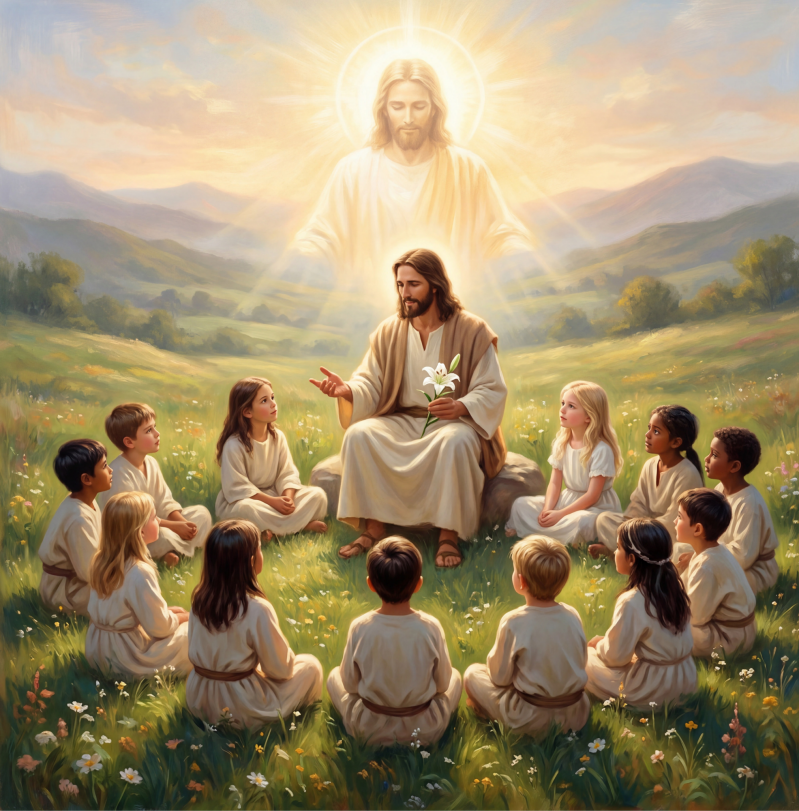
How God Wants You Pure Supports the Development of Divine Qualities Within a Child
God Wants You Pure supports children in discovering and nurturing the divine qualities that can live within every human heart. Through gentle poetic storytelling, the book encourages children to recognise qualities such as love, kindness, compassion, courage, honesty, patience and forgiveness as beautiful expressions of their inner nature.
The story encourages children to understand that being “pure” does not mean being perfect. Instead, purity can be understood as choosing to return to love, truth and goodness. This gives children a positive inner compass to help guide their thoughts, words and actions as they grow.
By bringing attention to these qualities, God Wants You Pure creates opportunities for children to reflect on how they want to treat themselves, others, animals and the natural world around them. Simple acts of kindness, caring and compassion become ways for children to express the goodness within them.
The book also supports the development of heart-led qualities such as empathy, self-awareness, integrity and responsibility. These qualities can help children develop meaningful relationships, make conscious choices and grow into confident young people who recognise the value they carry within themselves based on how God has raised them through-out their ongoing human maturation process.
Ultimately, God Wants You Pure reminds children that they are deeply loved and that the light of God can be expressed through the way they live. By nurturing divine qualities from an early age, children are supported to grow not only in character, but in their capacity to bring greater love, peace, kindness and goodness into the world.
💛✨📖
The Importance of Supporting Children to Live a Life Inspired by God’s Purity and Good Deeds
The early years of a child's life are a precious time of growth, discovery, and the development of values that can guide them throughout their journey. Supporting children to live a life inspired by God's purity and good deeds helps nurture hearts that are grounded in love, compassion, kindness, and faith.
God Wants You Pure was created to encourage children to understand that God's love is a guiding light that can help them make choices that reflect goodness, honesty, and care for others. When children are supported in developing a connection with God, they can begin to recognise the importance of living with a heart that seeks to serve, love, and bring positivity into the world.
Living a life inspired by God's purity does not mean striving for perfection. Instead, it is about growing each day with intention, learning from experiences, showing forgiveness, practising kindness, and choosing actions that align with love and compassion. These qualities help children build strong character and develop the confidence to navigate life's challenges with grace and resilience.
When children are encouraged to embrace good deeds, they learn that even small acts of love can create meaningful change. A kind word, helping a friend, showing gratitude, caring for creation, or offering forgiveness are all ways children can express God's love through their everyday actions.
Supporting children in this journey helps nurture important qualities including:
✨ Compassion — understanding and caring for the feelings and experiences of others.
✨ Integrity — learning to make choices that reflect honesty, responsibility, and strong values.
✨ Empathy — developing the ability to see the world through another person's perspective.
✨ Faith and trust — building a relationship with God and finding strength through His guidance.
✨ Purpose and service — discovering how their unique gifts can be used to bring goodness into the world.
Parents, teachers, and caregivers play an important role in creating environments where children feel supported, loved, and encouraged to grow in their faith and character. Through stories, conversations, modelling kindness, and opportunities to serve others, adults can help children understand that God's love is something they can carry within their hearts and share with those around them.
God Wants You Pure is a reminder that every child has the potential to become a light in the world. By nurturing children to live with pure hearts and compassionate actions, we help cultivate a generation of heart-led leaders who bring hope, kindness, and God's love into their communities.
At The Story Corner, we believe that the seeds planted in children's hearts today can blossom into beautiful expressions of love and goodness for generations to come.
💛✨📖
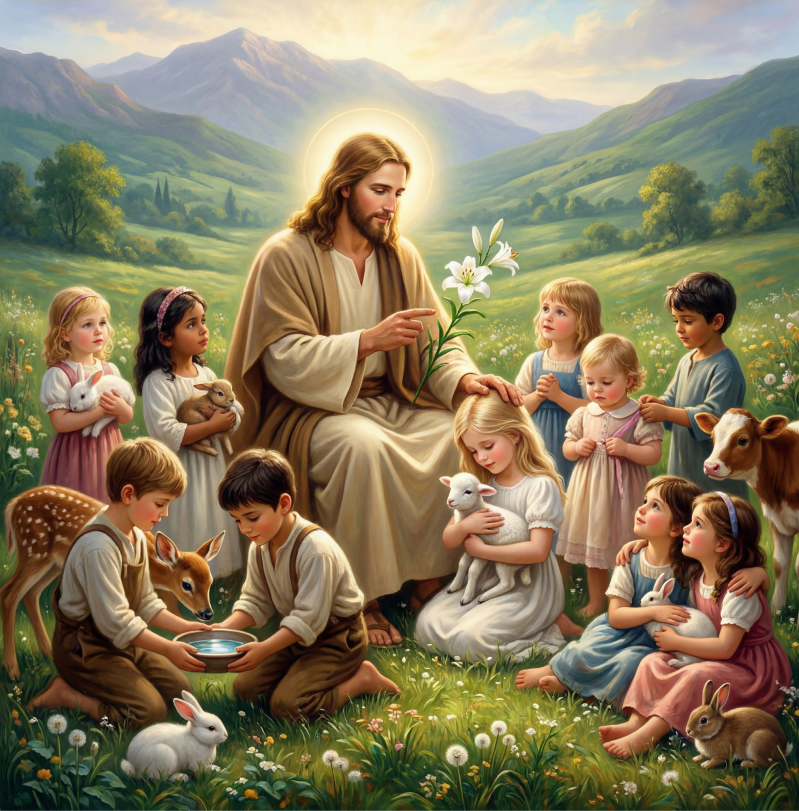

God Wants You Pure Inspires the Musical Expression of a Child
God Wants You Pure inspires children to discover the beauty of expressing their hearts through music. When a child sings, creates rhythms, dances, or plays an instrument, they are given a joyful way to express their emotions, imagination and connection with God.
Music can become a beautiful language of the heart—a way for children to celebrate love, goodness, innocence and the wonder of creation. Through musical expression, children can explore their unique voices and learn that their creativity is something precious to nurture.
God Wants You Pure encourages children to let their inner light shine and to use their gifts with love and purpose. Whether through a joyful song, a gentle melody or a spontaneous dance, every musical expression can become an opportunity for a child to connect with their heart and share something beautiful with the world.
Music also gives children an opportunity to experience joy, confidence and connection with others. Singing together, creating rhythms or sharing a performance can help children feel heard and valued, while encouraging cooperation, listening and a sense of belonging.
Through these creative experiences, a child can begin to understand that their voice matters. God Wants You Pure celebrates the idea that when children are encouraged to express themselves from a place of love, goodness and authenticity, their creativity can become a beautiful reflection of who they are and the gifts they have been given.
Music can also become a joyful way for children to celebrate their relationship with God and the world around them. Through song and sound, children can express gratitude, hope, love and wonder, discovering that their musical voice can be a meaningful and uplifting gift to themselves and others.
💛✨📖
God Wants You Pure Inspires the Creative Expression of a Child
God Wants You Pure encourages children to discover the beauty and freedom of their own creative expression. Through drawing, painting, storytelling, music, movement, crafting and imaginative play, children are given space to explore their feelings, ideas and unique perspectives.
Creativity allows a child to express what may sometimes be difficult to put into words. It nurtures imagination, confidence and self-discovery while encouraging children to recognise the goodness and beauty within themselves.
Inspired by the message of God Wants You Pure, creative expression becomes a joyful way for children to let their inner light shine. When children are encouraged to create from the heart, they learn that their unique gifts and imagination are precious—and that they can use their creativity to bring love, beauty and goodness into the world.
Creative expression can also help children develop a deeper sense of confidence in who they are. When a child is given permission to experiment, make mistakes and explore new ideas without fear of judgement, they learn that creativity is not about being perfect—it is about being authentic, curious and willing to discover.
Through creative play and artistic exploration, children can also learn to see the world with wonder. A simple drawing can become a story, a colour can communicate an emotion, and an imaginative idea can become something entirely new. God Wants You Pure supports this natural creative journey by encouraging children to embrace their individuality and allow their gifts to grow with love, purpose and joy.
When children are encouraged to create with an open heart, their creativity can become a powerful expression of their inner world. Whether they are making art, writing a story, singing a song or imagining something new, each creative experience gives them an opportunity to celebrate their uniqueness and share their gifts with others. In this way, God Wants You Pure inspires children to see creativity not only as something they do, but as a beautiful part of who they are.
💛✨📖
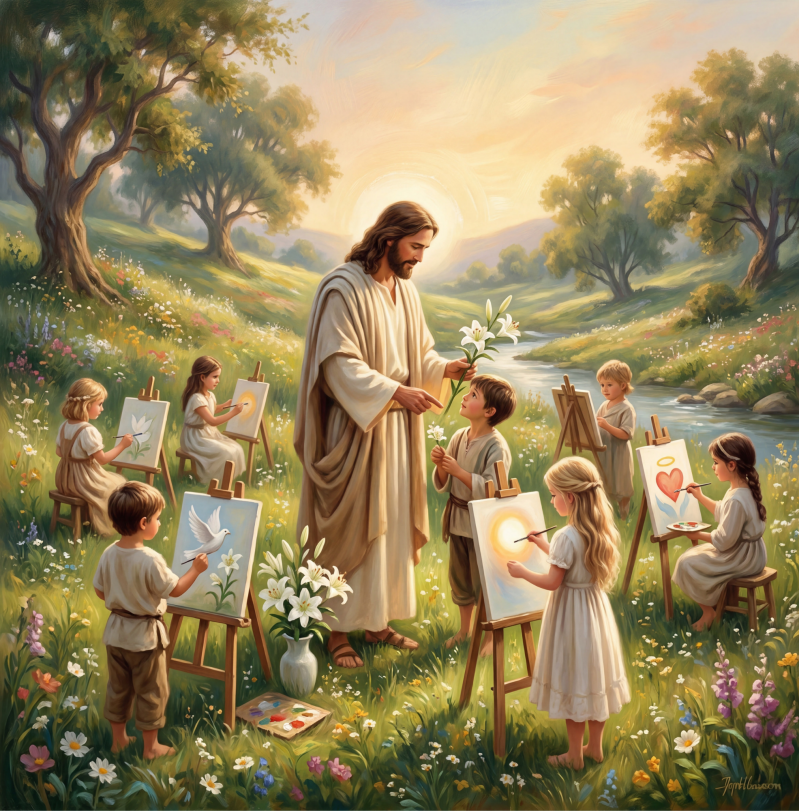
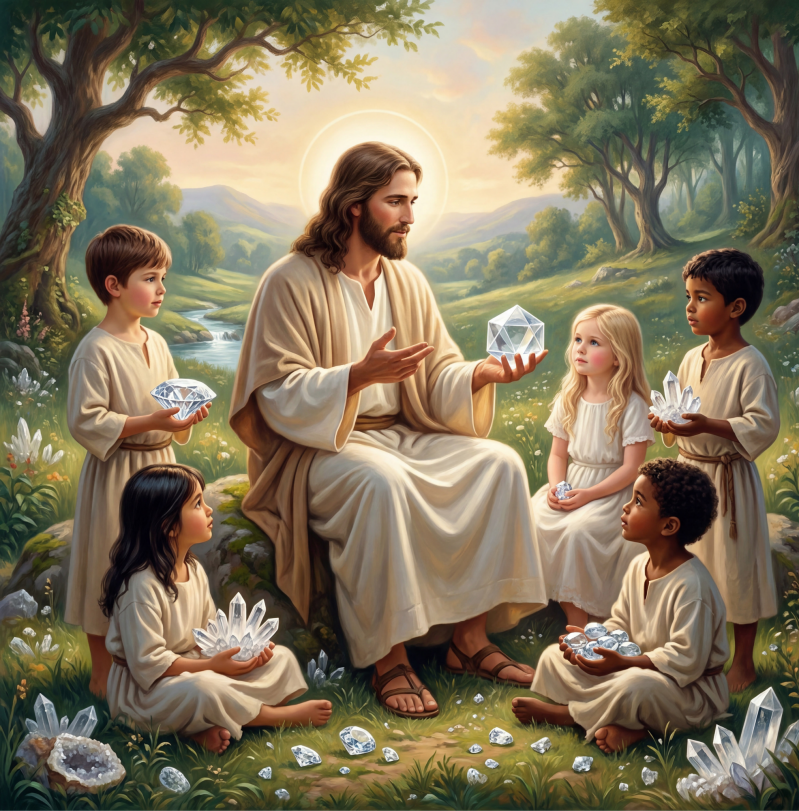
God Wants You Pure Supports What Grows a Child in Value
God Wants You Pure encourages children to recognise the qualities that help them grow into kind, confident and heart-led individuals. Through its message of love, goodness, purity and personal integrity, the book supports the development of values that can guide a child throughout life.
Children grow in value when they are encouraged to practise kindness, honesty, compassion, respect, courage and responsibility. These qualities help children understand their worth while also teaching them how to value others and contribute positively to the world around them.
God Wants You Pure invites children to nurture what is good within their hearts and to allow their character, choices and actions to reflect love and goodness. It is a gentle reminder that true growth is not only about what a child achieves, but also about who they are becoming.
A child’s sense of value can also grow when they learn to recognise the unique gifts, talents and qualities they carry within themselves. Encouraging children to appreciate their individuality can help them develop self-belief, resilience and a healthy understanding of their own worth.
The book also supports the importance of making choices that reflect kindness, love and respect. As children begin to understand how their words and actions affect others, they can develop greater empathy and responsibility, learning that their choices have the power to create positive change in their families, friendships and communities.
Ultimately, God Wants You Pure encourages children to grow from the inside out. By nurturing a loving heart, strong character, creative spirit and awareness of their own God-given gifts, children can develop values that become a foundation for living with purpose, compassion and integrity. It celebrates the beautiful journey of becoming not simply a successful child, but a good-hearted, courageous and valuable human being.
💛✨📖
God Wants You Pure Inspires Children to Be Heart-Led Leaders in the World
God Wants You Pure inspires children to discover that true leadership begins within the heart. Rather than defining leadership by power, popularity or achievement, the book encourages children to develop qualities such as love, kindness, courage, honesty and compassion. These qualities can help children grow into people who lead by example and positively influence the world around them.
Heart-led leadership begins with understanding and listening to what is good and true within. Children can learn to pause, reflect on their choices and consider how their words and actions affect others. By developing empathy and emotional awareness, they can become more thoughtful in the way they communicate, solve problems and build relationships.
The message of God Wants You Pure encourages children to recognise that their unique gifts have value and purpose. Every child has something meaningful to contribute, whether through creativity, caring for others, sharing ideas, helping their community or simply bringing kindness into everyday moments. When children believe their gifts matter, they can develop the confidence to use them for good.
Heart-led leaders also understand that strength can be expressed through gentleness, forgiveness and compassion. Children who learn to respect differences, stand up for what is right and treat others with dignity can become positive influences among their friends, families and communities. Leadership becomes less about being in charge and more about serving, encouraging and uplifting others.
God Wants You Pure also invites children to nurture their inner character as they grow. By choosing honesty over deception, kindness over cruelty and love over fear, children can begin developing a strong moral foundation. These everyday choices may seem small, but they can shape the character of a child and influence the kind of person they become.
Ultimately, God Wants You Pure encourages a generation of children to become heart-led leaders who bring love, goodness and positive change into the world. It reminds children that leadership does not have to wait until adulthood—it can begin today, through the way they care, create, communicate and choose to treat others. When children lead from a heart grounded in love and purpose, their influence can reach far beyond themselves.
💛✨📖

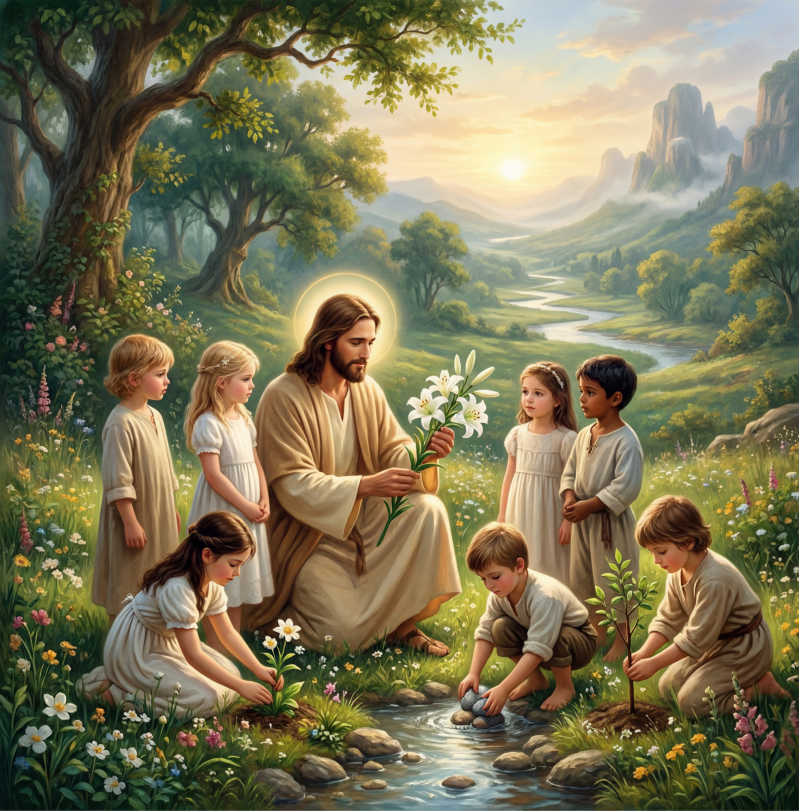
How God Wants You Pure Supports the Human Maturation Process in Children
The journey of childhood is a beautiful process of growth, discovery, and transformation. As children develop, they are learning how to understand themselves, build relationships, navigate challenges, and discover their place in the world. The human maturation process involves the development of the heart, mind, character, emotions, and spirit—and God Wants You Pure supports children through this important journey by nurturing qualities that help them grow into compassionate, wise, and purpose-filled individuals.
Through its gentle story-poem style, God Wants You Pure encourages children to recognise that growth is a lifelong journey guided by God's love and wisdom. The story reminds children that they are deeply valued and supported as they learn from experiences, overcome challenges, and develop the inner qualities that help them flourish.
The book supports the human maturation process by encouraging children to develop:
✨ Self-awareness — Helping children understand their thoughts, feelings, strengths, and unique gifts. As children become more aware of themselves, they can begin to recognise the beautiful qualities God has placed within them.
✨ Emotional maturity — Encouraging children to process emotions with love, patience, and understanding. The story supports children in learning that challenges are opportunities for growth and that God's presence can provide comfort and strength.
✨ Moral development — Inspiring children to understand the importance of kindness, honesty, compassion, forgiveness, and making choices that reflect God's goodness.
✨ Spiritual growth — Supporting children to develop a deeper connection with God and recognise faith as a guiding foundation throughout their lives.
✨ Purpose and responsibility — Encouraging children to discover that their actions matter and that they have the ability to contribute goodness, love, and positive change to the world around them.
The maturation process is not about becoming perfect; it is about continually learning, growing, and developing wisdom through life's experiences. God Wants You Pure helps children understand that mistakes, challenges, and moments of uncertainty are all part of becoming stronger and more connected to God's love.
When children are supported to grow with faith, compassion, and integrity, they develop the foundations needed to become confident and heart-led individuals. They learn to listen to their inner wisdom, make thoughtful choices, and use their unique gifts in service of others.
At The Story Corner, we believe that children's stories can nurture the development of the whole child—supporting their emotional, social, mental, and spiritual wellbeing. God Wants You Pure is a gentle invitation for children to embrace their journey of growth, trust in God's guidance, and become the loving, compassionate leaders they were created to be.
💛✨📖
💛
How God Wants You Pure Supports Positive Behaviour Guidance in Children
Children’s behaviour is a form of communication. Behind every action is a feeling, a need, a lesson being learned, or a part of a child’s development seeking support. Positive behaviour guidance helps children understand themselves, build emotional awareness, and develop the inner qualities needed to make loving and respectful choices. God Wants You Pure supports this process by nurturing children’s hearts with messages of faith, kindness, compassion, and personal responsibility.
Through its gentle story-poem style, God Wants You Pure encourages children to reflect on the connection between their thoughts, words, actions, and the impact they have on others. Rather than focusing on punishment or correction, the story inspires children to grow through understanding, love, and guidance.
The book supports positive behaviour guidance by encouraging children to develop:
✨ Self-awareness — Helping children recognise their emotions, intentions, and choices. When children understand what is happening within their hearts, they are better able to respond with wisdom and kindness.
✨ Emotional regulation — Supporting children to find calm, patience, and strength during challenging moments. Connecting with God’s love can provide children with a sense of comfort and security as they learn to navigate big feelings.
✨ Empathy and compassion — Encouraging children to consider how their words and actions affect others, helping them build caring and respectful relationships.
✨ Integrity and responsibility — Guiding children to understand that what they do and the action they take matters, their choices matter and that they have the ability to make decisions that reflect love, honesty, and goodness as inspired and guided by God.
✨ A heart-led approach to behaviour — Inspiring children to act from a place of kindness, connection, and awareness rather than fear or external pressure.
For parents, teachers, and caregivers, God Wants You Pure can be a valuable resource for opening conversations about values, choices, forgiveness, and personal growth. The story can help adults guide children through everyday moments by encouraging reflection and supporting children to understand the deeper meaning behind positive behaviours.
When children feel loved, valued, and connected to a sense of purpose, they are more likely to develop confidence, resilience, and a desire to contribute positively to the world around them. God Wants You Pure reminds children that growing in goodness is a journey and that every moment is an opportunity to learn, grow, and share God’s love.
At The Story Corner, we believe positive behaviour guidance begins with nurturing the heart. By planting seeds of faith, compassion, and wisdom, God Wants You Pure supports children in becoming respectful, caring, and heart-led individuals who bring kindness and goodness into their communities.
💛✨📖

How God Wants You Pure Can Be Used as a Tool for Teachers, Parents, and Conscious Caregivers
Children learn best when they are surrounded by love, guidance, meaningful conversations, and positive examples. God Wants You Pure is a beautiful resource designed to support teachers, parents, and conscious caregivers in nurturing children's spiritual growth, emotional wellbeing, and character development.
This heartfelt story-poem provides an opportunity to introduce children to the importance of living with a loving heart, making wise choices, and developing a strong connection with God. Through storytelling, children can explore meaningful conversations about faith, kindness, compassion, integrity, and the purpose they carry within themselves.
For parents and caregivers, God Wants You Pure can become a treasured tool for creating moments of connection and reflection with children. Reading the story together can encourage conversations about God's love, navigating life's challenges, understanding emotions, and choosing actions that bring goodness into the world. It offers families an opportunity to strengthen their bond while supporting children to grow in confidence, faith, and inner wisdom.
For teachers and educators, this book can be used as a foundation for values-based learning experiences. The themes within the story can inspire classroom discussions, creative activities, reflective questions, and opportunities for children to explore qualities such as kindness, honesty, empathy, resilience, and responsibility.
For conscious caregivers, God Wants You Pure offers a gentle reminder that children are developing their understanding of themselves and the world around them. By sharing stories that nurture love, purpose, and faith, caregivers can help children build a strong inner foundation that supports them throughout their lives.
The book can encourage children to explore questions such as:
✨ What does it mean to have a loving and pure heart?
✨ How can I show God's love through my words and actions?
✨ How can I find strength when I experience challenges?
✨ What unique gifts and purpose has God placed within me?
At its heart, God Wants You Pure is more than a children's book—it is a tool for planting seeds of faith, wisdom, compassion, and self-awareness. It supports the adults who guide children by providing a meaningful way to nurture heart-led leadership and encourage children to walk confidently in God's love.
The Story Corner believes that the stories we share with children help shape the values, beliefs, and dreams they carry into the future. God Wants You Pure is an invitation to support children as they grow into kind, courageous, and compassionate individuals who shine God's love into the world.
💛✨📖
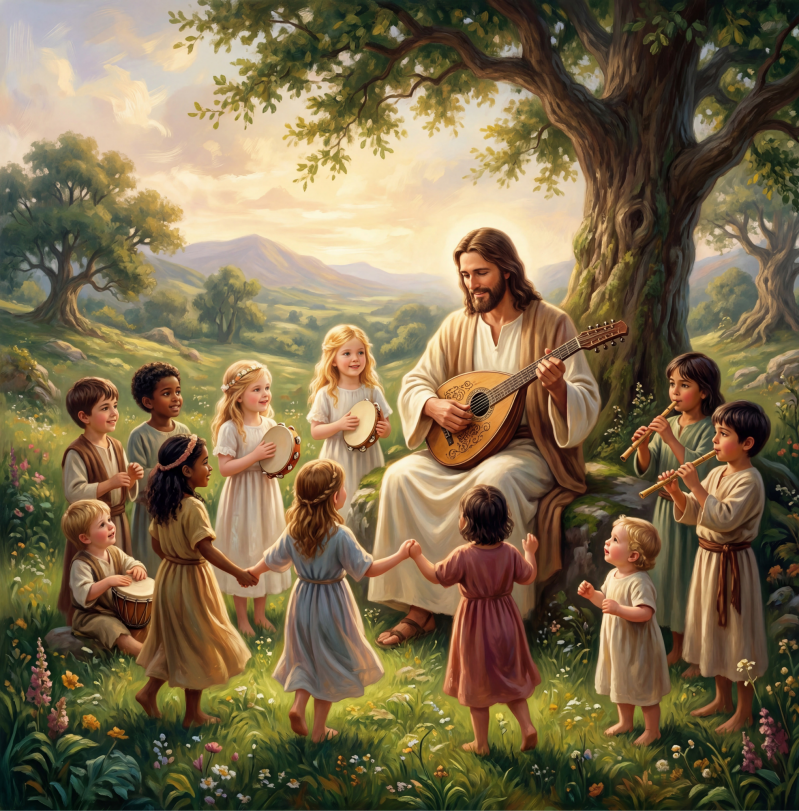

How God Wants You Pure Supports Children to Lean Into God’s Goodness for Guidance
Children are naturally curious, creative, and constantly learning how to navigate the world around them. As they grow, they need loving guidance and positive foundations that help them understand their choices, develop their character, and discover their unique purpose. God Wants You Pure supports children in leaning into God’s goodness as a source of wisdom, comfort, and guidance throughout their life journey.
This heartfelt story-poem encourages children to recognise that God’s love is always present and available to guide them through moments of joy, uncertainty, challenges, and growth. By connecting with God’s goodness, children are reminded that they are deeply loved, supported, and never alone.
God Wants You Pure helps children explore the importance of listening to the wisdom within their hearts and making choices that reflect God’s love. Through gentle storytelling, children are encouraged to develop qualities such as kindness, compassion, honesty, forgiveness, and humility—values that help them build strong foundations for life.
Leaning into God’s goodness supports children to develop:
✨ Inner wisdom — Learning to pause, reflect, and seek guidance when making decisions.
✨ Faith and trust — Understanding that God’s love provides strength and reassurance through life’s experiences.
✨ A compassionate heart — Recognising opportunities to serve, care for, and support others.
✨ Resilience through challenges — Finding courage and hope when facing difficulties or uncertainty.
✨ A sense of purpose — Discovering that their unique gifts can be used to bring goodness and love into the world.
For children, learning to follow God’s guidance is a journey of growth and discovery. It is about developing a relationship built on love, trust, and connection, while learning how their thoughts, words, and actions can reflect the goodness they carry within.
Parents, teachers, and caregivers can use God Wants You Pure as a meaningful resource to open conversations about faith, values, and the choices that help children grow into kind, courageous, and compassionate individuals.
At The Story Corner, we believe that stories have the power to plant seeds of hope, faith, and wisdom in young hearts. God Wants You Pure invites children to walk confidently with God, trusting His goodness to guide them as they grow, learn, and become the people they were created to be.
💛✨📖
How God Wants You Pure Supports the Overall Wellbeing of Children
Children thrive when they feel loved, supported, connected, and guided by values that help them understand themselves and the can serve the world around them. God Wants You Pure was created to nurture the overall wellbeing of children by encouraging a strong foundation of faith, love, kindness, emotional awareness, and inner strength.
Through its gentle story-poem style, God Wants You Pure supports children in developing a deeper connection with God and recognising that they are valued, cherished, and created with a unique purpose. This sense of belonging and spiritual connection can provide children with comfort, confidence, and reassurance as they experience the joys and challenges of growing up.
The book encourages children to cultivate qualities that contribute to their holistic wellbeing, including:
✨ Emotional wellbeing — Helping children understand that God's love is a source of comfort, strength, and support through their emotions, experiences, and challenges, while supporting them with positive behaviour guidance when developing relationships with others.
✨ Spiritual wellbeing — Encouraging children to build a relationship with God and discover faith as a guiding light throughout their life's journey to keep them inspired to all the good they can in all the ways they can.
✨ Social wellbeing — Inspiring children to practise kindness, compassion, forgiveness, and respect in their relationships with others.
✨ Mental wellbeing — Supporting children to develop positive thoughts, resilience, hope, and the confidence to face challenges with courage and optimism.
✨ Character development — Encouraging children to grow qualities such as unconditional love, honesty, integrity, empathy, kindness, care, healthy boundaries and responsibility.
God Wants You Pure reminds children that living with a pure heart is about growing in love, learning from experiences, and choosing actions that reflect God's goodness. It encourages children to look within themselves and recognise the beautiful qualities that God has placed within them.
When children feel connected to God's love, they can develop a stronger sense of identity, purpose, and inner peace. They learn that they are never alone and that they have the strength to overcome challenges while continuing to grow into the people they were created to be.
At The Story Corner, we believe that nurturing the whole child—heart, mind, body, and spirit—helps create a foundation for lifelong wellbeing. God Wants You Pure is a meaningful resource for families, educators, and faith communities seeking to inspire children to grow with love, wisdom, compassion, faith and a creative heart for God in their self expression.
May every child who reads this story be reminded that they are deeply loved, beautifully created, and guided by God's light as they journey through life.
💛✨📖
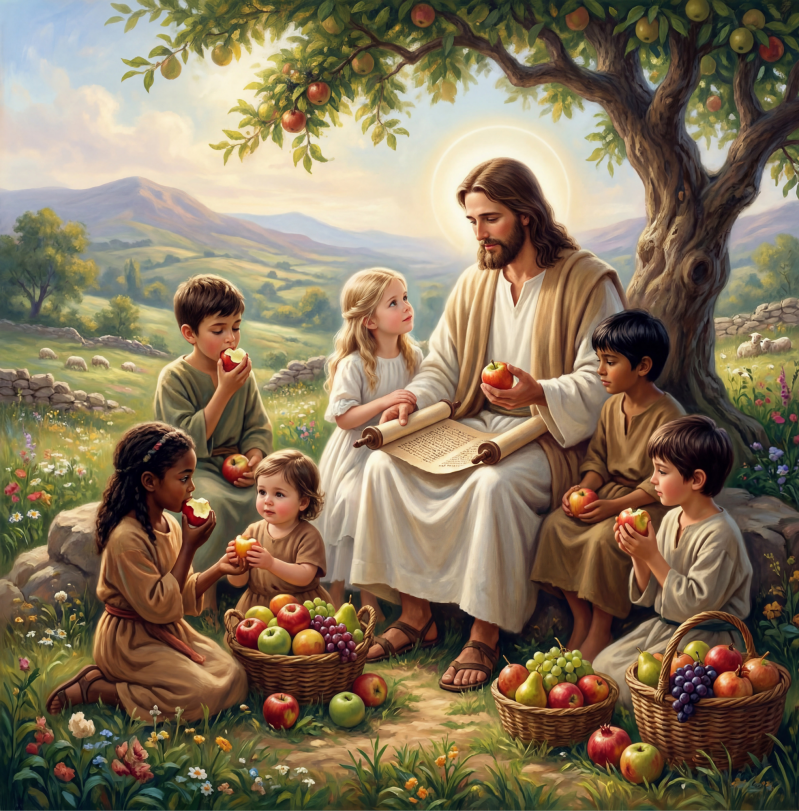

Our Latest Children’s Book God Wants You Pure Supports Children to Live a Life of Purity Led and Guided By God
The Story Corner is excited to share our latest children’s book, God Wants You Pure—a heartfelt story-poem created to inspire children to discover the beauty of living a life connected to God's love, wisdom, and guidance.
In a world where children are navigating many influences and experiences, God Wants You Pure offers a gentle reminder that they have a loving guide who is always with them. Through faith, trust, and connection with God, children can learn to make choices that reflect kindness, compassion, honesty, and love.
This inspiring story encourages children to understand that purity begins within the heart. It is not about being perfect, but about growing each day with a desire to choose goodness, develop strong character, and walk in alignment with God's plan. The book supports children in recognising the value of a loving heart and the importance of allowing God's light to guide their thoughts, words, and actions.
Through poetic storytelling, God Wants You Pure helps children explore meaningful life lessons, including:
✨ Following God's guidance — learning to trust that God's love provides direction and support through every season of life.
✨ Growing a pure heart — developing qualities such as kindness, forgiveness, humility, and compassion.
✨ Building inner strength — discovering courage and faith to overcome challenges and continue growing.
✨ Living with purpose — recognising that every child has unique gifts and a special role in sharing love and goodness with the world.
At The Story Corner, we believe children's books can plant powerful seeds of faith, hope, and wisdom that continue to grow throughout a child's life. God Wants You Pure was created to support families, educators, and faith communities in nurturing children who are guided by love and inspired to become heart-led leaders.
May this beautiful story remind every child that they are deeply loved by God, created with purpose, and supported as they journey through life with a heart full of faith, goodness, and love.
The Story Corner
Growing Hearts. Inspiring Minds. Cultivating Tomorrow’s Heart-Led Leaders.
💛✨📖
How God Wants You Pure Supports Children to Develop Self-Mastery
Self-mastery is the lifelong journey of learning how to understand ourselves, guide our choices, manage our emotions, and use our gifts in ways that create goodness in the world. For children, developing self-mastery begins with building a strong inner foundation of love, confidence, wisdom, and connection.
God Wants You Pure supports children on this journey by encouraging them to look within their hearts and recognise the importance of choosing thoughts, words, and actions that reflect God's love. Through its gentle story-poem style, the book inspires children to develop awareness of their character, their choices, and the impact they have on others.
The story teaches children that purity is not about perfection—it is about growth. It is about learning from experiences, making wise decisions, showing kindness, practising forgiveness, and allowing God's love to guide them through life's challenges. This understanding helps children develop emotional resilience and the ability to respond to situations with greater compassion and wisdom.
As children connect with the message of God Wants You Pure, they are encouraged to strengthen important qualities of self-mastery, including:
✨ Self-awareness — recognising their feelings, thoughts, strengths, and unique purpose.
✨ Self-control — learning to pause, reflect, and choose actions that align with love and kindness.
✨ Inner strength — developing courage and faith to overcome challenges and keep growing.
✨ Responsibility — understanding that their choices can create positive change in the lives of others.
✨ Heart-led decision making — learning to listen to the wisdom within their hearts and follow God's guidance.
In a world where children are constantly influenced by external messages, God Wants You Pure offers a reminder that true strength begins from within. When children are connected to God's love, they can develop the confidence to stand strong in their values, embrace their uniqueness, and walk forward with purpose.
Ultimately, God Wants You Pure supports children in becoming heart-led leaders by nurturing the inner qualities that allow them to serve, love, and contribute to the world around them. It plants seeds of faith, wisdom, and self-mastery that can continue to grow throughout their lives.
💛✨📖
The Importance of Encouraging Children to Pursue a Life of God’s Purity
The early years of a child’s life are a powerful time of growth, discovery, and the development of values that shape who they become. Encouraging children to pursue a life inspired by God’s purity provides them with a strong foundation of love, faith, kindness, compassion, and wisdom as they learn to navigate the world around them.
Pursuing God’s purity is not about expecting children to be perfect. Instead, it is about supporting them to grow with a heart that seeks goodness, so that they can make wise choices and take action that is guided by the pure love of God. It is about nurturing the inner qualities that help children develop strong character and a deeper understanding of their connection with God.
When children are encouraged to seek God’s purity, they learn that true beauty comes from within. A pure heart is reflected through kindness towards others, honesty in their choices, forgiveness when challenges arise, gratitude for life’s blessings, and a willingness to serve and support those around them.
Encouraging children to live a life inspired by God’s purity supports them to develop:
✨ A strong sense of identity — Understanding that they are deeply loved by God and created with unique gifts, talents, and purpose.
✨ Compassion and empathy — Learning to see others with love, respect, and understanding.
✨ Inner strength and resilience — Finding courage through faith when facing challenges, uncertainty, or moments of growth.
✨ Wisdom and discernment — Developing the ability to make choices guided by love, truth, and goodness.
✨ A heart of service — Recognising that their actions can bring kindness, hope, and positive change to the world.
Children who are supported to pursue God’s purity are given the opportunity to develop a meaningful relationship with faith and understand that God’s love can be a guiding light throughout their lives. This connection can provide comfort, direction, and a sense of purpose as they grow and mature.
Parents, teachers, and caregivers play an important role in creating environments where children feel safe to explore their faith, ask questions, learn from experiences, and grow in character. Through stories, conversations, and everyday examples of love and kindness, adults can help children see how God’s goodness can be expressed through their thoughts, words, and actions.
God Wants You Pure was created to inspire children to embrace this journey of growth—to follow God’s light, nurture a loving heart, and discover the joy of living a life guided by faith and goodness.
At The Story Corner, we believe that when children are supported to grow with love, wisdom, and spiritual connection, they can become compassionate, courageous, and heart-led leaders who share God’s love with the world.
💛✨📖


Why God Wants You Pure Matters
In a world filled with distractions, challenges, and constant change, children need messages that remind them of their worth, their purpose, and the love that surrounds them. God Wants You Pure matters because it offers children a gentle reminder that God's love is a guiding light—a source of strength, wisdom, and hope as they grow and discover who they are in their divinity.
This story-poem encourages children to understand that purity comes from nurturing a heart that is connected to love, kindness, compassion, honesty, and faith. It is not about being perfect; it is about continually growing, learning, and choosing goodness as they walk through life's adventures.
God Wants You Pure matters because the values children develop in their early years help shape the people they become. When children are supported in building a strong connection with God, they can develop confidence, resilience, empathy, and the courage to make choices that reflect love and goodness.
The book also carries a message of hope—that no matter what challenges children face, God's presence is always with them. Through moments of uncertainty, mistakes, and growth, children can find comfort knowing they are guided, supported, and deeply loved.
At the heart of God Wants You Pure is a vision for raising children who lead with their hearts. Children who understand God's love can become compassionate leaders who bring kindness, peace, and positive change into their families, communities, and the world around them.
This book matters because every child deserves to know they are precious, purposeful, and created with unique gifts to share. By planting seeds of faith, love, and wisdom in young hearts, we help nurture a future generation who can shine God's light through their words, actions, and the way they love others.
God Wants You Pure is more than a story—it is an invitation for children to walk in the glorious light of God to enjoy a beautiful journey of faith, embrace the goodness within their hearts, and discover the purpose God has lovingly placed within them.
💛✨📖
Who God Wants You Pure Is For
God Wants You Pure is a heartfelt story-poem created for children, families, and communities who desire to nurture hearts that are guided by faith, love, kindness, and wisdom.
This inspiring book is for children who are discovering who they are, while learning about God's love, and exploring the values that help them navigate life's journey. Through gentle words and meaningful messages, God Wants You Pure encourages children to trust in God's presence, seek goodness, and grow with a heart full of compassion and purpose.
This book is especially meaningful for:
✨ Families seeking faith-filled resources
Parents, grandparents, and caregivers who want to share stories that encourage conversations about God's love, character development, kindness, and the importance of living with a loving heart while serving community with value.
✨ Christian schools and educators
Teachers who are looking for uplifting children's literature that supports spiritual development, character building, and values-based learning in the classroom.
✨ Churches, Sunday schools, and faith communities
Communities wanting to provide children with stories that strengthen their connection with God and inspire them to live with love, integrity, and purpose as their North Star.
✨ Children discovering their unique purpose
Young readers who are learning that they are deeply loved by God and have the ability to bring goodness, kindness, and hope into the world.
At its heart, God Wants You Pure is for every child who needs the reminder that God's love is always present—guiding them through challenges, celebrating their growth, and helping them become the person they were created to be. God Wants You Pure is for inspiraing children to look towards Gods love and light as to want guides them to make decisions and choice in the world.
This book invites children to embrace a life led by love, compassion, and faith, inspiring them to become heart-led leaders who shine God's light into the world.
The Story Corner believes that the stories we share with children can plant seeds of wisdom, hope, and purpose that continue to grow throughout their lives. God Wants You Pure is one of those seeds—a gentle reminder that every child's heart is precious, loved, and beautifully guided by God.
💛✨📖


Why I Wrote God Wants You Pure
Throughout my journey working with children, I have witnessed the incredible beauty, innocence, curiosity, and wisdom that exists within a child's heart. Children naturally carry a sense of wonder and a desire to understand the world around them. They are constantly learning, growing, and discovering the values that will help guide them through life.
I wrote God Wants You Pure because I felt called to create a story that gently reminds children of the goodness, light, and love that God places within every heart after an intense conversation I had with God.
This story-poem was inspired by the belief that God's love can be a guiding light for children as they navigate life's adventures. Through moments of joy, uncertainty, challenges, and change, God's presence offers comfort, strength, and direction. My hope is that children will understand they are never walking alone, and that they can always turn towards God's love for wisdom and guidance.
God Wants You Pure encourages children to seek the beauty of a pure heart—a heart that chooses kindness, compassion, honesty, forgiveness, and love. Purity is not about perfection; it is about following the desire to embody Gods goodness, to brings a child into alignment with Gods thoughts, decisions and actions that guide them in life, while they grow closer to Gods likeness. Children learn from their life's experiences, and can allow for Gods love to shape the way they see theme selves and others.
We wanted to write a book that helps children recognise their unique purpose that inspires them to become heart-led leaders in the world. When children are connected to God's love, they can develop the courage to make wise choices that bring goodness, hope, and positive change into their families, communities, and the wider world.
My prayer is that God Wants You Pure becomes a meaningful resource for families, teachers, and faith communities—a story that opens conversations about God's love, character, purpose, and the beautiful journey of growing in faith.
May every child who reads this book be reminded that they are deeply loved, guided by God's light, and created with a special purpose to share love and goodness wherever they go.
💛✨📖
What if every child was inspired to live a life
led by the pure Love of God
as their compass and guide
As they make decision of how to live in the world
encouraging children to live in alignment with the blessing
to walk in Gods purity
as the cornerstone to help them overcome any challenge
and rise up in every moment
as they grow and learn…
through life's adventures
Introducing God Wants You Pure —
a beautiful story-poem from The Story Corner.
A story about the goodness that grows
when children walk in the pure light and love of God.
It reminds children that God's love can be their guiding light…
their north star this is comforting in difficult moments…
and their strength when life feels challenging.
God Wants You Pure encourages children to nurture a heart filled with kindness, compassion, courage, honesty, and love no matter what!
To seek God's goodness…
to listen to the wisdom within their hearts…
and to allow Gods love to guide their choices and their journey.
Purity isn't about being perfect.
It's about what can inspire children to make good choices
as kids grow and learn
its an invitation to choose goodness…
and become more deeply connected to the love of God.
This is an invitation for children to discover their unique purpose,
to walk boldly in God's light,
and to become the heart-led leaders they were created to be.
God Wants You Pure.
A story to inspire young hearts.
A message to guide a holy culture
A reminder that God's love is always there.
Available now from The Story Corner.
And all leading online platforms
https://amzn.asia/d/0iQE7hlT
https://www.the-story-corner.com/our-stories
Growing Hearts. Inspiring Minds. Cultivating Tomorrow's Heart-Led Leaders For a Bright Future
💛✨📖


📣 🥁Official Offical Book Launch 📣 🥁
📖 The Story Corner is excited to announce the offical release of GOD WANTS YOU PURE 💛✨📖
Today is the day we celebrate the online release of this divinely inspired new children’s book from The Story Corner. 🌟📖
God Wants You Pure is a sweet heart-felt story-poem that invites children to discover the beauty of living with goodness, love and purity of heart.
Through its gentle words and meaningful message, this book encourages children to walk in the light of God, listen to the wisdom within their hearts, and become compassionate, and creative heart-led leaders in the world and always remember the light of Gods goodness can guide us through life. ✨
At The Story Corner, we believe children's literature can do more than entertain. Stories can plant seeds. Stories can open hearts. Stories can give children language for the things they feel deep within themselves.
May this book inspire meaningful conversations between children, parents, educators and families about kindness, goodness, love, devotiob, service and the beautiful light we each carry within.
🌎✨ The hope found in the light of Gods love for the next generation matters.
📚 God Wants You Pure is now available.
Pick up a copy today to share this message and encourage this holy culture with the children you love and care about in your life.
Thank you to everyone who has supported this journey and helped bring this book into the world. May it find its way into the hands and hearts of the children who need its message. 💛🙏✨
Available across all leading online platforms and the online Story Corner bookstore
https://www.the-story-corner.com/our-stories
TOMORROW IS THE BIG DAY! ✨💛
The countdown is almost over…
Tomorrow, 21st August, God Wants You Pure is officially released! 📖✨
A gentle and joyful story-poem inviting children to discover the beauty of goodness, love, purity of heart, and walking in the light of God. 🌟
💛 God wants you pure…
so that your heart can remain gentle,
your love can remain true,
and your light can shine brightly in the world.
Tomorrow, a new story begins — one that encourages children to listen to their hearts, choose goodness, and become heart-led leaders. 🌿✨
📖 GOD WANTS YOU PURE
✨ Releasing 21 AUGUST 2026
Tomorrow is the big day! 🎉💛
Who’s excited to share this beautiful book with the children in their life?
#GodWantsYouPure #TheStoryCorner #ChildrensBooks #ConsciousKids #HeartLedChildren #FaithBasedBooks #ChildrensLiterature #BookRelease #TomorrowIsTheBigDay #21August #RaisingHeartLedLeaders


✨ God Wants You Pure is a gentle and heartfelt story that invites children to discover the beauty of living with a pure heart, a loving spirit, and a connection to God that guides their path.
Through poetic words and beautiful imagery, children are encouraged to listen to their hearts, choose goodness, and let their inner light shine.
Because when a child's heart is guided by love...
they can grow with compassion.
They can create with kindness.
They can make choices that bring light into the world.
And they can become the heart-led leaders our world needs.
God Wants You Pure inspires children to nurture the goodness within themselves — to walk in love, live with integrity, and remember the beautiful light that God has placed within their hearts.
Released on the 21st of August in 3 more days
Let your heart be your guide. Let your light shine.
✨👼💛
✨ God Wants You Pure is a gentle and heartfelt story that invites children to discover the beauty of living with a pure heart, a loving spirit, and a connection to God that guides their path.
Through poetic words and beautiful imagery, children are encouraged to listen to their hearts, choose goodness, and let their inner light shine.
Because when a child's heart is guided by love...
they can grow with compassion.
They can create with kindness.
They can make choices that bring light into the world.
And they can become the heart-led leaders our world needs.
God Wants You Pure inspires children to nurture the goodness within themselves — to walk in love, live with integrity, and remember the beautiful light that God has placed within their hearts.
Released on the 21st of August in 3 more days
Let your heart be your guide. Let your light shine.
✨👼💛

Only 4 more days until the release of God Wants You Pure… 💛
What does it really mean to have a pure heart?
To see the goodness in others.
To choose love over fear.
To listen to the quiet wisdom that comes from within, when we take the time out to sit in stillness with God
or is it to let your heart be guided by God?
At The Story Corner we know that “God wants you pure so that you can always be kind.” is definitely apart of it
God Wants You Pure, is an invitation for children to discover the beauty of goodness, love and a heart-led life that is rich in creative expression.
The countdown is on...
🌿 God Wants You Pure — releasing 21 August.
Only 5 more days to go until the release of God Wants You Pure…
Mark it down in your calnder, the release date is this coming Friday August 21st because...
"God wants you pure so that you can be gentle of heart...
God wants you pure so that you can make meaningful art.”
Shine bright from your heart because God loves you
✨👼💛

📣 🥁 Book Name Reveal 📣 🥁
....Can You Guess the Name of Next Story Corner Release ?....
💛 📚✨ Coming 21 August 2026 💛 📚✨
✨👼💛God Wants You Pure✨👼💛
The Story Corner is delighted to announce the upcoming release titled God Wants You Pure, a beautifully written story-poem that invites children to discover the goodness, peace, and strength found in walking in the pure light and love of God.
Launching on 21 August 2026, this uplifting new release inspires children to lean into follow all that is good true and beautiful through the pure presence of Gods love and that they are never alone. Through every challenge, every lesson, and every adventure life brings, God's loving presence is there to guide, strengthen, and support them as they grow.
God Wants You Pure is a heartfelt invitation for children to pursue the goodness and purity of God's love as their North Star that leads and guides their lives. It encourages young readers to develop hearts grounded in faith, compassion, wisdom, and integrity, inspiring them to become heart-led leaders who shine God's love into the world.
Beautifully illustrated and written with lyrical, poetic language, this inspiring book offers families, Christian schools, churches, and homeschool communities a meaningful resource for nurturing children's faith and character. It opens the door to conversations about trusting God, making wise choices, and discovering the unique purpose God has for every child.
At The Story Corner, we believe stories have the power to shape hearts, cultivate hope, and inspire the next generation to live with courage, kindness, and love. God Wants You Pure continues this mission by encouraging children to grow in their relationship with God and to joyfully serve His plan for their lives.
We look forward to sharing this holy spirit filled book with families across Australia and around the world.
Join us on the 21 August 2026 as we celebrate the launch of God Wants You Pure and inspire children to walk confidently in God's love, embrace lives of goodness and purity, and become the heart-led leaders they were created to be.
With love
The Story Corner
"Growing Hearts. Inspiring Minds. Cultivating Tomorrow's Heart-Led Leaders"
✨👼💛
The countdown is on…
Only 7 days to go until The Story Corner releases another story of the heart. Commissioned by God to inspire the children to walk in purity, in truth, in Gods strength and beauty.
Children…. God wants you pure... so you can be bright like the sun.
God wants you pure so that you can overcome any challenge while having fun.
A new children's book for the children of light is coming!
Watch this space and stay.. tuned…
🤍📚🦋✨️

Something exciting is coming…
The Story Corner has a beautiful new children's book on the way!
We have been working on something pure of heart...
A book that inspires children to want to seek all that is good, true and beautifulA book that inspire children to live in to be brave and create from their heart A book that inspires children to live alignment with Gods blessing so that they can be a blessing to the world...
Coming 21 August 2026.. Watch this space....
Something exciting is coming… ✨The Story Corner has a new release coming… watch this space… ✨💛📖
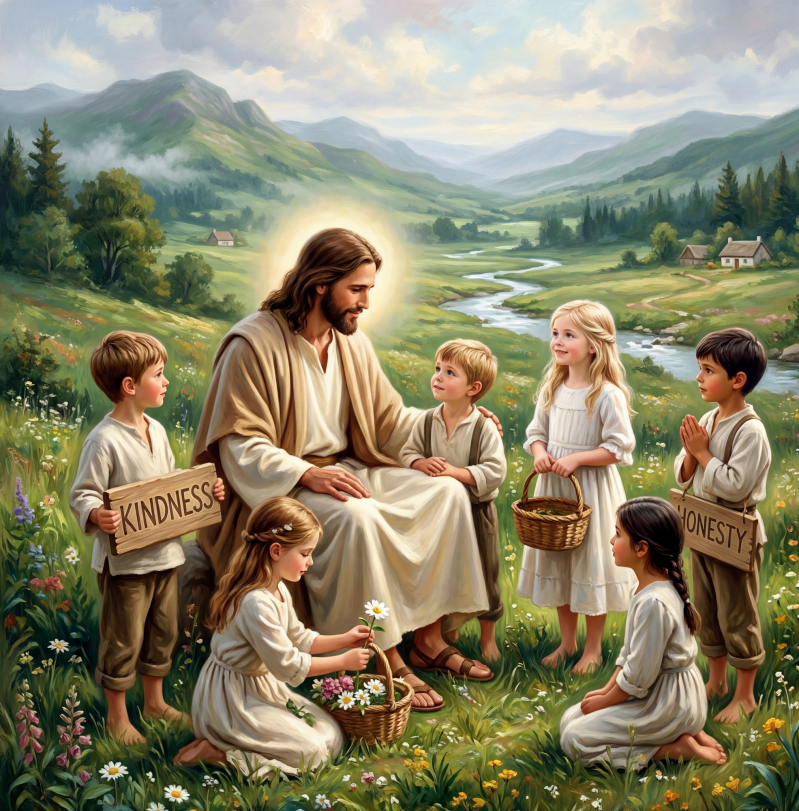

How God’s Love Inspires Children to Live in Alignment with God’s Blessing
God’s love is a beautiful gift that surrounds us every day. When children understand that they are deeply loved by God, they can begin to see themselves, others, and the world around them with kindness, gratitude, and hope.
Living in alignment with God’s blessing means choosing thoughts, words, and actions that reflect love. It means being kind to others, helping someone who needs support, telling the truth, forgiving mistakes, and being thankful for the blessings we already have.
God’s love can inspire children to use their gifts in wonderful ways. A child who loves to draw can create something that brings joy. A child who enjoys helping others can become a caring friend. A child who loves nature can learn to appreciate and protect God’s creation.
Sometimes life can be difficult, and children may feel worried, disappointed, or unsure of what to do. Remembering God’s love can help them find courage and keep going. They can pray, ask for guidance, and trust that they are never alone.
Living in God’s blessing does not mean that everything will always be perfect. Instead, it means learning to walk through life with faith, love, gratitude, courage, and compassion.
Every day gives children a new opportunity to reflect God’s love. Through a kind word, a helpful action, a grateful heart, or a loving smile, they can become a light to the people around them.
When children live with love in their hearts and faith in God, they can grow into the wonderful people God created them to be.
🤍📚🦋✨️
#GodsLove
#TheStoryCorner
#ChildrensBook
#KidsWhoCare
#KidsWithPurpose
#TheDivePlan
#HeavenOnEarth
#KidsBooks
#ConsciousKid
#PictureBook
#HeartLed
#BooksForChildren
#KidsWhoCanMakeADifference
#BrightFuture
How Gods Love Inspires a Holy Culture for Children
Gods Love, invites children to discover the beautiful truth that they are deeply loved by God and that God's love can guide the way they live, think, feel and relate to others.
When children grow up surrounded by messages of love, kindness, compassion, forgiveness, goodness, and faith, these values can become part of the culture they experience every day. Gods Love encourages families, educators, and communities to create environments where children are not only taught about God's love but are also encouraged to develope a meaningful relation with it for their own experiene of howe to live it.
A holy culture for children is one where Gods love is placed at the heart of everyday life. It is a culture where children are encouraged to treat others with kindness, care for creation, practise forgiveness, develop wisdom, and make choices that reflect goodness and compassion.
Gods Love also encourages children to recognise that their hearts matter. Through nurturing heart-based wisdom, children can begin to explore how love can influence their decisions and inspire them to become positive contributors to their families, friendsh, communities, and the wider world.
Creating a holy culture does not mean expecting children to be perfect. Instead, it means creating spaces where children can grow in love, learn from their mistakes, discover their God-given gifts, and develop into the people they were created to be.
Through its playful and uplifting message, Gods Love contributes to a vision of childhood where faith, love, creativity, compassion, and purpose can flourish together.
When God's love becomes part of the culture surrounding children, children are given the opportunity to grow in knowledge as well as in goodness, wisdom, compassion, and love.
🤍📚🦋✨️


How Gods Love Encourages Children to Embody God's Love for Heaven on Earth
Every child has the potential to become a light in the world. Through simple acts of kindness, compassion, forgiveness, and generosity, children can help create more peace, joy, and love wherever they go. Gods Love is a gentle and inspiring story that encourages children to understand that God's love is not only something they receive—it is something they can live and share with others every day.
The book invites children to discover that embodying God's love begins with the small choices they make. Choosing kind words instead of hurtful ones, helping a friend in need, showing empathy to someone who feels lonely, caring for animals and nature, and forgiving others are all ways children can express God's love in action. These everyday moments help children realise that even the smallest acts of love can have a meaningful impact.
As children begin to understand that they are deeply loved by God, they often develop a greater sense of confidence, belonging, and purpose. Knowing they are valued and cherished encourages them to treat others with the same love and respect they have received. This creates a ripple effect, where kindness inspires kindness and compassion encourages compassion.
Gods Love also reminds children that Heaven on Earth is something we can help create through the way we live. Every loving choice contributes to building homes, classrooms, playgrounds, and communities where people feel accepted, supported, and safe where the presence of Gods Love fills the atmopshere. When children learn to lead with their hearts, they become peacemakers, encouragers, and positive role models for those around them.
Parents, teachers, and conscious caregivers can use the story as an opportunity to discuss practical ways children can embody God's love each day. Whether it is sharing with a sibling, comforting a friend, expressing gratitude, or showing respect for God's creation, these simple actions help transform the story's message into lifelong habits.
By encouraging children to embody God's love in their thoughts, words, and actions, Gods Love helps nurture a generation of compassionate, heart-led individuals who recognise that connecting to Gods love and emanating that out into the world is one of the greatest gifts they can offer the world. As each child chooses love, they help to bring more hope, healing, and harmony into their families, schools, and communities—creating a little more of Heaven on Earth with every act of kindness.
🤍📚🦋✨️

How Gods Love Grows a Child in Learning How to Sit in Wise Counsel with God
In a world filled with constant noise and distractions, one of the greatest gifts we can offer children is the ability to slow down, listen, and seek God's wisdom. Gods Love gently encourages children to discover that God is always present, ready to guide, comfort, and lovingly lead them. As children grow in their relationship with God, they also learn how to "sit in wise counsel" with Him—bringing their thoughts, questions, hopes, prayers and challenges into His loving presence.
Learning to sit in wise counsel with God is not about having all the answers. It is about developing a trusting relationship in which children learn to pause, pray, reflect, and listen with open hearts. Through this practice, they begin to understand that God's love offers peace during uncertainty, courage during difficult moments, and wisdom when making important choices.
Gods Love reminds children that they are never alone. Whether they are experiencing joy, sadness, fear, or confusion, they can always turn to God in prayer, quiet reflection and upolifting devotion. These moments help children build confidence that God cares deeply for them and delights in walking beside them through every season of life.
Parents, teachers, and conscious caregivers can use the story to encourage simple spiritual practices such as quiet prayer, gratitude, reading Scripture, or spending peaceful time in nature while reflecting on God's love to feel Gods presence. Asking gentle questions like, "What do you think God is teaching you today?" or "How can we invite God's love into this situation?" helps children develop discernment and a habit of seeking God's guidance before reacting.
As children continue to practise listening with their hearts, they begin to recognise qualities that reflect God's wisdom—kindness, patience, humility, forgiveness, honesty, and compassion. These virtues become a steady foundation for the choices they make and the relationships they build.
Gods Love inspires children to understand that sitting in wise counsel with God is a lifelong journey of trust, faith, and love. By learning to seek His guidance each day, children grow into confident, compassionate, and discerning individuals who are anchored in God's presence. As they mature, they carry His love into their families, schools, friendships, and communities, becoming heart-led lights who reflect His wisdom and grace wherever they go.
🤍📚🦋✨️
The Importance of Encouraging Children to Be Heart-Led Leaders in the World
The leaders of tomorrow are the children of today. As children grow, they are not only learning skills and knowledge—they are developing the values, emotional awareness, and inner wisdom that will shape how they contribute to the world around them. Encouraging children to become heart-led leaders helps nurture a generation guided by compassion, empathy, courage, and a genuine desire to create positive change.
Being a heart-led leader is not about having power over others; it is about leading with love, kindness, integrity, and understanding. When children learn to listen to their hearts, recognise their emotions, and consider the feelings and needs of others, they develop the ability to make thoughtful choices that support themselves, their communities, and the world.
God's Love encourages children to discover the connection between love, faith, wisdom, and purposeful action. When children understand that they are deeply loved and uniquely created, they develop confidence in their own gifts and abilities. This foundation allows them to step forward with courage, share their ideas, support others, and believe that their actions can make a meaningful difference.
Heart-led leadership begins with qualities such as compassion, gratitude, forgiveness, respect, honesty, and responsibility. These qualities help children develop strong relationships, resolve challenges peacefully, and approach life with a sense of care and purpose. By nurturing these characteristics from a young age, we support children in becoming individuals who lead through example rather than simply through words.
Parents, teachers, and caregivers play an important role in encouraging heart-led leadership by creating environments where children feel valued, heard, and empowered. When adults model kindness, empathy, and faith, children learn that true leadership comes from serving others and sharing their unique gifts with the world.
At The Story Corner, we believe every child has the potential to be a positive influence. God's Love inspires children to embrace their inner wisdom, grow in compassion, and recognise that their choices, actions, and kindness have the power to create ripples of goodness.
When we encourage children to lead with their hearts, we nurture a future built on love, understanding, and hope—one where children grow into courageous individuals who use their gifts to make the world a more compassionate and beautiful place.
🤍📚🦋✨️


How God's Love Inspires the Heart of Devotion Through Musical Expression
Music has long been one of the most beautiful ways humanity connects with God. Long before children can fully express their thoughts with words, they naturally respond to melody, rhythm, and song. Through music, God's love gently awakens the heart, nurturing devotion, gratitude, joy, and a deep sense of belonging. As children sing, dance, clap, and make music, they begin to experience God's presence in ways that touch both their hearts and minds.
When children are surrounded by songs that celebrate God's unconditional love and goodness, they learn that worship is more than simply singing—it is a way of expressing love, thankfulness, and trust. Every melody becomes an opportunity to open their hearts to God's peace, allowing His love to take root within them. These joyful moments help children discover that God is always with them and is drawn even closer when they sing songs of worship and devotion with sincerity and love.
Musical expression also nurtures emotional wellbeing. Singing to God and for God cultivates a connection and an experience that is very uplifting and meaningful, singing in devotion calms the nervous system, and encourages children to express emotions in healthy and creative ways. As they lift their voices in praise, children often experience feelings of hope, comfort, courage, and happiness. Music becomes a bridge between the heart and spirit, helping children recognise that God's love is a constant source of strength through every season of life.
Group singing and musical activities further cultivate unity and compassion. Whether children are singing with family, classmates, or their church community, they experience the beauty of coming together with one heart. They learn to listen, harmonise, encourage one another, and celebrate shared faith. These experiences help develop empathy, cooperation, and a sense of community rooted in God's love.
Music also plants God's truth deeply within a child's heart. Bible verses, positive affirmations, and messages of kindness set to music are often remembered for years. These songs become lifelong companions, offering comfort during difficult moments and reminding children of God's promises wherever they go.
Parents and educators can foster this heart of devotion by creating joyful musical experiences every day. Singing together during morning routines, listening to uplifting worship music, dancing with gratitude, learning scripture songs, or encouraging children to create their own songs of thanksgiving cultivated a joyful way of living in alignment with Gods love. These musical, creative and playful moments weave the joy of God's love naturally into everyday life.
God's love inspires children to see music as a sacred gift—a beautiful language of the heart that draws them closer to the Creator. As children learn to worship through joyful musical expression, they develop hearts that are filled with gratitude, hope, compassion, and unwavering faith. Through every note they sing, they discover that God's love is always inviting them into a deeper relationship with Him, where their hearts can flourish with joy and lifelong devotion.
🤍📚🦋✨️
How Gods Love Develops a Child's Heart-Brain Coherence
Children flourish when their hearts and minds work together in harmony. While the brain helps children think, solve problems, and learn new skills, the heart plays an important role in shaping emotions, relationships, empathy, and compassion. Gods Love encourages children to nurture a loving way of thinking, feeling, and responding to the world around them.
Through its uplifting message, Gods Love reminds children that they are deeply loved, accepted, supportred and valued by God. When children feel safe and secure in love, they are often better able to regulate their emotions, remain calm during challenges, and approach others with kindness and understanding. This sense of inner security supports healthy emotional development and thoughtful decision-making.
The idea of "heart-brain coherence" is commonly used to describe a state in which a person's emotions and thinking are aligned, allowing them to respond with greater clarity, self-awareness, and emotional balance. Practices such as gratitude, compassion, prayer, mindful breathing, and quiet reflection are often associated with helping children feel more centred and emotionally settled. While research continues to explore this area, many parents and educators find these practices valuable for supporting children's overall wellbeing.
Gods Love provides a beautiful opportunity for parents, teachers, and conscious caregivers to introduce these heart-centred habits. Reading the story together can be followed by moments of gratitude, simple prayers, deep breathing, or conversations about kindness and forgiveness. These gentle practices encourage children to pause before reacting, listen to their inner values, and make choices that reflect love and wisdom.
As children repeatedly experience love, gratitude, and compassion, they begin to strengthen positive emotional habits. They learn that true strength comes not only from intelligence, rather it also comes from having a caring heart that considers the wellbeing of others. These qualities support healthy relationships, resilience, empathy, and confidence throughout life.
Ultimately, Gods Love encourages children to grow into whole and balanced individuals—using both their minds to learn and their hearts to love. By cultivating thoughtful reflection, emotional awareness, and a deep connection with God's love, the story helps lay a foundation for children to become compassionate, resilient, and heart-led individuals who bring peace, hope, and kindness into the world.
🤍📚🦋✨️


How God's Love Supports Children to Develop Self-Mastery
Self-mastery is one of the greatest gifts we can help children develop. It is the ability to understand their emotions, make wise choices, act with kindness, and remain true to their values, even when life becomes challenging. While these qualities grow through experience and guidance, they are strengthened when children know they are deeply loved and accepted.
God's Love encourages children to discover that God's love provides a secure foundation from which they can grow in confidence, resilience, and character. When children understand that their worth is not based on perfection or performance but on being loved by God, they are more likely to approach mistakes as opportunities to learn rather than reasons to feel defeated. This sense of security helps them develop perseverance, humility, and a willingness to keep growing.
As children learn about God's love, they are also encouraged to cultivate qualities such as patience, self-control, compassion, forgiveness, and heart lead creative self-expression. These virtues support healthy decision-making and help children respond thoughtfully rather than react impulsively. Over time, these everyday choices become the building blocks of self-mastery.
The story also reminds children that true strength is found through their loving relationship with God through devotion and acts of service. As they take time to pray, reflect, listen, and seek wisdom, they can develop a calm and confident heart that helps guide their thoughts, words, and actions. These simple practices encourage children to act with integrity, show empathy toward others, and navigate life's challenges with hope and faith.
Parents, carers, teachers, and faith communities all play an important role in nurturing these qualities. Through loving relationships, positive role modelling, and meaningful conversations, adults can help children understand that self-mastery is not about being perfect—it is about growing each day in wisdom, character, and love.
At its heart, God's Love reminds children that they are never alone on this journey. As they grow in faith and character, they are empowered to become compassionate, resilient, and heart-led individuals who use their unique gifts to make a positive difference in the lives of others. Through God's love, children can develop the inner strength to flourish with confidence, purpose, and grace.
🤍📚🦋✨️
How God's Love Supports the Human Maturation Process in Children
The journey of growing and maturing is one of the most important experiences a child will undertake. From their earliest years, children are learning how to understand themselves, navigate emotions, build relationships, make choices, and discover their unique place in the world. Being surrounded by love, guidance, and encouragement provides the foundation they need to grow into confident, compassionate, and resilient individuals.
God's Love explores how the presence of God's love can support children throughout this incredible journey of human maturation. When children know they are deeply loved, they develop a sense of safety and belonging that allows them to explore, learn, make mistakes, and continue growing with confidence.
God's love supports the development of the whole child—heart, mind, body, and spirit. It encourages children to become aware of their emotions, understand their thoughts, and develop the wisdom to make choices aligned with kindness, compassion, and integrity. Through this process, children begin to develop self-awareness, emotional intelligence, resilience, and a deeper understanding of who they are.
As children mature, they naturally encounter challenges that help shape their character. God's love provides a steady source of hope and strength, reminding children that difficulties are opportunities to learn, grow, and develop greater courage. Through faith, reflection, and supportive relationships, children can learn perseverance, forgiveness, patience, and the ability to respond to life's experiences with grace.
The human maturation process is not only about becoming more independent—it is also about learning how to connect meaningfully with others. God's love encourages children to cultivate empathy, generosity, respect, and compassion, helping them understand the importance of caring for themselves, others, and the world around them.
For parents, teachers, and caregivers, nurturing children in God's love creates a supportive environment where children can develop their unique gifts and grow into their fullest potential. Through loving guidance, positive role modelling, storytelling, and meaningful conversations, adults can help children build a strong foundation for lifelong growth.
At The Story Corner, God's Love was created to remind children that their journey of growth is supported by a love greater than themselves. It encourages young hearts to embrace learning, overcome challenges, develop wisdom, and become the compassionate, courageous, and purpose-filled individuals they were created to be.
Because when children grow with the understanding that they are deeply loved, they are empowered to flourish through every stage of their human journey.
🤍📚🦋✨️


How Gods Love Can Be Used as a Tool for Teachers, Parents and Conscious Caregivers
Children learn best when they feel safe, loved, and connected. While books can teach important knowledge, the most meaningful stories also nurture a child's heart. Gods Love is more than a children's book—it is a practical resource that helps teachers, parents, and conscious caregivers inspire kindness, compassion, emotional wellbeing, and positive character development.
As the rhythmic story-poem unfolds, children are invited to explore the unconditional love of God and discover how that love can guide their thoughts, choices, creative self expression and relationships. This creates natural opportunities for meaningful conversations about empathy, forgiveness, gratitude, courage, and caring for others.
For parents, Gods Love offers a beautiful way to connect with children during story time. Reading together encourages open conversations about devotion, faith, virtues and everyday acts of love, helping children feel heard, supported, and deeply valued.
Teachers and educators can incorporate the book into wellbeing lessons, circle time, or values-based learning. The story encourages respectful relationships, emotional intelligence, and classroom cultures built on kindness and inclusion. Reflective questions and creative activities inspired by the book can also help children develop communication skills, self-awareness, and confidence.
Conscious caregivers, grandparents, homeschool educators, and children's therapists can use Gods Love as a gentle conversation starter to help children understand the gift of Gods love and how coming into alignment with gods love can support children with regulating emotions, building resilience, and strengthening their connection with themselves and the world around them.
Most importantly, Gods Love reminds every child that they are deeply loved, uniquely created, and never alone. By using this story as a tool for learning and connection, adults can help nurture children who grow into compassionate, heart-led individuals capable of bringing more love, hope, and kindness into the world.
When children experience love as something they can both receive and share, they develop the confidence and wisdom to make positive choices that benefit themselves, their families, and their communities. Gods Love is an invitation for every caring adult to help plant these seeds —one story, one conversation, and one loving moment at a time.
🤍📚🦋✨️
How God's Love Encourages Children to Develop Divine Qualities and Characteristics
Every child carries within them the potential to express beautiful qualities such as kindness, compassion, courage, wisdom, patience, and love. When children are nurtured in an environment that reflects God's love, they are encouraged to discover and develop these divine qualities, allowing their unique gifts and character to blossom.
God's Love reminds children that they are created with purpose and are deeply valued. This understanding creates a foundation of self-worth and belonging, helping children recognise that they are capable of making loving choices, overcoming challenges, and sharing their light with others.
God's love encourages children to develop qualities that reflect the heart of compassion and grace. Through learning about forgiveness, children discover the importance of letting go of resentment and choosing understanding. Through kindness, they learn how small acts of love can create meaningful change. Through courage and faith, they discover the strength to face uncertainty and continue growing even when things feel difficult.
As children connect with God's goodness, they are inspired to cultivate inner qualities such as gratitude, humility, honesty, patience, generosity, and empathy. These characteristics support children in building healthy relationships, developing emotional awareness, and becoming thoughtful individuals who consider how their actions impact others.
Raising children with an awareness of God's love also supports the development of heart-led wisdom. Children learn to listen to their conscience, reflect on their choices, and act from a place of love and integrity. They begin to understand that true strength is not only found in what they can do, it is also found in the kindness, compassion, and care they bring into the world.
For parents, teachers, and caregivers, God's Love provides a beautiful opportunity to nurture these qualities through storytelling, meaningful conversations, and everyday experiences. By modelling love, patience, kindness, care, and devotional creativity adults help children see how these qualities can be embodied and shared.
At The Story Corner, we believe that stories can plant seeds of goodness that continue to grow throughout a child’s life. God's Love encourages children to embrace their unique journey, develop their divine qualities, and become compassionate, courageous, and love-filled individuals who positively influence the world around them.
Because when children know they are loved by God, they are empowered to recognise the goodness within themselves and share that goodness with others.
🤍📚🦋✨️
#GodsLove
#TheStoryCorner
#ChildrensBook
#KidsWhoCare
#KidsWithPurpose
#TheDivePlan
#HeavenOnEarth
#KidsBooks
#ConsciousKid
#PictureBook
#HeartLed
#BooksForChildren
#KidsWhoCanMakeADifference
#BrightFuture


How Gods Love Pollinates Children to Grow in Wisdom
Just as bees gently pollinate flowers, allowing gardens to flourish with beauty and new life, God's love can pollinate the hearts and minds of children, helping them grow in wisdom, compassion, and understanding. Gods Love uses this beautiful truth to encourage children to recognise that every loving thought, kind word, and caring action plants seeds that can blossom throughout their lives.
Wisdom is much more than gaining knowledge. It is learning how to make choices that reflect love, integrity, humility, and kindness. As children experience God's unconditional love, they begin to develop an inner compass that helps guide their decisions with empathy and discernment. They learn that true wisdom comes from living with a heart that seeks what is good, just, and life-giving.
Like a flower that needs sunlight, water, and healthy soil to thrive, children flourish when they are nurtured by love, encouragement, and positive role models. Through meaningful storytelling, Gods Love reminds children that they are deeply loved by God and that His love gives them the confidence to grow into thoughtful, courageous, and compassionate individuals.
Parents, teachers, and conscious caregivers can use the story as a springboard for conversations about what wisdom looks like in everyday life. Children can be encouraged to ask themselves questions such as, "What is the loving choice?" "How can I help someone today?" or "How can I show kindness when someone is having a difficult day?" These simple reflections help children practise wisdom through their daily actions.
Just as one bee can pollinate hundreds of flowers, one act of love can inspire countless others. A child who chooses kindness can brighten a classroom, strengthen a friendship, comfort someone who is hurting, or inspire others to do the same. In this way, God's love spreads from one heart to another, creating a ripple effect that reaches far beyond what we can see.
Gods Love encourages children to become living expressions of God's love by allowing His wisdom to grow within them each day. As these seeds of wisdom continue to blossom, children become heart-led individuals who bring hope, peace, and compassion to their families, schools, and communities. Like a flourishing garden filled with vibrant flowers, their lives become a beautiful reflection of the love that first nurtured them.
🤍📚🦋✨️
How God's Love Supports Positive Behaviour Guidance in Children
Supporting children to develop positive behaviours is not only about teaching rules and expectations—it is about helping children understand themselves, their emotions, their choices, and the impact they have on others. When children are guided through the foundation of love, kindness, and patience, they are more likely to develop self-awareness, empathy, and a desire to make positive choices.
God's Love highlights the importance of nurturing children through connection, grace, and the encouragement of creative expression in devotion to Gods love. When children experience God's unconditional love, they begin to understand that they are valued and accepted, even when they make mistakes. This creates a sense of emotional safety where children can reflect, learn, and grow without feeling defined by their challenges or behaviours.
Positive behaviour guidance is strengthened when children are supported to understand the reasons behind their emotions and actions. God's love encourages children to develop qualities such as patience, kindness, forgiveness, self-control, and care. These qualities help children learn how to manage big feelings, resolve conflicts, show respect, and make choices that reflect care for themselves and others.
For parents, teachers, and caregivers, leading with God's love means approaching children with curiosity, empathy, and understanding. Instead of focusing only on correcting behaviour, adults can guide children to recognise their feelings, understand consequences, repair relationships, and develop the skills needed to navigate life’s experiences with wisdom and confidence.
Through loving guidance, children learn that mistakes are opportunities for growth. They discover that forgiveness allows relationships to heal, that kindness creates connection, and that their choices have the power to bring goodness into the world around them.
God's Love provides a meaningful resource for families, educators, and caregivers to explore these important lessons with children. Through storytelling and reflection, children are encouraged to develop goodness, kindness and care within themselves through the nourishment of Gods Love with a creative heart-led approach when interacting with others.
At The Story Corner, we believe that positive behaviour guidance begins with connection. When children feel loved, understood, and supported, they are empowered to grow into respectful, caring, and compassionate individuals who reflect God's goodness through their thoughts, words, and actions.
Because every child flourishes when they are guided and support by Gods Love.
🤍📚🦋✨️


Our Latest Children's Book: God's Love Supports Children to Learn & Grow Through God's Goodness
At The Story Corner, we believe that every child deserves stories that fill their heart with hope, inspire their imagination, and remind them of how deeply they are loved and how the goodness with in them can grow in Gods love. Our latest children's book, God's Love, has been lovingly created to do just that.
This joyful and uplifting story invites children on a heartwarming journey of devotion, encouraging them to discover the goodness of God in both the everyday moments and the challenges they encounter as they grow. Through playful storytelling and meaningful messages, children are reminded that God's love is always present—guiding, strengthening, comforting, and encouraging them every step of the way.
As young readers explore the story, they are introduced to timeless values such as kindness, care, patience, self-control and creative expression. These qualities help children build strong character, develop healthy relationships, and grow in confidence as they learn to make thoughtful, loving choices throughout their lives.
God's Love also encourages children to recognise that God's goodness is not only something to receive but something to reflect. As they experience love, grace, and kindness, they are inspired to share these same gifts with their families, friends, schools, and communities, becoming positive influences wherever they go.
Perfect for bedtime reading, family devotionals, classrooms, faith-based schools, and children's ministry, this beautifully written story creates opportunities for meaningful conversations about faith, identity, purpose, and the enduring goodness of God.
Our hope is that God's Love becomes a treasured family favourite—a story that children return to time and again, reminding them to lean into the power of Gods love to support them as a ovingly guided throughout life's adventures for their success.
Because when children grow in the knowledge of God's goodness, they can face the future with faith, courage, and the confidence to become heart led leaders in the world.
🤍📚🦋✨️
How God's Love Supports the Overall Wellbeing in Children
A child’s wellbeing is nurtured when they feel safe, valued, connected, and deeply loved. God's Love shares the powerful message that God's love can provide children with a strong foundation of faith, belonging, and inner confidence as they learn, grow, and navigate the adventures of life.
When children understand that they are unconditionally loved by God, they can develop a greater sense of security and self-worth. This loving foundation helps children feel supported during moments of uncertainty, challenges, and change, reminding them that they are never alone and that they always have a source of comfort, guidance, and hope.
God's love supports children’s emotional wellbeing by encouraging them to recognise and express their feelings with compassion and understanding. As they learn about forgiveness, patience, kindness, and grace, children develop important emotional skills that help them build resilience, manage challenges, and create healthier relationships with themselves and others.
Spiritually, God's love helps children develop a deeper sense of purpose, connection, and gratitude. It encourages them to reflect on their unique gifts, listen to their inner wisdom, and discover how they can share love, kindness, and compassion with the world around them.
Because of God's Love also supports the development of positive character traits that contribute to lifelong wellbeing, including courage, empathy, generosity, integrity, and perseverance. These qualities empower children to make thoughtful choices, overcome obstacles, and approach life with faith and confidence.
For parents, educators, and caregivers, this story provides an opportunity to nurture meaningful conversations about love, faith, emotions, values, and personal growth. By creating spaces where children feel heard, accepted, and encouraged, adults help children build a strong foundation for emotional, social, and spiritual wellbeing.
At The Story Corner, we believe that stories have the ability to inspire hearts and support children’s growth in beautiful ways. God's Love is a reminder that every child is precious, uniquely created, and surrounded by a love that can guide them through every step of their journey.
When children know they are loved by God, they are empowered to grow with confidence, compassion, resilience, and the belief that they have a meaningful purpose in the world.
🤍📚🦋✨️

The Importance of Raising Children in God's Love
Every child deserves to grow up with a deep sense of love, belonging, and purpose. Raising children in God's love provides them with a strong foundation that supports their emotional wellbeing, spiritual growth, character development, and understanding of their place in the world.
When children experience God's love, they learn that they are valued not because of what they achieve or how they compare to others, but because they are uniquely created and deeply cherished. This sense of unconditional love helps children develop confidence, resilience, and inner security as they navigate the joys, challenges, and self discoveries of growing up.
God's love teaches children important values that shape the way they see themselves and interact with others. Through learning about patience, kindness and care children begin to understand that love is not only something they receive—it is something they can share through their art, their words and actions.
A child who grows up knowing God's love is supported in developing a strong moral compass and a compassionate heart. They learn that challenges and mistakes are opportunities for growth, that forgiveness creates healing, and that courage and faith can help them move through difficult moments with hope and trust.
For parents, teachers, and caregivers, nurturing children in God's love creates opportunities to build meaningful connections and guide children with empathy, understanding, and grace. Through stories, conversations, prayer, reflection, and positive role modelling, adults can help children discover their own relationship with faith and the goodness that exists within themselves and others.
\God's Love was created to inspire these important conversations and remind children that they are never alone on their journey. It encourages young hearts to grow with faith, wisdom, compassion, and confidence as they discover who they are and the unique gifts they have to offer the world.
At The Story Corner, we believe that when children are raised with love, faith, and encouragement, they are empowered to become kind, courageous, and creatvive heart-led individuals who bring hope and light into their families, communities, and the world.
Because the greatest gift we can give children is the understanding that they are deeply loved—and that love has the power to guide and inspire them to keep blossoming and blooming through what ever season and cycle of life they are going through.
🤍📚🦋✨️


Why God's Love Matters
God's love is one of the greatest gifts a child can ever discover. It is a love that is unconditional, unwavering, and everlasting—a love that remains constant through every joy, every challenge, and every season of life. When children grow up knowing they are deeply loved by God, they develop a strong foundation of security, hope, and purpose that can guide them throughout their lives.
In a world that can often feel uncertain and overwhelming, children need reminders that their worth is not determined by their achievements, appearance, or the opinions of others. Their true identity is found in being wonderfully created and deeply loved by God. This understanding can help children approach life with confidence, resilience, and the courage to keep going, even when they encounter difficulties.
God's love also shapes the way children relate to others. As they experience forgiveness, grace, compassion, and kindness, they begin to extend those same qualities to their family, friends, and community. They learn that true strength is expressed through humility, empathy, generosity, and a willingness to care for those around them.
When children understand God's love, they are encouraged to make choices that reflect integrity, wisdom, and compassion. They discover that even when they make mistakes, they can learn, grow, seek forgiveness, and begin again. This gives them the confidence to embrace life's lessons without fear, knowing they are loved every step of the way.
At The Story Corner, we believe stories can help nurture both faith and character. God's Love was written to remind children that God's love is not simply something they hear about—it is something they can experience, trust, and carry with them wherever they go. It is a love that brings comfort in difficult times, joy in everyday moments, and hope for the future.
When children know they are loved by God, they are empowered to love themselves with humility, care for others with compassion, and live with courage, kindness, and purpose. God's love becomes more than a comforting idea—it becomes the foundation from which they learn, grow, and shine their unique light into the world, in making the world a better place.
🤍📚🦋✨️
Who God's Love Is For
God's Love was written for every child who deserves to know they are deeply loved, wonderfully created, and never alone. It is a story that gently reminds young hearts that God's love is constant through every season of life, offering comfort, strength, hope, and guidance as they learn and grow.
This book is ideal for children who are beginning to discover who they are and the unique gifts they have to share with the world. Through playful storytelling and uplifting messages, it encourages young readers to develop qualities such as kindness, patientce, compassion, gratitude, resilience, and self-control while building a strong foundation of love and belonging.
God's Love is also a valuable resource for parents, grandparents, carers, teachers, homeschool families, children's ministry leaders, and faith-based schools who wish to nurture children's emotional, spiritual, and character development. The story creates meaningful opportunities for conversations about God's unconditional love, making wise choices, overcoming challenges, and living with purpose.
Whether read together as a bedtime story, shared in a classroom, explored during Sunday school, or enjoyed during quiet family moments, this book offers gentle encouragement for children to trust that they are never facing life's adventures alone. It reminds them that God's love can bring peace in times of uncertainty, courage in moments of fear, and joy in everyday life.
At its heart, God's Love is for every family seeking stories that inspire goodness, strengthen relationships, and encourage children to grow into creative, devotional and confident heart-led leaders in the world. It is a celebration of the truth that every child is precious, deeply valued, and uniquely created with purpose.
Our hope is that this story becomes more than a book—it becomes a treasured family keepsake, a conversation starter, and a lasting reminder that God's love is a gift that children can carry with them throughout their lives, sharing that same love with others wherever they go.
🤍📚🦋✨️


Why I Wrote God's Love
Every child deserves to grow up knowing one simple, life-changing truth: they are deeply loved.
I wrote God's Love because I wanted to create a story that reminds children they are never alone. In a world where young people can experience uncertainty, fear, disappointment, and self-doubt, I wanted to offer a message of hope that points them back to the unwavering love of God—a love that remains constant through every season of life.
As children grow, they begin discovering who they are and how they relate to the world around them. My hope is that this book encourages them to build their identity not on comparison, achievement, or the opinions of others, but on the secure foundation of God's unconditional love. When children know they are loved exactly as they are, they are better equipped to face challenges with courage, extend compassion to others, and believe in God's unique purpose for their lives.
Writing this story was also inspired by my belief that children's books can shape hearts as much as they shape minds. Stories have the ability to plant seeds of devotion, kindness, creativity, resilience, and hope that continue to grow long after the final page has been turned. I wanted God's Love to be one of those stories—a book that families would return to again and again, finding encouragement and meaningful conversations each time they read it together.
Throughout the story, children are invited to recognise that God's love is not only something to receive, rather it is also something to share. As they grow in faith, compassion and heart led leadership, wisdom, and courage, they can become a source of light and inspiration in their homes, schools, friendship circles, and communities.
It is my prayer that every child who reads Because of God's Love will come away with a deeper sense of peace, confidence, and belonging. More than anything, I hope they discover that they are wonderfully created, deeply cherished, and capable of making a beautiful difference in the world because they are loved by God.
Thank you for joining me on this journey. I hope this story becomes a treasured part of your family's bookshelf and a gentle reminder that God's love is always present—guiding, strengthening, and walking beside us through every adventure life brings.
🤍📚🦋✨️
Every child enters this world carrying a light...
A heart filled with wonder...
A beautiful imagination...
And the potential to become something extraordinary.
In a world where children are exposed to a lot of external influence from modern culture and media without real substance
What if the first thing to influence a child
Was the the love of God
A love that never leaves them.
A love that gives them courage when they feel afraid...
Hope when life feels uncertain...
And a peace deep within their hearts.
Introducing God's Love...
A beautifully illustrated children's book that share a playful rhythmic and heartfelt story, the supports children to be inspired by God's love that is all around them...
Bright like the sunshine...
Gentle as a feather...
Vast as the ocean...
And always with them through every adventure.
As each page unfolds, children are encouraged to develop devotion, kindness, patience, compassion, creativity, courage, self-control, and the wisdom to follow the loving guidance within their hearts.
More than simply a story...
God's Love gently nurtures emotional wellbeing, spiritual connection, heart-led leadership, and a child's confidence to become the person God created them to be.
It reminds every child that they are deeply loved...
Wonderfully made...
Never alone...
And capable of making a beautiful difference in the world.
Perfect for families, grandparents, classrooms, churches, Christian schools, and bedtime reading...
God's Love plants seeds of faith that children can carry with them for a lifetime.
Because when children grow in God's love...
They learn to love themselves...
Love others...
Care for the earth and all of Gods creation…
And become a light that shines brightly wherever they go.
God's Love
A timeless story that inspires children to live with faith, kindness, courage, creativity, and love.
Available now from The Story Corner.
And all leading online platforms
Plant the seed of God's love in your child's heart today.
🤍📚🦋✨️


Book Launch Announcement
The Story Corner Proudly Presents: God's Love
The Story Corner is delighted to announce the upcoming release of its newest children's book, God's Love—a heartwarming story that celebrates the boundless love of God and the powerful role that faith can play in a child's journey through life.
Created for children and families, God's Love is a fun, engaging, and uplifting story that reminds young readers they are deeply loved, wonderfully created, and always supported by Gods love. Through playful storytelling and meaningful life lessons, children are encouraged to discover that God's love is a constant source of comfort, courage, wisdom, and strength, helping them navigate their way through life's adventures with confidence and hope.
Every child experiences moments of joy, curiosity, uncertainty, and challenge as they grow. God's Love gently reassures childrenthat through the power of Gods Love they can over come challenge and that Gods Love supports children to grow in confidence as they blossom into being their best.
More than a story, this book is an invitation for children to grow from the inside out in Gods Love. It encourages young readers to develop paients, kindness, care and self-control when making decisions and interacting with others that reflects Gods wisdom. Through simple yet meaningful messages, children are inspired to cultivate a deeper connection between their hearts and minds, nurturing empathy, thoughtful decision-making, and the confidence to positively influence the world around them.
At The Story Corner, we believe stories have the power to shape hearts, spark meaningful conversations, and plant seeds that flourish throughout a lifetime. God's Love has been thoughtfully created to support parents, grandparents, teachers, carers, children's ministry leaders, and homeschool families as they nurture children's emotional, spiritual, and character development.
Whether shared as a bedtime story, explored in classrooms, or enjoyed together as a family, this beautifully written book invites children to embrace the truth that they are loved beyond measure and capable of sharing that love with others through their words, choices, and actions.
This exciting new release continues The Story Corner's mission of creating inspiring children's books that nurture emotional wellbeing, positive values, faith, curiosity, and personal growth through engaging storytelling.
We are thrilled to welcome God's Love to The Story Corner collection and are excited for children and families around the world to be inspired by it.
Stay connected with The Story Corner for exclusive previews, behind-the-scenes updates, and the official launch date.
Together, let's inspire the next generation to live with faith, hope, compassion, and love—because every child deserves to know they are deeply loved and wonderfully made.
Now available from The Story Corner.
“Gods Love will inspire the expression of your creative heart” 🌟
Pick up a copy today:
🤍📚🦋✨️
Something exciting is coming... ✨
God's Love, the lates children's book from The Story Corner, is almost here! Join us on a heartwarming adventure that celebrates God's unconditional love and inspires children to grow in kindness, patience, faith, and creative heart-led wisdom.
Stay tuned for the official book reveal, release date, sneak peeks, and exciting launch announcements.
We cannot wait to share God's Love with you and your family.
Because every child deserves to know they are deeply loved, wonderfully guided, and capable of shining their unique light into the world.
Coming Soon from The Story Corner.
💛📖


Something exciting is coming… ✨The Story Corner has a new release coming… watch this space… ✨💛📖
AVOS: A Practical Framework for Supporting Children With Positive Behaviour Guidance
Children communicate through their behaviour long before they have the words to express their thoughts and emotions. Rather than viewing challenging behaviour as something to control or punish, conscious parenting encourages us to see it as an opportunity to understand, connect, and guide. One practical approach that supports this philosophy is the AVOS framework—a simple yet effective method that helps parents and educators respond with empathy while encouraging emotional growth and positive behaviour.
AVOS stands for Acknowledge, Validate, Observe, and Support. These four steps provide a compassionate roadmap for navigating difficult moments while strengthening the parent-child relationship.
A – Acknowledge
The first step is to acknowledge the child's experience. This means noticing what is happening without criticism or judgement. Children feel seen and valued when adults recognise their emotions and experiences rather than dismissing them.
For example, you might say, "I can see you're feeling upset," or "It looks like you're finding this really difficult."Acknowledging emotions creates emotional safety and helps children feel understood.
V – Validate
Validation communicates that a child's feelings are real and acceptable, even if their behaviour needs guidance. It does not mean agreeing with inappropriate actions; it means accepting that the emotion behind the behaviour is genuine.
You might say, "It's okay to feel angry when things don't go your way," or "I understand why you feel disappointed."When children feel validated, they are often more willing to calm down and listen to guidance.
O – Observe
Observation involves becoming curious about what may be driving the behaviour. Instead of reacting to the behaviour itself, parents gently consider the underlying need or emotion.
Ask yourself questions such as:
-
Is my child tired, hungry, overwhelmed, or overstimulated?
-
Are they seeking connection or reassurance?
-
Is there something they are struggling to communicate?
By observing with curiosity rather than judgement, parents can respond to the root cause instead of simply addressing the behaviour.
S – Support
The final step is to support the child in finding a positive way forward. Once they feel calm and connected, parents can guide them towards healthy ways of expressing emotions, solving problems, or repairing relationships by inviting the child to come up with a solution or offering a suggestion.
Support might include taking deep breaths together, offering a comforting hug, brainstorming solutions, or practising calming techniques. It may also involve setting clear and respectful boundaries that help children understand expectations while maintaining a sense of safety and connection.
Why AVOS Works
The AVOS framework shifts the focus from punishment to teaching. Instead of asking, "How do I stop this behaviour?"parents begin asking, "What is my child trying to communicate, and how can I help them learn?" This compassionate approach nurtures emotional intelligence, resilience, empathy, and self-regulation—skills that children will carry throughout their lives.
Every challenging moment becomes an opportunity to strengthen trust, deepen connection, and teach valuable life skills. As children consistently experience being acknowledged, validated, understood, and supported, they develop greater confidence in managing their emotions and making positive choices.
Conscious parenting is not about perfection; it is about responding with presence and compassion. The AVOS framework offers a simple yet powerful way to guide children's behaviour while fostering a relationship built on trust, respect, and unconditional love.
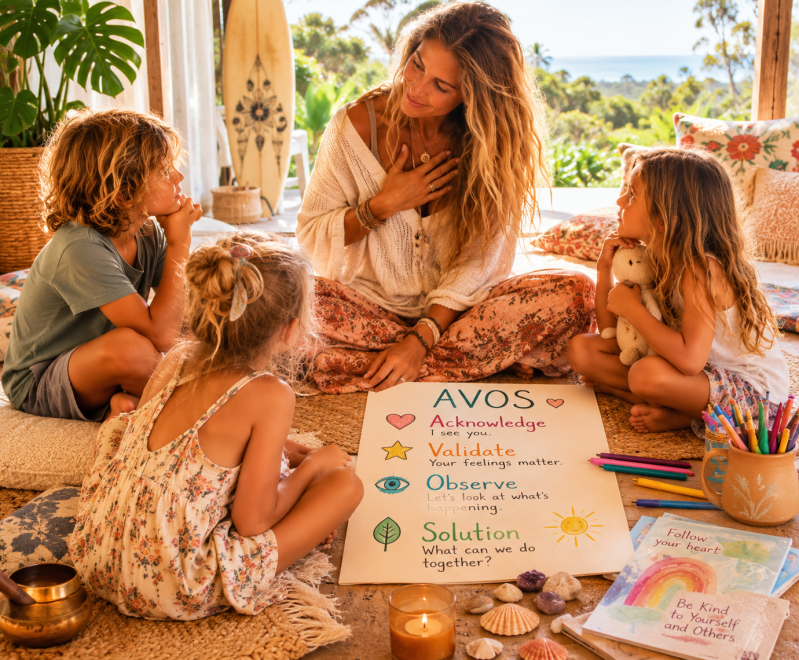
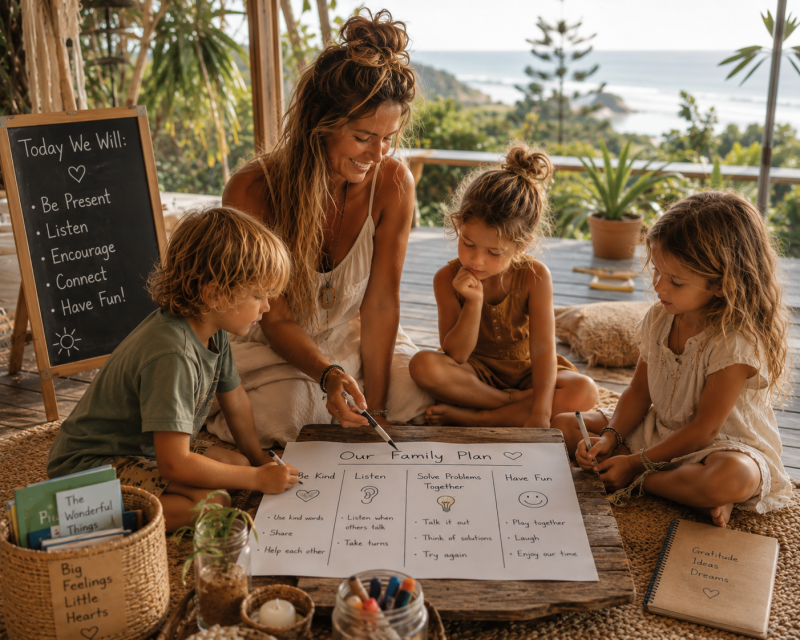
Practical Tools and Exercises: Providing Actionable Strategies, Activities, and Reflective Exercises for Parents to Practice Conscious Parenting in Everyday Life
Conscious parenting is not about being a perfect parent—it is about being present, intentional, and committed to growing alongside your child. Every interaction offers an opportunity to strengthen connection, build trust, and nurture your child's emotional wellbeing. By weaving small, mindful practices into everyday life, parents can create a loving environment where children feel safe, valued, and empowered to thrive.
Pause Before You Respond
When emotions run high, take a moment to pause before reacting. A few slow breaths can help you respond with patience rather than frustration. Ask yourself, "What is my child trying to communicate through their behaviour?" This simple shift encourages connection over control.
Create Daily Moments of Connection
Spend a few minutes each day checking in with your child. Ask questions such as, "How are you feeling today?" or "What was the best part of your day?" Listening without judgement helps children feel heard, strengthens trust, and supports emotional intelligence.
Practice Active Listening
Give your child your full attention when they speak. Make eye contact, listen without interrupting, and reflect back what you hear. Feeling understood helps children regulate their emotions and builds confidence in expressing themselves.
Encourage Gratitude and Mindfulness
Simple family rituals, such as sharing three things you are grateful for each evening or taking a mindful walk in nature, help children develop appreciation, presence, and emotional resilience. These practices encourage children to notice the beauty in everyday life and cultivate a positive mindset.
Reflect on Your Own Growth
Conscious parenting begins with self-awareness. Challenging moments with your child can often reveal areas for your own healing and growth. Journaling or asking yourself questions like, "What triggered me today, and how could I respond differently next time?" can help you become a calmer and more intentional parent.
Repair and Reconnect
Every family experiences moments of conflict. What matters most is the willingness to repair. Offering a sincere apology when needed teaches children accountability, empathy, and that relationships can grow stronger through honesty and compassion.
Lead by Example
Children learn most from what they observe. By modelling kindness, healthy boundaries, gratitude, self-care, and emotional regulation, parents provide powerful lessons that children naturally carry into their own lives.
A Journey of Growth
Conscious parenting is not about getting everything right—it is about choosing connection, compassion, and presence each day. Small, consistent acts of love, listening, and self-reflection create a strong foundation for children to develop confidence, resilience, empathy, and emotional wellbeing.
As parents continue to grow alongside their children, they nurture not only the next generation but also a family culture rooted in love, respect, and wholehearted connection.
How Conscious Parents Can Reflect on Their Own Triggers and Patterns for Growth as They Guide Their Children Through the Human Maturation Process
Conscious parenting is more than teaching children how to navigate life—it is also a journey of personal growth for parents. As children move through the natural stages of human development, they often awaken emotions, memories, and patterns within us that invite deeper reflection and healing.
Every Trigger Is an Invitation
Every challenging moment can become an opportunity to pause and ask, "Why has this situation triggered such a strong response in me?" Rather than reacting automatically, conscious parents choose curiosity over judgement. They recognise that many emotional triggers are rooted in past experiences, unmet needs, or beliefs formed during their own childhood. By bringing awareness to these patterns, parents create space to respond with greater patience, compassion, and understanding.
Conscious parenting encourages us to pause and gently ask ourselves:
- Why has this situation affected me so deeply?
- What emotion is rising within me?
- Is this reminding me of something from my own childhood?
- What unmet need or unresolved wound might be asking for my attention?
Each challenge becomes an invitation to pause.
Each trigger becomes an opportunity to grow.
Each moment of connection becomes a seed planted for future generations.
Children Mirror What Needs Healing
Children are not only learning from what we teach—they are learning from who we are. They observe how we regulate our emotions, navigate conflict, communicate respectfully, and repair relationships when mistakes are made. When parents model self-awareness and emotional responsibility, they show children that growth is a lifelong process and that it is safe to acknowledge, express, and work through difficult feelings.
Children naturally reflect aspects of ourselves that we may not consciously recognise. Their emotions, independence, curiosity, sensitivity, or even defiance can shine a light on areas where we have developed protective patterns throughout our own lives.
Respond Rather Than React
Reaction often comes from unconscious patterns shaped by past experiences. Response comes from presence.
Reflecting on our own triggers also helps break generational cycles. Instead of repeating patterns of criticism, control, or emotional disconnection, conscious parents can choose empathy, connection, and respectful guidance. This creates a home where children feel emotionally safe, valued, and supported as they develop confidence, resilience, and emotional intelligence.
Becoming a Safe Emotional Anchor
Children are still developing the parts of their brain responsible for emotional regulation, impulse control, and reasoning. They naturally look to trusted adults to help co-regulate their nervous systems.
Embracing Imperfection
No parent responds perfectly all the time, and perfection is not the goal. What matters most is a willingness to learn, reflect, apologise when necessary, and continue growing. Every moment of awareness strengthens the bond between parent and child while nurturing a family culture built on trust, respect, and unconditional love.
As we guide our children through the human maturation process, we are also invited to mature ourselves. Through conscious reflection, compassion, and presence, parenting becomes not only a gift to our children but also a profound path of healing, transformation, and growth for generations to come.

How to Foster Deep, Meaningful Connections Between Parent and Child to Build Trust and Mutual Respect
The relationship between a parent and child is one of the most influential bonds in a person's life. It provides the foundation upon which children develop their sense of safety, self-worth, emotional intelligence, and ability to form healthy relationships with others. While every family experiences challenges, it is the quality of connection—not perfection—that nurtures a lifelong bond built on trust, love, and mutual respect.
Deep, meaningful connection is created through everyday moments of presence, understanding, and genuine care. When children consistently feel seen, heard, accepted, and valued, they naturally develop confidence, resilience, and a secure sense of belonging.
Be Fully Present
One of the greatest gifts a parent can offer is their full attention. In today's fast-paced world, distractions are everywhere, making genuine presence more valuable than ever.
Children know when they have your undivided attention. Putting away phones, making eye contact, listening without interruption, and engaging wholeheartedly in conversation communicates a powerful message:
"You matter. I enjoy being with you."
Even ten to fifteen minutes of intentional one-on-one connection each day can significantly strengthen the parent-child relationship.
Listen to Understand
Children don't always need immediate solutions—they need to feel understood.
Active listening involves slowing down, allowing children to fully express themselves, and acknowledging their emotions without judgement. Rather than rushing to fix a problem, parents can respond with empathy:
"That sounds really upsetting."
"I can understand why you felt disappointed."
"Thank you for sharing that with me."
When children know their feelings are welcomed, they become more willing to communicate openly throughout their lives.
Create Emotional Safety
Trust grows when children know they can express themselves honestly without fear of criticism, shame, or rejection.
Creating emotional safety means accepting all emotions while gently guiding behaviours. Feelings are never wrong—they simply provide information about a child's inner world.
Parents can model emotional intelligence by naming emotions, remaining calm during difficult moments, and demonstrating healthy ways to cope with frustration, sadness, excitement, or disappointment.
When children feel emotionally safe, they learn that vulnerability is a strength rather than something to hide.
Respect Your Child as an Individual
Every child has their own unique personality, interests, learning style, and pace of development.
Rather than expecting children to become who we imagine they should be, conscious parenting invites us to discover who they already are.
Respecting their individuality includes:
-
Encouraging their passions.
-
Honouring their opinions.
-
Allowing for them the authony to choose (given they are age-appropriate choices)
-
Celebrating their unique gifts.
-
Supporting their natural curiosity.
Children who feel accepted for who they are develop strong self-esteem and greater confidence in their authentic identity.
Build Trust Through Consistency
Trust isn't built through grand gestures—it develops through consistent, dependable actions over time.
Children thrive when they know their parents are emotionally reliable.
This includes:
-
Following through on promises.
-
Maintaining healthy routines.
-
Being honest.
-
Admitting mistakes.
-
Offering reassurance during uncertainty.
When parents apologise sincerely after making mistakes, they demonstrate humility and show children that healthy relationships include repair as well as connection.
Spend Quality Time Together
Meaningful relationships grow through shared experiences.
Quality time doesn't have to be expensive or elaborate. Often, the simplest moments create the strongest memories.
Ideas include:
-
Reading books together.
-
Cooking family meals.
-
Nature walks.
-
Gardening.
-
Playing board games.
-
Creating art.
-
Building cubbies.
-
Dancing together.
-
Sharing bedtime gratitude.
-
Exploring new places.
These shared experiences become the threads that weave lasting family connection.
Encourage Open Communication
Children are more likely to share their thoughts when they know they won't be judged or dismissed.
Ask open-ended questions that encourage conversation:
-
"What was the best part of your day?"
-
"What made you smile today?"
-
"What was something challenging?"
-
"How did that make you feel?"
-
"What do you think would help next time?"
Curiosity creates conversation, while criticism often creates silence.
Practice Mutual Respect
Respect is not something children simply learn through instruction—it is something they experience.
Parents model respectful relationships by speaking kindly, listening attentively, acknowledging feelings, and involving children in age-appropriate decisions.
Mutual respect teaches children that every family member has value, thoughts worth hearing, and feelings worth considering.
Children who grow up experiencing respect are more likely to extend that same respect to others.
Celebrate Connection Over Perfection
No parent is perfect, nor should they strive to be.
Children benefit far more from authentic parents who are willing to learn, grow, apologise, and reconnect than from parents trying to appear flawless.
Moments of repair after conflict often strengthen relationships even more than avoiding conflict altogether.
Every hug after an argument, every heartfelt apology, every shared laugh, and every quiet moment of listening reinforces the message:
"Our relationship matters."
Growing Together
Parenting is a journey of growing alongside our children. As we nurture trust, compassion, empathy, and mutual respect, we create a family environment where every member feels valued, safe, and deeply loved.
The strongest parent-child relationships are not built in extraordinary moments—they are cultivated through thousands of ordinary acts of kindness, patience, presence, and unconditional love.
When connection becomes the foundation of parenting, trust flourishes, communication deepens, and children develop the confidence to become compassionate, resilient, and emotionally healthy adults who carry these gifts into every relationship throughout their lives.
How to Embody Conscious Parenting as a Way of Being
Conscious parenting is more than a parenting philosophy—it is a way of living, relating, and growing alongside our children. It is not about striving to become the perfect parent or having all the answers. Instead, it is about choosing to show up each day with awareness, compassion, and a willingness to learn. When we embody conscious parenting, we create an environment where both parents and children can thrive emotionally, socially, and spiritually.
The journey begins with recognising that our children are not simply learning from what we teach them—they are learning from who we are. They observe how we respond to challenges, manage our emotions, treat others, and care for ourselves. Our actions become their greatest lessons. When we model patience, kindness, honesty, and respect, we invite our children to naturally develop these qualities within themselves.
One of the most powerful ways to embody conscious parenting is through cultivating self-awareness. Parenting often shines a light on our own childhood experiences, beliefs, and emotional triggers. Instead of reacting impulsively during difficult moments, conscious parenting encourages us to pause and ask ourselves, "What am I feeling right now?" and "How can I respond in a way that reflects my values?" This pause creates space for thoughtful responses rather than automatic reactions, allowing difficult moments to become opportunities for growth and connection.
Practising deep listening is another essential part of conscious parenting. Children long to feel seen, heard, and understood. This means listening not only to their words but also to the emotions and needs beneath them. Rather than immediately correcting, solving, or dismissing their feelings, we can acknowledge them with empathy. Simple responses such as, "I can see you're feeling disappointed," or "That sounds really hard," help children feel emotionally safe and strengthen the trust within the relationship.
Conscious parenting also invites us to see behaviour as communication. Every tantrum, tear, or challenging behaviour is often an expression of an unmet need, overwhelming emotion, or developing skill. Instead of asking, "How do I stop this behaviour?" we can gently ask, "What is my child trying to communicate?" Approaching behaviour with curiosity rather than judgment helps us respond with compassion while still providing guidance and appropriate boundaries.
Healthy boundaries are an important part of conscious parenting. Compassion does not mean saying "yes" to everything. Children feel secure when boundaries are clear, respectful, and consistent. When limits are communicated with warmth rather than fear or shame, children learn responsibility, self-discipline, and respect while still feeling deeply loved. Boundaries become opportunities to teach rather than punish.
Equally important is nurturing our own wellbeing. Parents often give so much of themselves that their own needs quietly fade into the background. Yet caring for ourselves is not selfish—it is essential. Taking time to rest, enjoy creative hobbies, spend time in nature, nourish our bodies, and connect with supportive relationships allows us to parent from a place of fullness rather than exhaustion. Children also benefit from seeing healthy self-care modelled in everyday life.
Creating moments of mindful connection strengthens family relationships. Reading together, sharing meals, creating art, exploring nature, gardening, playing games, or simply sitting together without distractions helps build lasting memories and a deep sense of belonging. These everyday moments remind children that they are valued not because of what they achieve, but simply because they are loved.
Perhaps one of the most beautiful aspects of conscious parenting is embracing imperfection. Every parent will have moments of frustration, make mistakes, or wish they had responded differently. Conscious parenting is not about avoiding these moments—it is about repairing them. A sincere apology, an honest conversation, and a willingness to reconnect teach children that mistakes are a natural part of being human and that relationships can grow stronger through understanding and forgiveness.
Gratitude can also become a daily practice within the family. Taking a few moments each day to share something you appreciate about one another fosters a positive home environment and helps children notice the beauty, kindness, and abundance already present in their lives. Gratitude shifts our focus from what is lacking to what is flourishing.
Ultimately, embodying conscious parenting is about choosing love over fear, connection over control, and curiosity over criticism. It is a lifelong practice of growing alongside our children, learning from each experience, and recognising that parenting is as much about our own personal development as it is about raising the next generation.
When we embrace conscious parenting as a way of being, we create more than a peaceful home—we cultivate a family culture rooted in empathy, trust, resilience, and respect. These values become the foundation upon which children develop emotional intelligence, confidence, and compassion. In doing so, we plant seeds that will continue to blossom for generations, nurturing not only our own families but also the communities and world our children will one day help shape.
The Importance of Supporting Children to Develop Healthy Boundaries with Compassion
Healthy boundaries are an essential life skill that supports children's emotional wellbeing, confidence, safety, and ability to form positive relationships. Boundaries help children understand their own needs, feelings, and personal limits while also learning to respect the needs and feelings of others. When taught with compassion, boundaries become a powerful tool for developing emotional intelligence, self-respect, and empathy.
Many adults associate boundaries with saying "no," but healthy boundaries are much more than that. They help children recognise that they have a voice, that their feelings matter, and that they have the right to feel safe and respected. At the same time, children learn that others deserve the same consideration and respect.
Supporting children to develop healthy boundaries begins with creating environments where they feel heard and valued. When adults listen to children's feelings without judgement, children learn to trust their own emotions and communicate them more effectively. For example, when a child expresses discomfort about a situation, rather than dismissing their feelings, adults can acknowledge their experience and help them explore appropriate ways to respond.
Teaching children how to communicate their needs respectfully is another important part of boundary development. Encouraging phrases such as "I don't like that," "Please stop," or "I need some space" helps children develop confidence in expressing themselves while remaining respectful toward others. Role-playing everyday situations can provide children with opportunities to practise these skills in a safe and supportive environment.
Compassion plays an important role in helping children understand that boundaries are not about controlling others or pushing people away. Instead, boundaries help create relationships built on trust, understanding, and mutual respect. Children can learn that it is possible to be kind while also honouring their own needs. This balance helps prevent people-pleasing behaviours and encourages healthy self-esteem.
Adults can model healthy boundaries in their own lives by communicating their needs calmly and respectfully. Children learn by observation, and when they see adults setting limits with kindness and consistency, they gain practical examples of how boundaries work in everyday relationships.
Teaching consent is another valuable way to support healthy boundary development. Simple practices such as asking before giving a hug, respecting personal space, and encouraging children to ask permission before borrowing belongings help reinforce the idea that everyone's body, feelings, and possessions deserve respect.
When conflicts arise, they can become valuable learning opportunities. Instead of immediately solving problems for children, adults can guide them to identify their feelings, listen to another person's perspective, and work together toward a respectful solution. These experiences help children develop communication, empathy, and problem-solving skills that will serve them throughout life.
Children who learn healthy boundaries with compassion often grow into adults who can communicate effectively, maintain healthy relationships, advocate for themselves, and respect the needs of others. These skills contribute to emotional resilience, mental wellbeing, and a strong sense of self-worth.
By nurturing healthy boundaries from an early age, we empower children to navigate the world with confidence, kindness, and respect. In doing so, we help raise a generation capable of creating healthier relationships, stronger communities, and a more compassionate future.
✋️🧒🙏🦋🤍
The Importance of Supporting Children to Nourish and Nurture Themselves Through Self-Care
Teaching children the value of self-care is an important part of supporting their overall health, wellbeing, and development. Self-care is more than meeting basic physical needs—it also involves helping children understand their emotions, build confidence, and develop healthy habits that they can carry throughout their lives.
When children are encouraged to nourish themselves through balanced nutrition, adequate rest, physical activity, and positive relationships, they develop the foundation for lifelong wellbeing. Equally important is nurturing their emotional and mental health by giving them opportunities to express their feelings, practise mindfulness, enjoy creative play, and spend time doing activities that bring them joy and a sense of belonging.
Adults play a vital role by modelling healthy self-care behaviours and creating environments where children feel safe, valued, and supported. By encouraging children to listen to their bodies, recognise their emotions, and make age-appropriate choices that support their wellbeing, we help them build resilience, independence, and self-awareness.
Supporting children to nourish and nurture themselves through self-care empowers them to develop healthy routines, strengthen their self-esteem, and grow into confident individuals who understand the importance of caring for both their physical and emotional wellbeing.

The Importance of Supporting Children to Embody Healthy Patterns of Behaviour at a Young Age
The early years of a child's life are a critical time for learning and development. During this period, children begin to develop habits, values, and behaviours that can influence their health, relationships, and overall wellbeing throughout their lives. Supporting children to embody healthy patterns of behaviour from a young age helps lay the foundation for positive lifelong outcomes.
Healthy behaviours include showing kindness and respect, managing emotions, practising good hygiene, eating nutritious foods, staying physically active, getting enough rest, and developing positive social skills. As children learn through observation and experience, consistent guidance and positive role modelling from parents, caregivers, and educators are essential in helping these behaviours become everyday habits.
Providing children with encouragement, clear expectations, and opportunities to make positive choices helps them build confidence, resilience, and a sense of responsibility. Creating supportive environments where healthy behaviours are celebrated enables children to develop self-awareness, self-regulation, and empathy for others.
By nurturing healthy patterns of behaviour early in life, we equip children with the skills and confidence to make positive choices, form meaningful relationships, and thrive physically, emotionally, and socially as they grow.
It is also important to recognise that healthy behaviours are developed over time through consistent encouragement rather than perfection. Children learn best when they are given opportunities to practise new skills in supportive, nurturing environments where mistakes are viewed as part of the learning process. Celebrating effort, providing positive reinforcement, and adapting expectations to each child's age, abilities, and individual needs helps foster a growth mindset and encourages children to take ownership of their wellbeing.
Supporting healthy patterns of behaviour also strengthens children's ability to make informed choices, solve problems, and cope with challenges. These life skills contribute to resilience, emotional regulation, and positive decision-making, enabling children to navigate school, relationships, and future responsibilities with greater confidence and independence. By investing in these habits during the early years, families, educators, and communities help children build a strong foundation for lifelong health, learning, and wellbeing.
🏃♀️🧘♀️🛁🦋✨️
Discover More with the Story Corner QR Code
Finding the perfect book has never been easier. The Story Corner QR Code is your gateway to exploring our complete collection of books, giving you instant access to our full catalogue wherever you are.
Simply scan the QR code with your smartphone or tablet to be taken directly to the Story Corner website. From there, you can browse our extensive range of titles, discover new releases, explore featured collections, and find books that inspire readers of all ages.
Whether you're a parent looking for engaging stories to share with your child, an educator searching for quality classroom resources, or a school building a library collection, the Story Corner website makes it easy to explore everything we have to offer. Our online catalogue is regularly updated, ensuring you always have access to the latest books and educational resources available for purchase.
Using the Story Corner QR Code also saves time. Instead of searching online or carrying printed catalogues, a quick scan connects you directly to the information you need. You can view book descriptions, browse by category, compare titles, and make informed purchasing decisions—all from your mobile device or computer.
The Story Corner QR Code can be displayed in classrooms, libraries, book fairs, school newsletters, brochures, posters, and promotional materials, making it simple for families, teachers, and book lovers to stay connected with our growing collection.
At Story Corner, we believe every great reading journey begins with easy access to great books. Our QR code bridges the gap between printed materials and our online catalogue, providing a convenient way to discover stories that educate, entertain, and inspire.
The next time you see the Story Corner QR Code, give it a scan and unlock a world of reading. Your next favourite book is just one click away.
If you'd like, I can also adapt this article for a school newsletter, a brochure, a social media post, or make it more promotional or SEO-friendly.
🏃♀️📚🦋✨️

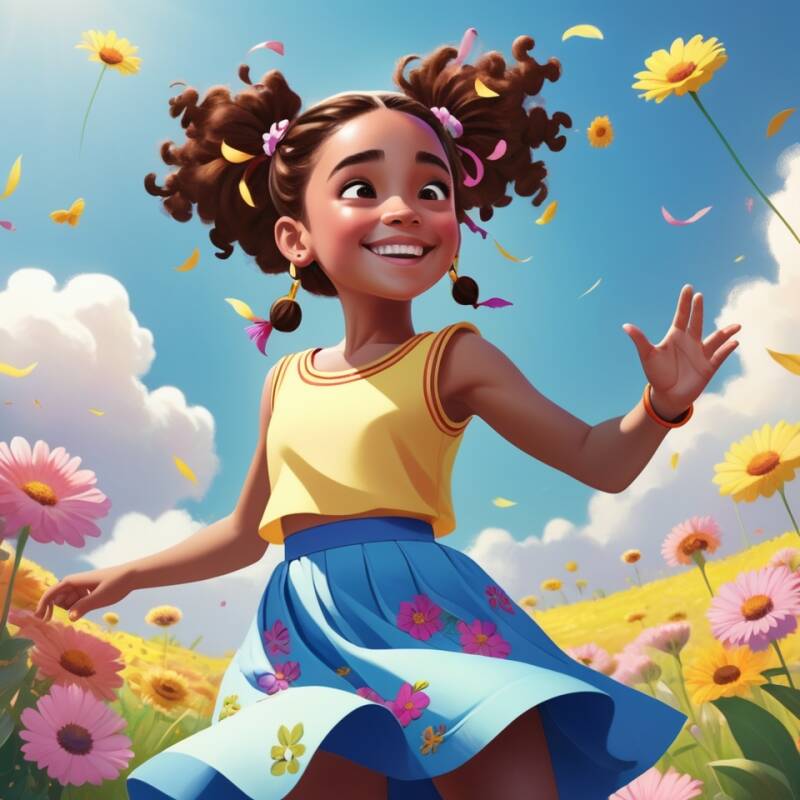
The Importance of Creating a Non-Judgemental Space for Children as They Explore Being Silly and Playful Through Creative Movement
Children are naturally curious, expressive, and imaginative. Before they learn to worry about what others think, they instinctively move, dance, jump, wiggle, roll, and laugh without hesitation. These moments of uninhibited play are far more than entertainment—they are essential building blocks for healthy physical, emotional, and social development.
Creating a non-judgemental environment where children feel free to be silly and explore the creative movements of their bodies allows them to develop confidence, resilience, and a lifelong connection with movement.
When children know they won't be criticised or corrected for moving "the wrong way," they become more willing to explore and experiment with out inhibitions. A simple invitation to move like an animal, pretend to float like a feather, or invent a brand-new dance encourages creativity without the pressure of getting it right. In these moments, there are no mistakes—only exploration.
Playful movement also supports emotional wellbeing. Children often process their feelings through movement long before they can explain them with words. Running, spinning, stretching, balancing, or making exaggerated movements can help release energy, reduce stress, and provide an outlet for emotions in a healthy and natural way. A safe, accepting space tells children that every emotion and every movement has value.
Being silly together is equally powerful. Shared laughter creates connection and helps children feel accepted for who they are. When adults join in the fun—making funny faces, wobbling like jelly, or pretending to stomp like dinosaurs—they send an important message: it is safe to take risks, to be imaginative, and to enjoy the experience without fear of embarrassment.
Creative movement also nurtures physical literacy and physical nutrition. As children explore different ways of moving, they develop balance, coordination, body awareness, strength, and spatial understanding. Unlike structured activities that focus on specific skills or outcomes, open-ended movement encourages children to discover what their bodies can do in their own unique way and at their own pace.
Perhaps most importantly, a non-judgemental space helps build confidence. Children who feel accepted are more likely to trust themselves, express their ideas, and participate wholeheartedly. Rather than comparing themselves to others, they begin to value their own abilities and develop a healthy sense of self-esteem.
For parents, carers, and educators, creating this environment doesn't require expensive equipment or elaborate planning. It begins with simple choices: replacing correction with curiosity, celebrating effort over performance, encouraging imagination over perfection, and allowing children to lead the play. Open-ended prompts such as, "Can you find a new way to move?" or "What does your happy dance look like?" invite creativity while reinforcing that there is no single right answer.
In a world where children are increasingly exposed to performance, comparison, and structured routines, opportunities for free, joyful movement have never been more valuable. By protecting spaces where children can be silly, playful, and unapologetically themselves, we are supporting far more than physical development. We are nurturing creativity, emotional resilience, confidence, and a genuine love of movement that can stay with them throughout their lives.
Sometimes the greatest learning happens not when children are trying to perform, rather when they are simply laughing, imagining, and discovering all the wonderful ways their bodies were designed to move.
🏃♀️📚🦋✨️
Our Latest Children's Book Move Your Body Encourages Children to Get Creative with How They Move Their Body
At The Story Corner, we believe children learn best when they are having fun. That is why our latest children's book, Move Your Body, was created to inspire children to explore movement in a playful, imaginative, and creative way.
Children are naturally designed to move. They jump, skip, twirl, stretch, dance, crawl, and run as they discover the world around them. Movement is one of the ways children express themselves, build confidence, develop new skills, and experience joy. Move Your Body celebrates this natural part of childhood by encouraging children to get creative with how they move their bodies every day.
Rather than focusing on structured exercise, the story invites children to use their imagination and have fun. Can they move like a butterfly floating through a garden? Can they stretch like a tall tree reaching for the sky? Can they hop like a kangaroo or wiggle like a worm? Through playful ideas and rhythmic storytelling, children are encouraged to see movement as an exciting adventure rather than a task.
Creative movement helps children develop more than just physical skills. It supports their imagination, self-expression, confidence, coordination, and body awareness. When children are given the freedom to move in their own unique way, they learn to trust themselves, explore their capabilities, and celebrate what makes them special.
Move Your Body also reminds children that there is no single "right" way to move. Every child is different, and every child can discover movement in a way that feels enjoyable to them. Some children may love dancing, while others enjoy running, stretching, balancing, or creating their own playful movements. The goal is not perfection—it is participation, enjoyment, and exploration.
In a world where many children are spending more time sitting and engaging with screens, encouraging creative movement has never been more important. Active play supports healthy growth and development while helping children build habits that contribute to their overall wellbeing.
Our hope is that Move Your Body inspires children to get up, get moving, and use their imagination to create their own movement adventures. Whether they are pretending to be animals, acting out a story, dancing to music, or inventing their own games, every movement becomes an opportunity to learn, grow, and have fun.
Through joyful storytelling and playful rhythm, Move Your Body encourages children to embrace the wonder of movement and discover that their bodies were made to move, explore, create, and thrive.
Because when movement and imagination come together, magic happens.
🏃♀️📚🦋✨️
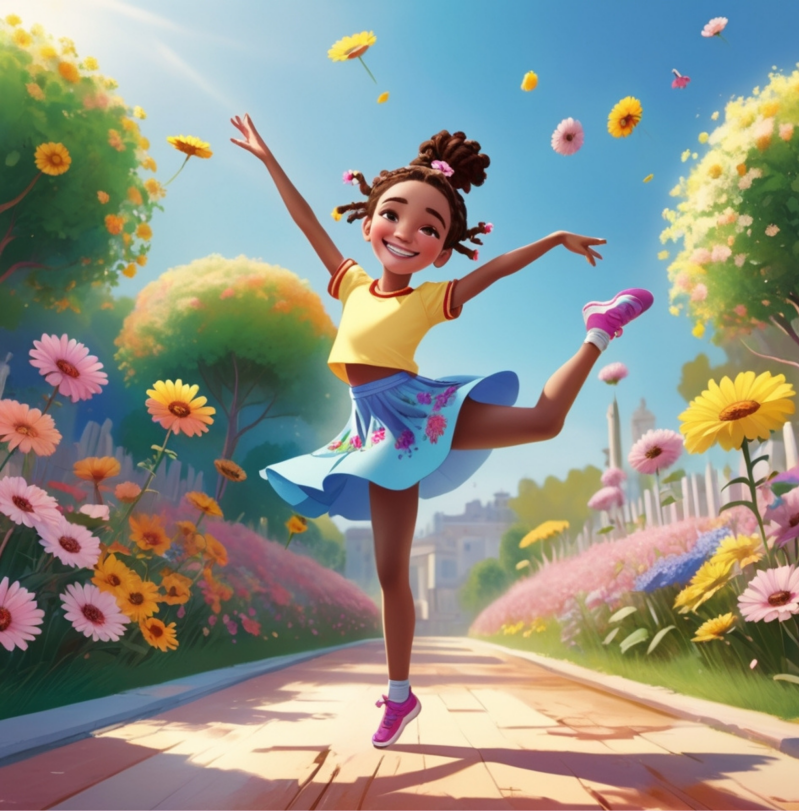

How Move Your Body Supports the Human Maturation Process in Children
Childhood is a remarkable period of growth and development. During these early years, children are not only growing physically, they are also developing emotionally, mentally, socially, and spiritually. This process of growth, often referred to as human maturation, lays the foundation for the person a child will become.
At The Story Corner, we believe that simple daily experiences can have a profound impact on this developmental journey. That is one of the reasons Move Your Body was created.
While Move Your Body is a fun, playful, and rhythmic story that encourages children to be active, it also supports many of the developmental processes that contribute to healthy maturation.
One of the most important aspects of maturation is physical development. As children move, they strengthen their muscles, improve balance and coordination, develop motor skills, and gain greater control over their bodies. Through activities such as jumping, stretching, dancing, and active play, children learn how their bodies work and develop the physical abilities needed for everyday life.
Movement also supports brain development. During childhood, the brain is constantly forming new connections and learning from experience. Physical activity stimulates the brain and can help improve concentration, memory, learning, and problem-solving abilities. By encouraging children to move regularly, Move Your Body helps support both physical and cognitive development.
Emotional maturation is another important part of growing up. Children are continually learning how to understand, express, and regulate their emotions. Movement can be a valuable tool in this process as well as an alternative way of creating a non verbal communication dialogue between children and parents when there is conflict or miss-understanding . Physical activity provides a healthy outlet for releasing energy, reducing stress, and managing strong emotions. Through joyful movement, children often experience greater confidence, happiness, and emotional balance when they are able to express and emote themselves through the physical movement of creative self expression.
The story also supports the development of self-awareness and self-confidence. As children discover what their bodies can do, they develop a stronger sense of identity and capability. Every new movement, skill, and experience helps reinforce the belief that they are capable of learning, growing, and overcoming challenges.
Social development is also nurtured through movement. Many forms of active play involve cooperation, communication, teamwork, and shared experiences. Whether children are dancing together, participating in games, or engaging in imaginative play, movement helps them develop important social skills and a sense of connection with others.
Perhaps most importantly, Move Your Body encourages children to develop positive habits and personal responsibility. By learning to enjoy movement from an early age, children begin to understand that they have the ability to make choices that support their health and wellbeing. These early experiences help cultivate self-discipline, self-care, and self-mastery—qualities that contribute to healthy maturation throughout life.
The book also encourages creativity and imagination, both of which are important aspects of human development. Creative movement allows children to express themselves, explore new possibilities, and engage with the world in meaningful ways. It nurtures curiosity, confidence, and independent thinking.
At its heart, Move Your Body is about helping children develop a healthy relationship with themselves and their bodies. It encourages them to move with joy, explore with confidence, and embrace habits that support their overall growth and wellbeing.
Human maturation is not a single event but an ongoing journey of development. Every experience, habit, and lesson contributes to that journey. Through playful storytelling and joyful movement, Move Your Body supports children as they grow into healthy, confident, resilient, and well-rounded individuals.
Because every jump, stretch, wiggle, dance, and playful adventure is helping to shape the person a child is becoming.
🏃♀️📚🦋✨️
How Move Your Body Supports Children to Develop Self-Mastery
Self-mastery is one of the most valuable gifts we can help children develop. It is the ability to understand themselves, make positive choices, regulate their emotions, build healthy habits, and take responsibility for their wellbeing. While self-mastery is often thought of as a skill that develops later in life, its foundations are established during childhood through the everyday experiences, habits, and messages children receive.
This is one of the many reasons Move Your Body was written.
At first glance, Move Your Body is a fun, playful, and rhythmic story that encourages children to enjoy movement and active play. However, beneath the joyful storytelling lies a deeper purpose: helping children develop healthy habits, discipline, practice, awareness, and self-leadership skills that contribute to lifelong wellbeing.
Movement teaches children that they have the power to positively influence how they feel. When children dance, stretch, jump, run, and play, they experience firsthand how movement can increase their energy, improve their mood, strengthen their bodies, and support their overall wellbeing. These experiences help children begin to understand an important principle of self-mastery—that their choices matter.
As children engage with the story, they are encouraged to see movement as something they can actively choose each day. This simple message helps cultivate personal responsibility and empowers children to take ownership of their health and wellbeing from an early age.
Move Your Body also supports the development of self-awareness. Through movement, children become more connected to their bodies and learn to notice how they feel. They begin to recognise when they have lots of energy to release, when they need to slow down, or when movement helps them feel happier, calmer, and more focused. These moments of awareness are important building blocks for emotional intelligence and self-regulation.
The story also reinforces the value of consistency. Healthy habits are not formed through one big action but through many small choices repeated over time. By encouraging children to move their bodies regularly and joyfully, Move Your Body helps plant the seeds for routines and habits that can support them throughout their lives.
Perhaps most importantly, the book encourages children to view movement as an act of self-care rather than an obligation. When children learn to care for their bodies with kindness, gratitude, and respect, they develop a stronger sense of self-worth and confidence. They begin to understand that looking after themselves is not something they have to do—it is something they get to do.
At The Story Corner, we believe that self-mastery begins with simple daily practices that help children grow in confidence, awareness, and personal responsibility. Move Your Body offers one of those practices in a way that is accessible, engaging, and enjoyable for young readers.
Our hope is that this story inspires children to develop a lifelong love of movement while also helping them discover something even more important: that they have the ability to make choices that support their happiness, health, and success.
When children learn to move their bodies creatively with joy, they are also learning to lead themselves with intention. That is the beginning of self-mastery.
🏃♀️📚🦋✨️

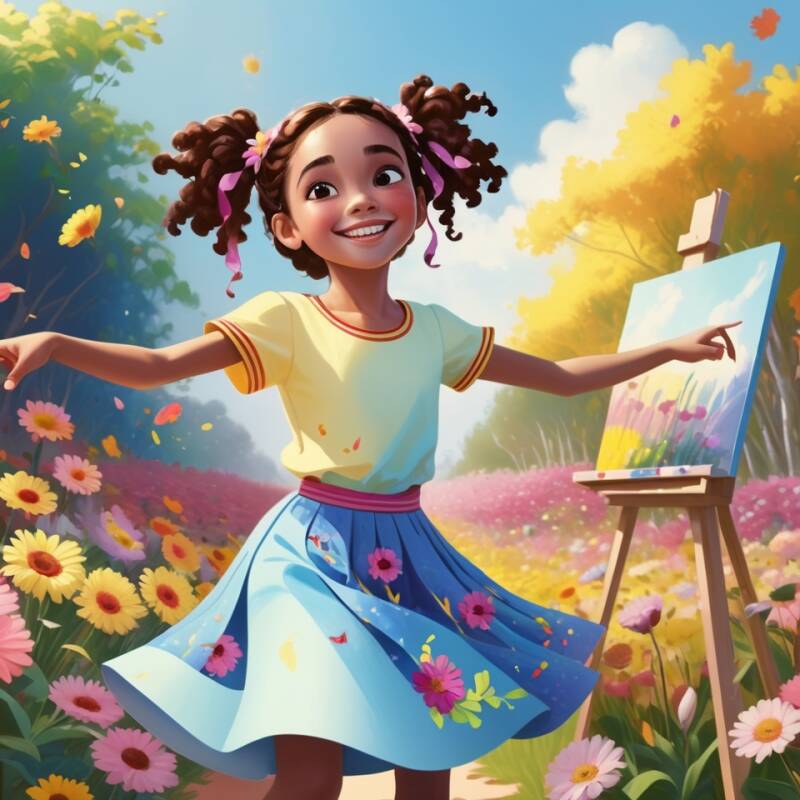
How Move Your Body Supports the Overall Wellbeing of Children
Children thrive when their minds, bodies, and emotions are nurtured together. Healthy development is about much more than academic learning alone—it is about supporting the whole child. This is one of the reasons Move Your Body was created.
At The Story Corner, we believe that movement is one of the simplest and most effective ways to support children's overall wellbeing. Through playful rhythm, engaging storytelling, and imaginative movement, Move Your Body encourages children to develop healthy habits that can positively impact many areas of their lives, physically, mentally, emotionally and creatively.
Physical wellbeing is perhaps the most obvious benefit of movement. When children move their bodies through active play, they develop strength, coordination, balance, flexibility, and motor skills. Regular movement also supports healthy growth and helps children build a strong foundation for lifelong health.
However, the benefits of movement extend far beyond the physical body.
Movement can also support emotional wellbeing. Children often process emotions through play and physical activity. Running, dancing, stretching, and active movement can help children release excess energy, reduce feelings of stress, and experience greater joy and confidence. Movement provides children with a healthy outlet for self-expression while helping them feel more connected to themselves.
Mental wellbeing is also supported through movement. Research continues to show that physical activity can help improve concentration, focus, memory, and learning. When children move regularly, they often feel more alert, engaged, and ready to learn. Active play stimulates both the body and the brain, helping children develop important cognitive skills while having fun.
Move Your Body also encourages children to build positive habits and self-awareness in creative ways. Through the story, children are reminded that they have the ability to make choices that support their wellbeing in fun and theatrical. Learning to enjoy movement from an early age helps children develop habits that can benefit them throughout childhood and beyond.
Social wellbeing is another important aspect of healthy development. Movement often brings children together through games, dancing, sports, and shared activities. These experiences help children build friendships, develop communication skills, learn cooperation, and strengthen their sense of belonging within a community.
Perhaps most importantly, Move Your Body encourages children to develop a positive relationship with their bodies. The story celebrates movement as something enjoyable rather than something children "have" to do. It teaches children to appreciate their bodies for all the amazing things they can do, fostering confidence, gratitude, and self-respect.
At its heart, Move Your Body is about helping children discover that caring for their wellbeing can be fun. Through joyful movement and creative play, children can develop healthy habits that support their physical health, emotional resilience, mental focus, social connections, and overall happiness.
Our hope is that this story inspires children to move with confidence, creative play with joy, and develop habits that help them thrive throughout their lives.
Because when children move their bodies, they are also nurturing their wellbeing—one joyful step, jump, wiggle, and dance at a time.
🏃♀️📚🦋✨️
How Move Your Body Can Be Used as a Tool for Teachers, Parents, and Conscious Caregivers
Children learn best when they are engaged, having fun, and actively participating in the learning process. While Move Your Body is a playful and rhythmic children's story, it is also much more than a book. It can be used as a valuable tool by teachers, parents, and conscious caregivers to encourage healthy habits, active learning, emotional wellbeing, and positive child development.
At The Story Corner, we believe that stories have the power to inspire meaningful conversations and create opportunities for growth. Move Your Body was designed to do exactly that.
For teachers and educators, Move Your Body can be incorporated into classroom activities, movement breaks, health and wellbeing programs, and early childhood learning experiences. The rhythmic nature of the story naturally encourages participation and can invite children to act out the movements as they read. This creates an interactive learning experience that supports physical development while keeping children engaged and focused.
The book can also be used as a starting point for discussions about healthy lifestyles, self-care, body awareness, and the importance of movement. Educators can encourage children to brainstorm different ways they enjoy moving their bodies, helping them develop confidence, creativity, and self-expression.
For parents, Move Your Body offers an opportunity to turn storytime into active family time. Instead of simply reading the book together, parents can encourage children to follow along with the movements, create their own movement games, or invent new ways to move inspired by the story. These shared experiences strengthen connection while promoting healthy habits in a fun and enjoyable way.
The book also provides parents with a simple and accessible way to introduce conversations about wellbeing. Children can begin to understand that taking care of their bodies through movement is an important part of feeling healthy, strong, and happy.
For conscious caregivers, Move Your Body can be used as a tool to support holistic child development. Movement is closely connected to emotional regulation, confidence, self-awareness, and overall wellbeing. Encouraging children to move regularly can help them release energy, process emotions, improve focus, and develop a stronger connection with their bodies.
Conscious caregivers understand that learning extends beyond academic skills. By incorporating movement into daily routines, caregivers can support children's physical, emotional, mental, and social development in a balanced and nurturing way. Move Your Body reinforces this approach by presenting movement as an act of joy, self-care, and self-expression rather than obligation.
The story can also be used to inspire creative play. Children might choose to move like animals, dance to music, create obstacle courses, or invent their own imaginative movement adventures. These experiences help develop creativity, problem-solving skills, confidence, and independence while encouraging active participation.
Ultimately, Move Your Body serves as a versatile resource that supports the whole child. Whether it is being used in a classroom, at home, or within a conscious caregiving environment, the book provides opportunities for connection, learning, movement, and growth.
Our hope is that teachers, parents, and caregivers use Move Your Body not only as a story to read, but as an invitation to inspire children to embrace movement, develop healthy habits, and discover the joy of caring for their wellbeing.
Because when adults intentionally create opportunities for children to move, play, and explore, they are helping to lay the foundation for a healthier, happier, and more empowered future.
🏃♀️📚🦋✨️


How Move Your Body Supports Positive Behaviour Guidance in Children
Children are naturally designed to move. From running, jumping, climbing, dancing, and exploring, movement is an essential part of healthy childhood development. While physical activity is often associated with fitness and physical health, it also plays a powerful role in supporting positive behaviour guidance.
Many challenging behaviours in children are not simply acts of defiance or disobedience. Often, they are signs that a child has unmet needs, excess energy, emotional overwhelm, or difficulty regulating their feelings. Providing opportunities for children to move their bodies can help meet these needs in healthy and constructive ways.
Movement helps children release built-up energy and tension that may otherwise be expressed through frustration, restlessness, impulsivity, or challenging behaviour. Whether it is a walk in nature, a game of tag, dancing to music, or participating in a movement-based activity, physical activity helps children reset both their body and mind.
Research has shown that movement supports the development of the brain and nervous system. As children engage in physical activity, they strengthen neural pathways that support attention, concentration, emotional regulation, and self-control. These skills are essential for helping children make positive choices, cooperate with others, and navigate social situations successfully.
Movement also provides children with an opportunity to process emotions. Children often experience big feelings but may not yet have the language to express them. Activities that involve movement can help children release stress, anxiety, anger, or excitement in a safe and healthy way. After moving their bodies, many children feel calmer, more focused, and better able to communicate their needs.
For parents, teachers, and caregivers, movement can be a valuable positive behaviour guidance tool. Rather than focusing solely on correcting behaviour, adults can proactively support children's wellbeing by incorporating regular opportunities for movement throughout the day. Short movement breaks, outdoor play, yoga, stretching, obstacle courses, dancing, or simple games can all help children regulate their energy and emotions.
Most importantly, movement is fun. When children enjoy moving their bodies, they develop positive associations with physical activity while building confidence, resilience, and emotional wellbeing. These benefits extend beyond childhood and contribute to healthy habits that can support them throughout their lives.
By recognising movement as more than exercise and embracing it as a tool for emotional regulation and positive behaviour guidance, we can help children develop the skills they need to thrive, connect with others, and navigate life's challenges with greater confidence and ease.
🏃♀️📚🦋✨️
The Importance of Encouraging Children to Get Playful and Have Fun While They Move Their Body
For children, movement and play naturally go hand in hand. Long before organised sports, structured activities, or exercise routines, children learn about their world through playful movement. They run, jump, dance, spin, climb, skip, and explore simply because it feels good and brings them joy.
Encouraging children to have fun while they move their bodies is one of the most effective ways to foster a lifelong love of physical activity. When movement is associated with enjoyment rather than pressure or performance, children are more likely to stay active, engaged, and motivated.
Playful movement supports far more than physical health. It stimulates creativity, imagination, social connection, emotional wellbeing, and cognitive development. Whether children are pretending to be animals, creating obstacle courses, dancing to music, or playing games with friends, they are developing important life skills while having fun.
Play also provides opportunities for children to build confidence and resilience. Through playful challenges, they learn to take risks, solve problems, persevere, and celebrate their achievements. These experiences help strengthen their self-esteem and encourage a positive relationship with movement.
Laughter and enjoyment also help reduce stress and promote emotional wellbeing. When children are having fun, their bodies release feel-good chemicals that support relaxation, happiness, and overall wellbeing. As a result, they often feel more regulated, connected, and ready to engage positively with others.
Parents, teachers, and caregivers can support children by creating environments where movement feels playful rather than forced. Simple activities such as dancing, imaginative games, outdoor adventures, nature walks, scavenger hunts, and family playtime can inspire children to move naturally and joyfully.
When we encourage children to play, explore, and have fun while moving their bodies, we are giving them much more than exercise. We are helping them develop healthy habits, positive self-confidence, emotional wellbeing, and a lifelong appreciation for movement.
After all children are designed to move, play, discover, and thrive.
🏃♀️📚🦋✨️

The Importance of Encouraging Children to Move Their Body From a Young Age
Childhood is a time of growth, discovery, and development. From the moment children begin to crawl, walk, run, and explore, movement becomes one of their primary ways of learning about themselves and the world around them. Encouraging children to move their bodies from a young age is not only important for their physical development, yet also for their emotional, mental, and social wellbeing.
Movement is a natural part of childhood. Children are born with a desire to explore, play, and interact with their environment. When we encourage movement, we are supporting this natural instinct and helping children develop the skills they need to thrive.
One of the most obvious benefits of movement is physical health. Active play helps children build strong muscles and bones, improve balance and coordination, develop motor skills, and support healthy growth. Regular movement also helps children build healthy habits that can contribute to lifelong wellbeing.
However, the benefits of movement extend far beyond physical development.
Movement plays an important role in supporting children's emotional wellbeing. Young children often express and process their emotions through play and physical activity. Running, dancing, stretching, jumping, and imaginative movement can help children release energy, reduce stress, and experience feelings of joy and accomplishment. Movement provides children with a healthy outlet for self-expression while supporting emotional resilience.
Physical activity also contributes to cognitive development and learning. Research has shown that movement can support concentration, memory, creativity, and problem-solving skills. When children engage in active play, they are stimulating both their bodies and their brains. This can help improve focus, readiness to learn, and overall engagement in educational experiences.
Encouraging movement from a young age can also help children develop confidence and self-awareness. As children learn new physical skills and discover what their bodies can do, they gain a sense of competence and self-belief. Every jump, balance, stretch, and new achievement contributes to a growing sense of confidence and independence.
Movement also provides opportunities for social development. Whether children are playing games, dancing with friends, participating in group activities, or exploring together outdoors, movement encourages communication, cooperation, teamwork, and connection. These experiences help children build positive relationships and develop important social skills.
In today's world, where children are increasingly surrounded by screens and sedentary activities, creating opportunities for movement has become more important than ever. Encouraging active play helps children maintain a healthy balance while fostering habits that support their overall wellbeing.
Most importantly, movement should be enjoyable. Children are far more likely to remain active when movement is associated with fun, creativity, and connection rather than pressure or obligation. By encouraging children to move through play, imagination, music, storytelling, and exploration, we help them develop a positive relationship with their bodies and a lifelong appreciation for active living.
At The Story Corner, we believe that healthy habits begin in childhood. By encouraging children to move their bodies from a young age, we are giving them a gift that extends far beyond childhood itself. We are helping them build confidence, resilience, wellbeing, and healthy habits that can support them throughout their lives.
Every dance, stretch, jump, skip, and playful adventure contributes to a child's development. When we encourage movement, we are not simply helping children stay active—we are helping them grow into healthy, happy, confident, and thriving individuals.
How Move Your Body Supports Children to Enjoy Movement
One of the greatest gifts we can give children is a love of movement. When children enjoy moving their bodies, physical activity becomes something they naturally want to do rather than something they feel they have to do. This positive relationship with movement can support their health, wellbeing, confidence, and happiness throughout their lives.
This is one of the key intentions behind Move Your Body.
At The Story Corner, we believe that healthy habits are most sustainable when they are connected to joy, play, and positive experiences. Rather than teaching children that movement is a task or responsibility, Move Your Body introduces movement as something exciting, creative, and fun.
Through playful rhythmic storytelling, the book invites children to participate in movement while using their imagination. As children read along, they are encouraged to stretch, wiggle, jump, dance, and explore the many ways their bodies can move. This playful approach helps transform movement into an enjoyable experience that children naturally want to repeat.
The story also celebrates movement as meditation and for children to enjoy being present in the moment in their body. Every child is unique, and every child moves differently. Move Your Body encourages children to focus on the joy of movement itself rather than performance, comparison, or achievement. This helps children develop confidence and a positive connection with their bodies.
When movement is associated with fun, children are more likely to stay active. They begin to see physical activity as an opportunity for adventure, creativity, and self-expression. Whether they are pretending to be animals, dancing to music, exploring outdoors, or creating their own movement games, they are discovering that movement can be one of life's simple pleasures.
The book also encourages children to become more aware of how movement makes them feel. As they move, children often experience increased energy, improved mood, greater confidence, and a sense of accomplishment. These positive experiences reinforce the value of movement and help children understand that caring for their bodies can feel good.
For parents, teachers, and caregivers, Move Your Body provides a gentle and engaging way to encourage active lifestyles without relying on pressure or instruction. Instead, the story creates an environment where movement is celebrated, enjoyed, and explored through play.
Perhaps most importantly, Move Your Body helps children develop a mindset that movement is something to be enjoyed every day - regularly, to enhanced their overall health and wellbeing for sucess in their life. By introducing this message during the early years, we can help children establish healthy habits and positive attitudes that support their long-term wellbeing.
Move Your Body is a celebration of movement, imagination, and childhood joy. It reminds children that their bodies were made to move, explore, play, and thrive.
Our hope is that every child who reads Move Your Body discovers something simple yet powerful: moving your body can be fun, and when movement brings joy, healthy habits often follow naturally.
Because when children enjoy moving their bodies, they are building a foundation for a healthier, happier, and more active future that will lead to their sucess.
🏃♀️💃👶🌈🤍✨
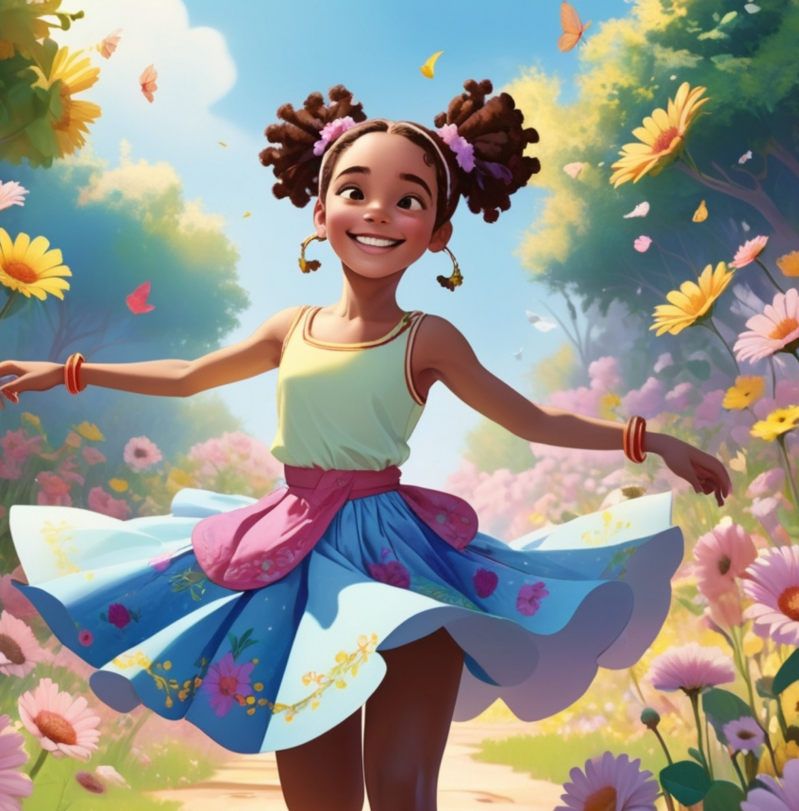
Why Move Your Body Matters
Movement is one of the most natural and important parts of childhood. From the moment children begin to crawl, walk, run, jump, and explore, they learn about themselves and the world through movement. Yet in today's fast-paced and increasingly digital world, many children are spending less time engaging in active play and more time sitting indoors.
This is why Move Your Body matters.
Move Your Body is a joyful invitation for children to reconnect with the simple pleasure of moving their bodies. Through playful rhythm and engaging storytelling, the book encourages children to embrace movement as a fun and enjoyable part of everyday life.
Movement is about much more than physical exercise. It plays a vital role in supporting children's overall development and wellbeing. When children move, they strengthen their muscles and coordination, improve their balance and motor skills, and support the healthy development of their growing bodies. Physical activity also helps children release energy, improve focus, and build confidence in their abilities.
Beyond the physical benefits, movement can positively impact a child's emotional wellbeing. Dancing, running, stretching, and active play can help children express themselves, reduce stress, elevate their mood, and develop a greater sense of self-confidence. Movement allows children to experience freedom, creativity, and joy while learning what their bodies are capable of achieving.
Move Your Body also helps children understand that healthy habits are built through small daily choices. By encouraging children to move regularly and enjoy being active, the story introduces an important life lesson: taking care of our bodies is an act of self-respect and self-care.
The habits children develop in their early years often become the foundation for their future wellbeing. When children learn to enjoy movement from a young age, they are more likely to carry those positive habits into adolescence and adulthood. They learn that being active is not something they have to do—rather its an invitation for them to engage in as creative play as a way to support them to feel strong, healthy, happy, and alive.
At The Story Corner, we believe stories can inspire positive change. Move Your Body was created to support children in developing healthy lifestyles while fostering confidence, self-awareness, and a love of active play.
In a world that often encourages children to sit still, Move Your Body reminds them of something important: their bodies were designed to move, explore, play, and thrive.
Because when children move their bodies, they are not only strengthening their physical health—they are building habits, confidence, resilience, and wellbeing that can support them for a lifetime.
That is why Move Your Body matters.
"Every creative jump, stretch, dance, and step is an investment in a child's health, happiness, and future." 🏃♀️🌱💛📚
Who Move Your Body Is For
Move Your Body was written for every child who loves to play, explore, dance, jump, stretch, and discover the joy of movement.
At The Story Corner, we believe that healthy habits begin in childhood. Through fun, engaging, and meaningful stories, children can learn valuable life lessons that support their growth and wellbeing. Move Your Body was created to encourage children to embrace movement as a natural, creative and enjoyable part of everyday life.
This book is perfect for children aged 3–8 years, offering a playful and rhythmic reading experience that captures young imaginations while promoting positive habits. Whether a child enjoys dancing around the living room, running through the park, or simply being active and curious, this story celebrates the joy of moving their body.
Move Your Body is also a valuable resource for parents and caregivers who want to encourage healthy lifestyles from an early age. Reading the story together can create opportunities for meaningful conversations about exercise, wellbeing, self-care, and the importance of staying active.
It can also open up a conversation about non verbal forms of self expression and body conversation dialogue between child and caregiver when words are not enough.
Educators and early childhood professionals will also find Move Your Body a wonderful addition to classrooms, childcare centres, and learning programs. The book can be used to support discussions about physical health, movement, body awareness, and healthy routines while inspiring children to participate in active play.
Beyond promoting physical activity, Move Your Body encourages children to move consistently and regularly while building confidence, developing body awareness, expressing themselves creatively, and experiencing the simple joy that movement can bring. It reminds children that movement is not about perfection or performance—it is about having fun, feeling good, and celebrating what their bodies can do.
Move Your Body is for families, educators, and communities who want to inspire children to grow into fit, healthy, happy, and confident individuals.
If you believe in nurturing healthy habits, encouraging active play, and helping children thrive, then Move Your Body was written for you.
💃🏻🎭🦋
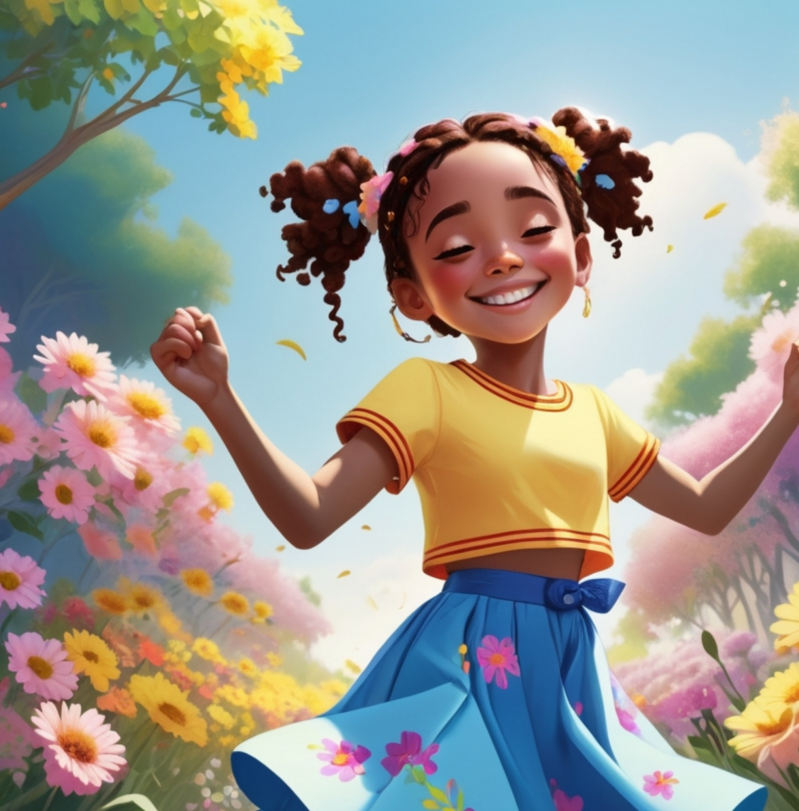

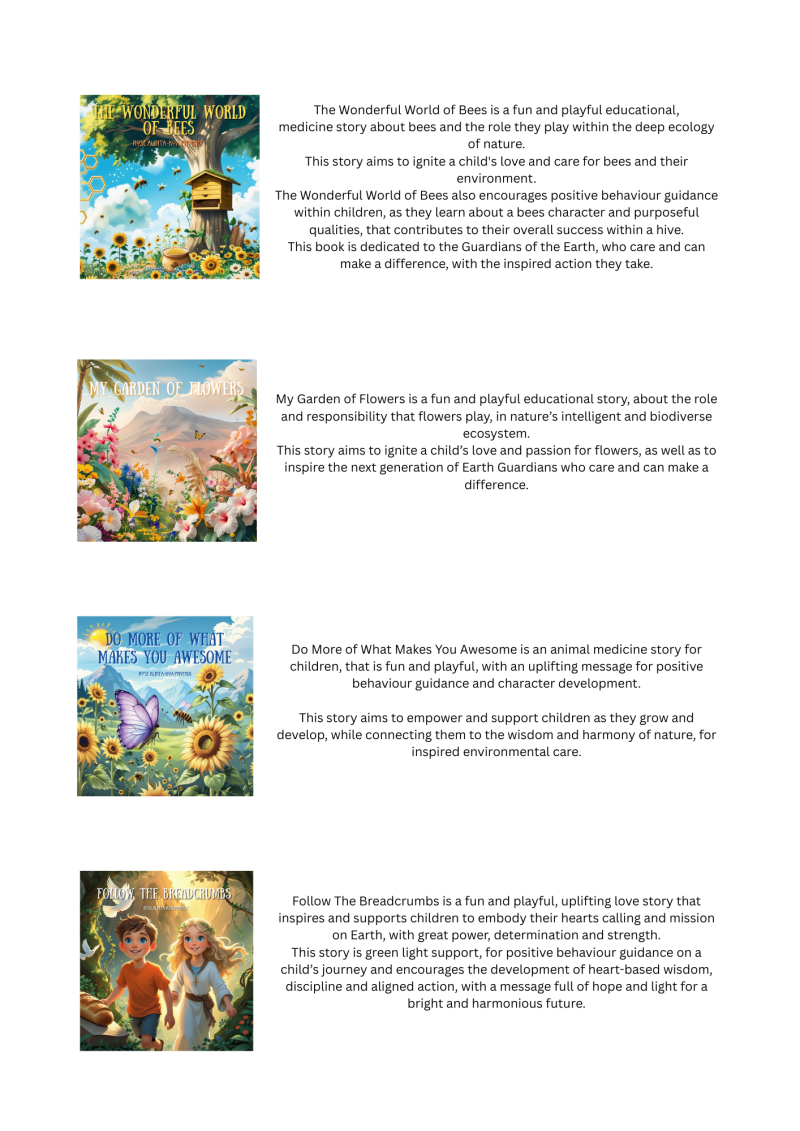
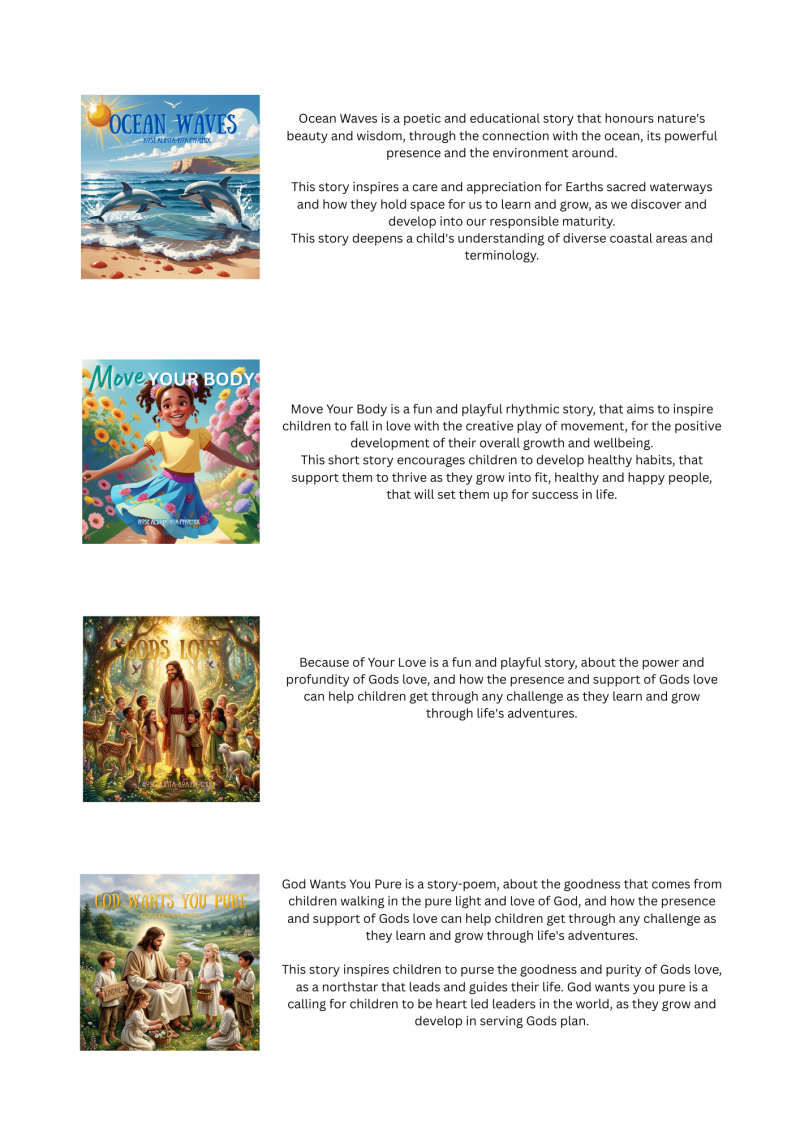
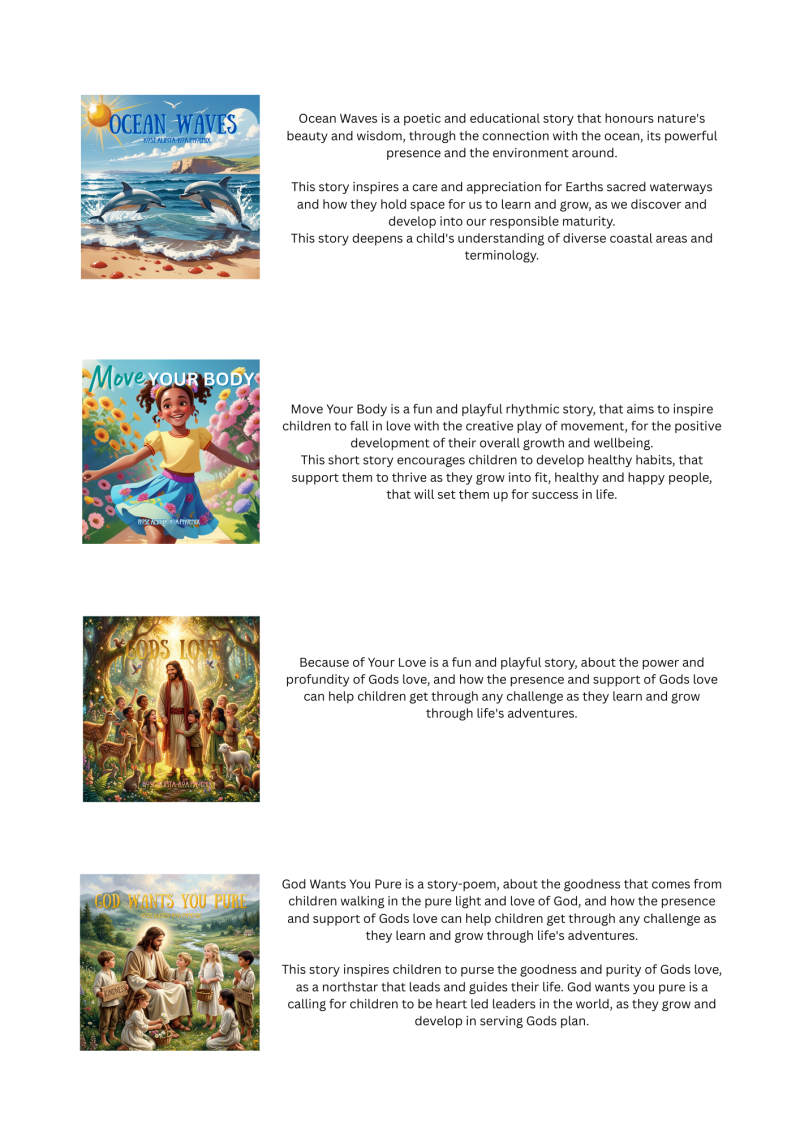
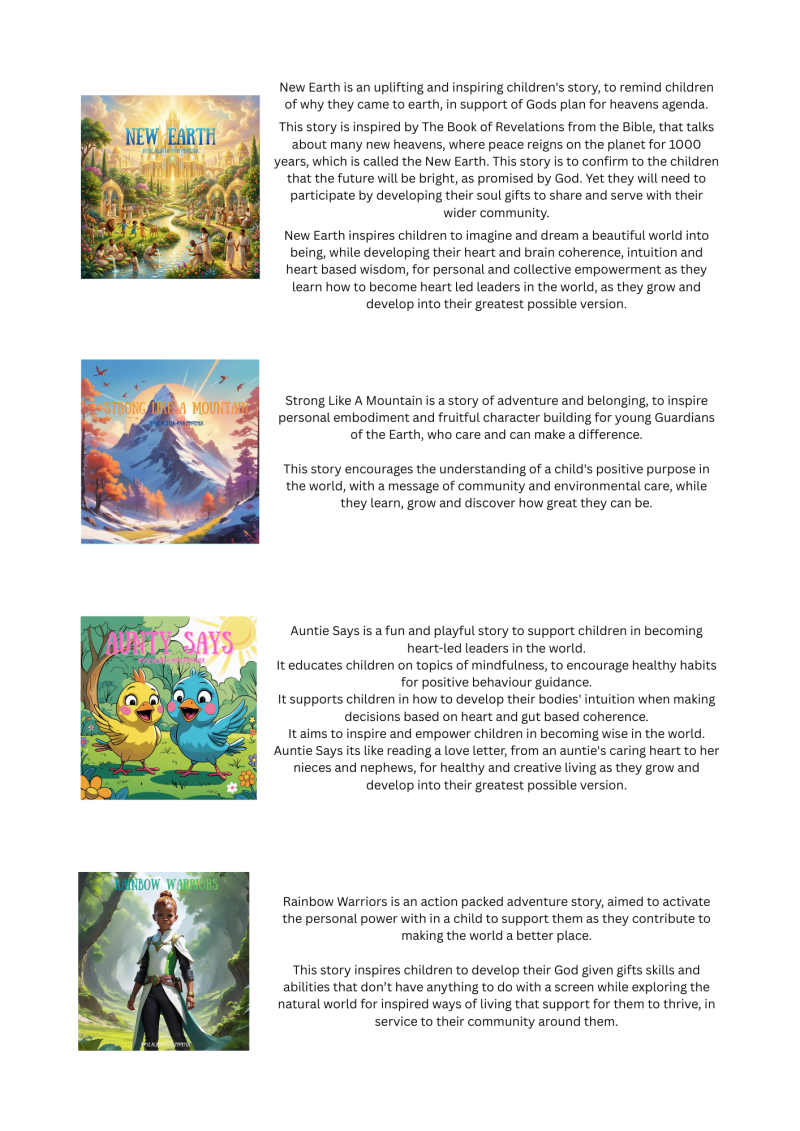
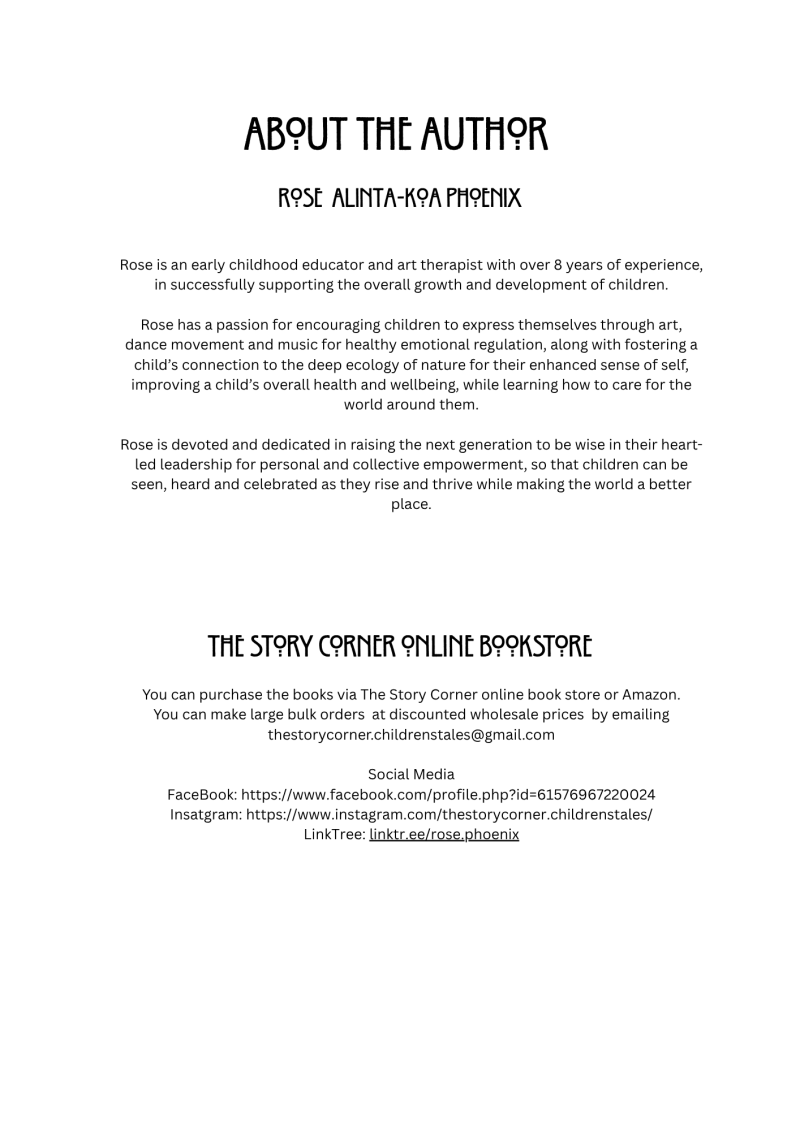
The Story Corner is Excited to Releases the 2026 Conscious Kids Collection Catalogue
The Story Corner is delighted to announce the release of the 2026 Conscious Kids Collection Catalogue, featuring a growing range of inspiring children's books designed to nurture young hearts, minds, and imaginations.
Created with a focus on nature play, emotional wellbeing, positive values, creativity, self expression, environmental awareness, and character development, the collection offers meaningful stories that support children as they learn, grow, and discover their unique gifts, skills and abilities.
The 2026 catalogue includes beloved titles such as The Wonderful World of Bees and Do More of What Makes You Awesome Art Making Is How I Express My Emotions, Caring For Country, Move Your Body, God Wants You Pure, Rainbow Warriors and New Earth, along with other engaging books that encourage curiosity, self-confidence, kindness, resilience, and a connection with the natural world.
At The Story Corner, we believe stories have the power to shape lives. Our mission is to create books that not only entertain yet also inspire positive conversations between children, parents, caregivers, and educators.
The 2026 Kids Collection Catalogue has been designed as a valuable resource for families, schools, libraries, childcare centres, and community organisations seeking quality children's literature with heart and purpose.
We invite readers of all ages to explore the collection and join us in fostering a love of reading while supporting the wellbeing and development of future generations.
For more information about The Story Corner Kids Collection, please contact us via https://www.the-story-corner.com/contact or follow our journey as we continue creating stories that inspire children to learn, grow, and thrive.
📚🦋✨️
Why I Wrote Move Your Body
As someone who has worked closely with children as a professional Early Childhood Educator and Art Therapist and witnessed their growth, development, and unique personalities unfold, I have always been passionate about supporting children's overall wellbeing. This passion is what inspired me to write Move Your Body.
In today's world, many children are spending increasing amounts of time sitting indoors, using screens, and engaging in sedentary activities. While technology certainly has its place, I believe it is more important than ever to encourage children to reconnect with one of the most natural and powerful tools available to them—their bodies.
Children are born to move to thrive. Movement supports healthy physical development, strengthens growing muscles and bones, enhances coordination, and contributes to overall health. However, the benefits of movement extend far beyond the physical.
Throughout my experience working with children, I have seen firsthand how movement can support emotional wellbeing, enhance confidence and self esteem, self-expression, and develop positive behaviour with in a child. When children have opportunities to run, jump, dance, stretch, play, and explore, they are often happier, more focused, and better able to listen, learn, regulate their emotions and relationships with others.
I wrote Move Your Body to inspire children to discover the joy of movement and to help parents, caregivers, and educators recognise the important role movement plays in healthy overall childhood development. My hope is that this book encourages families to make movement a fun, creative and natural part of everyday life, rather than viewing it as something that only happens during organised sports or structured activities.
The book also reflects my belief that children learn best through positive experiences. By presenting movement in a creative, playful, engaging, and encouraging way, I hope to nurture a lifelong appreciation for caring for their bodies and wellbeing.
Move Your Body is an invitation for children to celebrate what their bodies can do, embrace active living, and experience the many physical, emotional, social, and developmental benefits that playful movement provides.
My greatest hope is that this book inspires children to move with joy, confidence, and curiosity while supporting the healthy development of future generations.
After all, when children move their bodies, they are not only strengthening their muscles—they are building the foundations for a healthy, happy, and thriving life.
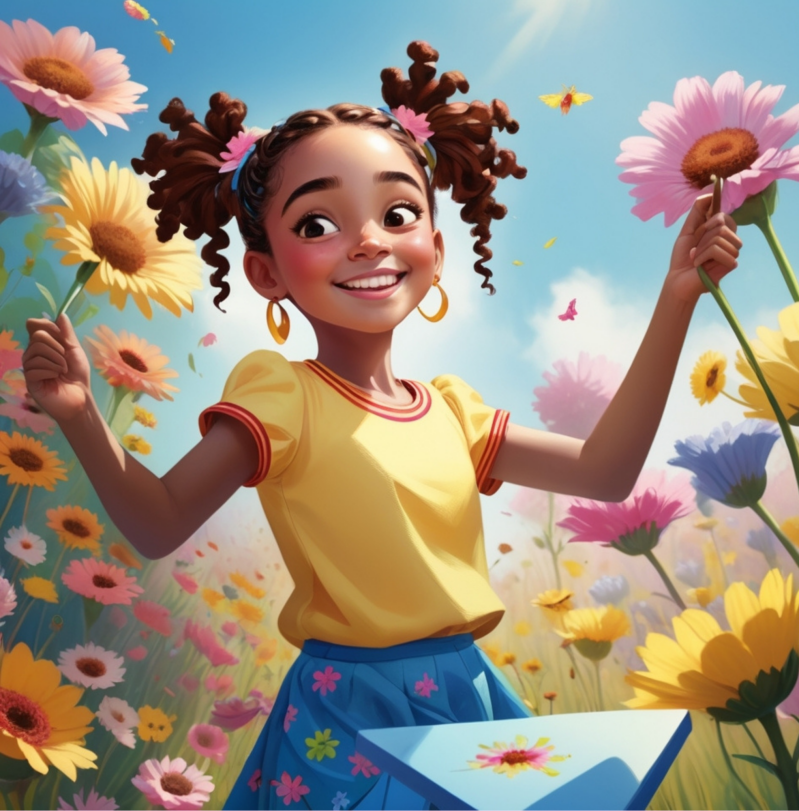
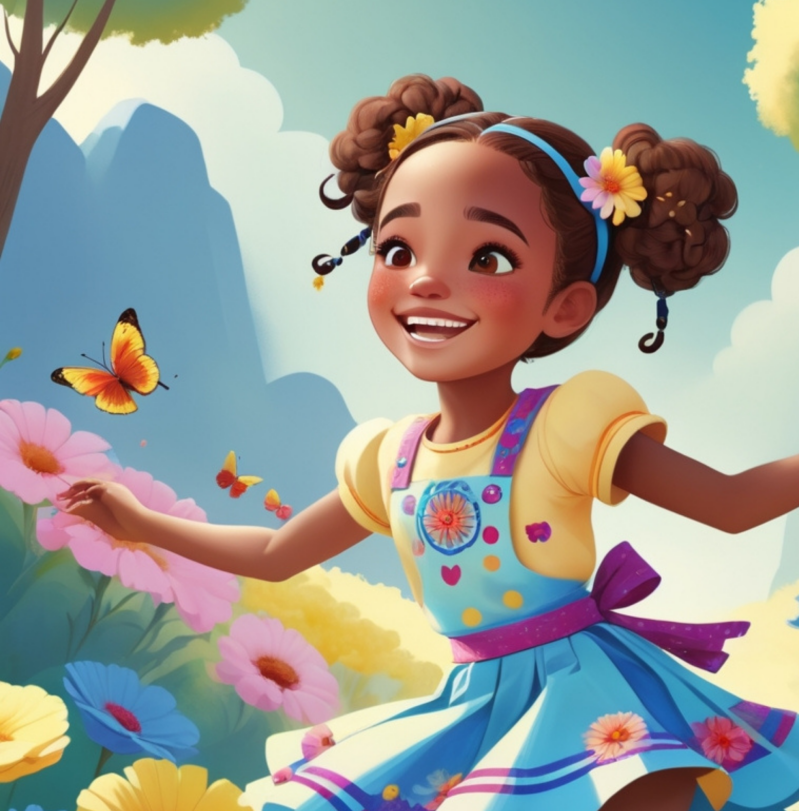
Promo Video
https://www.facebook.com/share/v/18yjbfuYMG/
What happens when children discover the joy of movement?
A hop becomes an adventure.
A wiggle becomes a dance.
A stretch becomes a moment of confidence.
Move Your Body is a fun and playful rhythmic story that inspires children to fall in love with movement through imagination, creativity, and play.
Through simple, engaging actions and joyful storytelling, children are encouraged to jump, stretch, twirl, march, and explore all the amazing ways their bodies can move.
More than just a story, Move Your Body helps children develop healthy habits that support their physical, emotional, and social wellbeing.
Because active children grow into strong, confident, and resilient people.
Every movement builds coordination.
Every adventure sparks imagination.
Every playful moment supports a child to thrive.
Help your child discover the magic of movement.
Move. Play. Grow.
Move Your Body is a joyful rhythmic story inspiring healthy, happy, active children.
"Move Your Body today, for a healthier tomorrow."
Pick up a copy today for the little people you care about in your life, to share a message of playful health and wellness
Now available across all leading platforms.
Amazon,Apple Books, Kobo, Bookshop.org and Barnes & Noble
https://amzn.asia/d/0cAnJOp2 👈
www.the-story-corner.com
🥳The Story Corner Has Another Book Launch Announcement📚
Today is the day….
We are excited to announce the launch of our latest children’s book: Move Your Body a fun, playful, and rhythmic story that inspires children to discover the joy of developing healthy habits through movement, play, and creativity.
Move Your Body invites young readers to jump, stretch, dance, wiggle, and explore all the wonderful ways their bodies can move. Through uplifitng rythmic storytelling, the book celebrates movement as an important part of children's growth, wellbeing, and development.
In a world where many children spend increasing amounts of time indoors and in front of screens, this book offers a refreshing reminder of the importance of physical activity, play, and movement for a healthy and balanced life.
The story playfully encourages children to embrace movement as a natural and enjoyable part of an every daily routine, helping them develop positive habits that can support them throughout their lives. By fostering a love of movement from an early age, children can build confidence, strengthen their bodies, support their emotional wellbeing, and develop the foundations for a healthy future.
Move Your Body is perfect for families, educators, and early learning environments, Move Your Body is an engaging resource that promotes physical wellbeing while encouraging imagination, self-expression, and fun.
As with all books from The Story Corner, Move Your Body has been created with a heartfelt commitment to support children to grow in happiness and wisdom, through meaningful storytelling.
Get ready to move, play, and grow!
Now available from The Story Corner.
https://amzn.asia/d/0cAnJOp2 👈
www.the-story-corner.com 👈
💃🏻🦋🌈🤍

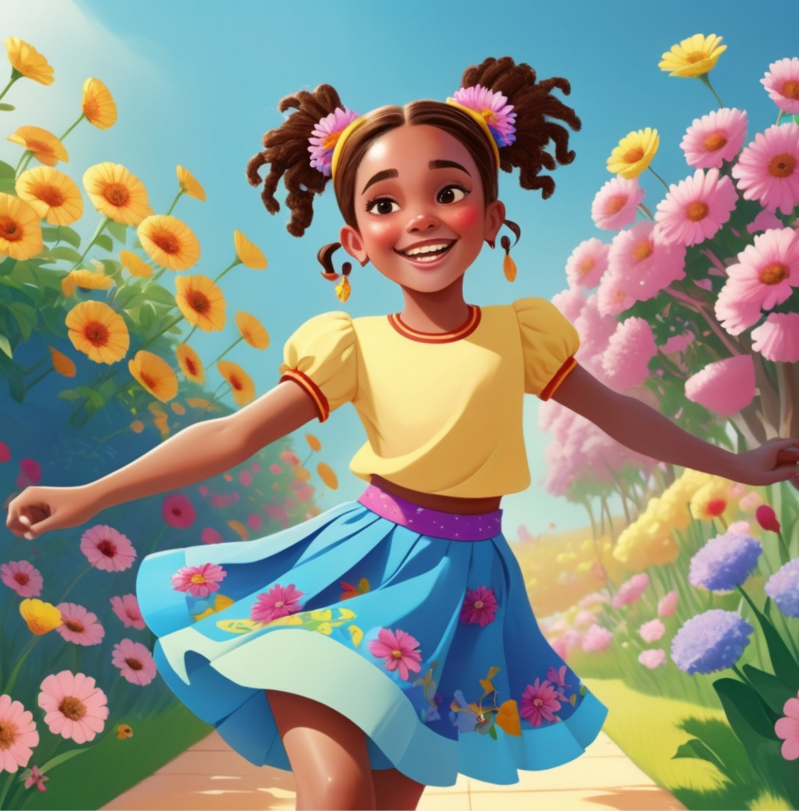
🎉✨ SOMETHING EXCITING IS COMING... ✨🎉
The countdown is almost over!
Tomorrow, The Story Corner excited to releases its latest children's book...
🌟 *MOVE YOUR BODY* 🌟
A playful new children's book celebrating movement, play, healthy habits, and positive wellbeing.
Tomorrow, the adventure begins!
Get ready to move, laugh, dance, and grow. 💛
#MoveYourBodyBook #ComingTomorrow #TheStoryCorner
The Importance of Encouraging Children to Play in Nature
Encouraging children to play in nature is one of the most meaningful ways to support their overall growth and development. Natural environments offer space for exploration, creativity, movement, and emotional balance in ways that structured indoor environments cannot.
In a world increasingly shaped by screens and schedules, time in nature gives children something essential: freedom to move, observe, imagine, experience and simply be.
🌊 Nature as a Space for Healthy Development
Outdoor play supports physical development by encouraging movement, coordination, and strength. Running on grass, climbing rocks, or walking along beaches helps children develop motor skills and body awareness in natural, varied terrain.
Unlike structured exercise, nature play is self-directed, where the landscape is the teacher and the clasroom. Children decide how to move, explore, and engage, which builds confidence, autonomy and independence.
🌊 Supporting Emotional Wellbeing
Nature has a calming effect on the mind. The sounds of birds, wind, water, and rustling leaves help regulate sensory input and reduce overstimulation.
When children spend time outdoors, they often experience reduced stress, improved focus, concerntration and mood. Natural settings provide space for emotional release, regulation, reflection, and rest, supporting overall mental wellbeing.
🌊 Encouraging Creativity and Imagination
Natural environments are open-ended. A stick can become a wand, a rock can become a treasure, and a hill can become a mountain in a story. This flexibility encourages imaginative thinking and creativity.
Without fixed rules or instructions, children learn to create their own games, narratives, and experiences, strengthening problem-solving skills and independent thought.
🌊 Building Curiosity and Learning
Nature naturally sparks questions. Children begin to notice patterns, changes, and relationships in the environment — why leaves change colour, how tides move, or where insects live.
This curiosity becomes the foundation for lifelong learning. It encourages observation, inquiry, and a desire to connect with and understand the world more deeply.
🌊 Strengthening Emotional Resilience
Outdoor play often involves small challenges — uneven ground, changing weather, or physical effort. These experiences help children build resilience and adaptability.
By learning to navigate natural challenges, children develop confidence in their ability to cope with change and uncertainty.
🌊 Supporting Social Skills and Connection
Nature play also creates opportunities for shared experiences. Children working together to build, explore, or imagine in outdoor settings learn cooperation, communication, and empathy.
These social interactions are often more organic and less structured, allowing relationships to develop naturally.
🌊 Reconnecting Children with the Natural World
Encouraging children to play in nature helps foster a sense of connection and respect for the environment. When children regularly interact with natural spaces, they begin to see themselves as part of the ecosystem rather than separate from it.
This connection is foundational for developing environmental awareness, care and responsibility later in life.
Encouraging children to play in nature supports their physical health, emotional wellbeing, creativity, resilience, and social development.
More than just recreation, nature play is a vital part of healthy childhood development — offering lessons, experiences, and memories that shape how children grow and understand the world.
In every forest, beach, garden, and open field, children are not only playing — they are learning how to live, grow, and connect. 🌿🌊


The Importance of Raising Children to Develop Wisdom Through Landscape Exploration
Wisdom in childhood is not only built through formal education, it is also built through lived experience — especially when children are given the opportunity to explore natural landscapes. Mountains, rivers, forests, coastlines, and open fields that offer unique lessons that shape how children understand themselves and the world around them.
Raising children with opportunities for landscape exploration helps them develop observation skills, emotional awareness, resilience, curiosity, and a deeper sense of connection to life itself.
🌊 Learning Through Direct Experience
When children engage with real environments, they learn in ways that go beyond textbooks. A forest teaches stillness and attention. A river teaches flow and movement. The ocean teaches rhythm, power, and change. These experiences create lasting impressions that shape understanding in a natural and meaningful way.
Through exploration, children begin to see that the world is not static — it is alive, dynamic, and constantly evolving.
🌊 Developing Observation and Awareness
Landscape exploration encourages children to slow down and notice details: the texture of sand, the sound of wind through trees, the movement of water, or the patterns in clouds.
This practice strengthens observation skills, which are foundational to wisdom. When children learn to truly see and listen, they begin to understand the deeper relationships within nature and within themselves.
🌊 Building Emotional Resilience Through Nature
Natural landscapes are not always predictable. Weather changes, tides shift, and environments transform. By experiencing these changes firsthand, children learn adaptability.
This helps them understand that uncertainty is a natural part of life. As a result, they develop emotional resilience — the ability to remain steady and grounded even when circumstances change.
🌊 Encouraging Curiosity and Inquiry
Exploring landscapes naturally leads to questions: Why do waves form? How do trees grow so tall? What shapes a mountain? This curiosity is a vital part of nature explorations for wisdom development.
When children are encouraged to ask questions and seek answers through exploration, they build critical thinking skills and a lifelong love of learning.
🌊 Strengthening Connection and Belonging
Landscape exploration also helps children feel connected to something larger than themselves. Standing at the edge of the ocean or walking through a wide open field can create a sense of awe, perspective and care.
This connection fosters humility, gratitude, and a feeling of belonging within the natural world.
🌊 Supporting Emotional Balance and Wellbeing
Time spent in natural environments has been shown to support emotional wellbeing. Children often feel calmer, more focused, and more balanced after time outdoors.
These experiences help them regulate emotions and develop a sense of inner stability that contributes to wiser decision-making.
🌊 Cultivating Respect for the Natural World
As children explore landscapes, they begin to understand their value. They see the beauty, complexity, and fragility of ecosystems. This awareness encourages respect and care for the environment.
Wisdom grows when understanding is paired with responsibility.
Raising children to develop wisdom through landscape exploration is about more than outdoor activity — it is about nurturing a deeper way of seeing and being in the world.
Through direct experience with nature, children learn patience, awareness, resilience, curiosity, and connection. These qualities form the foundation of true wisdom.
In this way, every landscape becomes a classroom, and every moment in nature becomes an opportunity for growth. 🌿🌊🏔️
The Importance of Raising Children to Develop Earth-Based Wisdom
Earth-based wisdom refers to the understanding that humans are deeply connected to the natural world, and that the rhythms of nature can guide how we live, learn, and grow. Raising children with this awareness is not only valuable for environmental stewardship — it also supports emotional wellbeing, resilience, and a grounded sense of identity.
In a modern world increasingly shaped by technology and fast-paced living, children can easily become disconnected from natural environments. Earth-based wisdom offers a way to restore that connection by helping children see nature not as something separate from themselves, rather as something they are part of.
🌊 Nature as a Teacher of Life Skills
When children are regularly exposed to nature, they learn lessons that cannot always be taught through books alone. The ocean, forests, weather, and seasons demonstrate cycles of change, patience, adaptation, and renewal.
These experiences help children understand that life also moves in cycles — moments of growth, stillness, challenge, and recovery. This perspective supports emotional balance and adaptability as they grow.
🌊 Building Emotional Awareness Through Nature
Earth-based wisdom encourages children to observe the natural world and, in doing so, better understand their own internal experiences. The calm of a forest or the rhythm of waves can help children recognise and regulate their emotions.
This connection supports emotional intelligence by helping children notice how their feelings shift, much like natural patterns in the environment.
🌊 Fostering Responsibility and Care for the Planet
Children who grow up with a sense of connection to the Earth are more likely to develop responsibility and care for it. Earth-based wisdom encourages stewardship — the understanding that our actions impact the environment and that we have a role in protecting it.
This sense of responsibility extends beyond nature and into relationships, communities, and everyday decision-making.
🌊 Encouraging Presence and Mindfulness
Nature naturally slows us down. When children spend time observing natural environments, they learn to be present — to notice details, listen carefully, and engage their senses.
This mindfulness supports concentration, emotional regulation, and a deeper appreciation for the world around them.
🌊 Supporting Identity and Belonging
Earth-based wisdom also helps children develop a sense of belonging. When they understand that they are part of a larger ecosystem, they begin to see themselves as connected rather than separate.
This perspective can strengthen confidence, reduce anxiety, and create a stable foundation for personal growth.
🌊 Passing on Wisdom for Future Generations
Raising children with Earth-based wisdom is also an act of legacy. It ensures that future generations grow up with respect for the planet and an understanding of how to live in balance with it.
This wisdom is not only environmental — it is also emotional, relational, and spiritual in nature. It shapes how children see themselves, others, and the world.
The importance of raising children with Earth-based wisdom lies in its ability to nurture grounded, aware, and compassionate individuals.
By reconnecting children with nature, we support their emotional development, strengthen their resilience, and encourage a lifelong respect for the planet.
In doing so, we help them grow not only as learners — rather we grown them as thoughtful stewards of the Earth and its future. 🌿🌊


Our Latest Children’s Book Ocean Waves Supports Children to Learn About Diverse Coastal Areas and Terminology
Our latest children’s book, Ocean Waves, is a poetic and educational story designed to introduce children to the beauty and diversity of coastal environments while gently building their understanding of ocean-related terminology for language nutrition.
Through lyrical storytelling and vivid natural imagery, the book invites young readers to explore the meeting point between land and sea — a dynamic world shaped by tides, weather, seasons and cycles.
Exploring Diverse Coastal Environments
One of the key strengths of Ocean Waves is its focus on nature diverse terrain found along the world’s coastlines. Children are guided through different coastal settings, each with its own unique characteristics, rhythms, and ecological features.
From sandy beaches to dramatic rocky shoreline, to gentle estuaries and beach-faced sea beds the story helps children recognise that no two coastal environments are the same. This encourages curiosity about geography and the natural world, while also building an appreciation for environmental diversity.
By experiencing these landscapes through storytelling, children begin to understand how nature shapes land over time and how water and earth interact in constant motion.
🌊 Introducing Ocean and Coastal Terminology
Ocean Waves also gently introduces children to important coastal and ocean-related vocabulary. Rather than presenting terminology in isolation, the story weaves language naturally into the narrative, making learning intuitive and engaging.
Children are exposed to words that describe ocean movement, coastal formations, and natural processes, helping them build language skills while deepening their understanding of the environment.
This approach supports literacy development and scientific awareness at the same time, making the learning experience both meaningful and memorable.
🌊 Learning Through Story and Imagination
What makes Ocean Waves especially effective as an educational resource is its use of poetic storytelling. Instead of focusing on instruction alone, the book uses a sense of adventure imagination, and rhythm to create emotional connection.
When children feel connected to a story, they are more likely to retain information and develop genuine interest in the subject matter. The ocean becomes not just a topic of study, it is also a living, moving presence that inspires wonder and reflection.
🌊 Supporting Environmental Awareness
By exploring the coastal landscape and their features, Ocean Waves also nurtures early environmental awareness. Children begin to understand that oceans and coastlines are part of a larger ecosystem that requires care and respect.
This awareness helps lay the foundation for responsible attitudes toward nature, encouraging children to see themselves as part of the natural world rather than separate from it.
🌊 A Resource for Families and Educators
Ocean Waves is designed to be enjoyed both at home and in educational settings. For families, it offers a calming and meaningful shared reading experience. For educators, it provides opportunities to integrate literacy, geography, and environmental learning into one cohesive resource.
The story can be used to spark discussion, creative activities, and exploration of real-world coastal environments.
Ocean Waves supports children in learning about diverse coastal areas and ocean terminology through a blend of storytelling, imagination, and education.
By bringing language and landscape together, the book helps children build knowledge, curiosity, and a deeper connection to the natural world.
Ocean Waves is an invitation to explore the living language of the ocean and the ever-changing beauty of the world’s coastlines. 🌊📚
How Ocean Waves Supports Character Development in Children
Ocean Waves is a poetic and educational children’s story that uses the nature exploration to gently support the development of positive character development in children.
Character development in childhood is shaped through experiences, reflection, and meaningful stories. Ocean Waves contributes to this growth by presenting the ocean as a guide — one that reflects important values such as patience, presence, respect, responsibility, and resilience.
Encouraging Kindness and Respect
The ocean is vast, interconnected, and life-sustaining. Through this imagery, children are invited to reflect on their relationship with the natural world and all life forms that it nourishes and nurtures. This helps to develop understanding and respect — for nature, animals and people, and for the shared environment we all depend on.
As children begin to understand the importance of caring for Earth’s waterways, they also develop a broader sense of empathy and consideration.
Building Patience and Emotional Balance
The natural rhythm, seasons and cycles in nature teaches children that not everything happens instantly. Just as the tide moves in cycles, and the landscape is shaped by seasons, growth and development with in a child takes time as they learn through their lived experience, where nature is the teacher.
This understanding supports patience — an essential character trait that helps children manage frustration, wait their turn, and approach life with calm persistence.
Developing Responsibility and Stewardship
Through its focus on coastal environments, Ocean Waves gently introduces the idea that actions have consequences. Children learn that caring for the ocean is part of caring for the world.
This fosters responsibility and encourages young readers to see themselves as stewards of the environment and contributors to a larger community.
Strengthening Resilience and Perseverance
The ocean is both calm and powerful, strong and soft. It experiences storms, yet continues its movement and renewal. This becomes a powerful metaphor for resilience.
Children are encouraged to understand that challenges are a natural part of life, and that strength comes from being able to continue in moving forward even after difficulty. This supports perseverance — a key element of strong character development.
Supporting Self-Awareness and Reflection
Ocean Waves also encourages children to pause and reflect. Through descriptive and poetic language, it creates space for children to consider their own internal landscape of thoughts and feelings as they explore the natural world around them. They may take notice of how the presence of nature influences their emotions and mental wellbeing.
This reflective practice helps children become more aware of their behaviour, choices, and emotional responses — an important foundation for developing integrity and self-control.
Inspiring Curiosity and Love of Learning
Character development is also shaped by curiosity. The story introduces coastal landscapes and ocean terminology, encouraging children to ask questions and explore the world around them.
This love of learning supports open-mindedness and a growth-oriented mindset.
Ocean Waves supports character development in children by weaving together lessons of patience, presence, responsibility, resilience, and curiosity through the natural symbolism of the ocean.
Rather than instructing children directly, the story invites them to observe, reflect, and connect — allowing positive character development to grow naturally over time.
In this way, Ocean Waves is not only a story about the sea, it is also a quiet guide for shaping mindful, conscious and grounded young individuals. 🌊💙


How Ocean Waves Supports the Overall Wellbeing of Children
Ocean Waves is more than a story about the sea — it is a gentle contribution to a child’s emotional, mental, and environmental wellbeing.
At its heart, the story uses the ocean as a calming and reflective space where children can explore ideas of self-exploration, growth, and nature connection. The rhythm of the waves becomes a natural grounding tool, helping young readers experience a sense of calm and stability through language and imagery.
One of the key ways Ocean Waves supports wellbeing is through encouraging mindfulness and self awarness through nature exploration. Children are introduced to exploring the coastal landscape as a platform for learning and growing. Through descriptive coastal scenes and sensory language, children are encouraged to slow down and engage with the present moment. This kind of storytelling can support relaxation, focus, and a greater sense of inner peace.
The story also nurtures environmental connection which is another important aspect of wellbeing. Ocean Waves fostering appreciation for the seashore, coastlines, and Earth’s waterways, the story helps children develop respect for nature. This experience helps a child to develope a sense of love for nature and care for the environment. Research and lived experience both show that time spent connecting with nature can improve mood, reduce stress, and support overall mental health.
Social and relational wellbeing is also gently supported. The story encourages shared reading experiences between children, families, and educators, creating opportunities for conversation, bonding, and emotional connection. These shared moments help children feel seen, heard, and supported.
Ocean Waves supports a sense of identity and belonging. By exploring the vastness and beauty of the ocean, children are reminded that they are part of something much larger than themselves. This perspective can help build confidence, curiosity, and a grounded sense of place in the world.
Through its poetic storytelling and nature-based themes, Ocean Waves offers children a soft space to grow — emotionally, mentally, and spiritually — while deepening their connection to the world around them. 🌊💙
How Ocean Waves Supports Positive Behaviour Guidance in Children
Ocean Waves is a poetic children’s story that uses the natural rhythm and symbolism of the sea to gently support positive behaviour development in children. Rather than focusing on correction or instruction, the story encourages self awareness for self-guided growth.
Positive behaviour guidance is most effective when children are supported to understand their emotions, recognise consequences, and develop internal motivation for kind and thoughtful actions. Ocean Waves contributes to this process through its calming narrative and nature-based metaphors.
Encouraging Emotional Understanding Before Behaviour
Many behaviours in childhood are rooted in emotions that are not yet fully understood or expressed. Ocean Waves helps children recognise that feelings, like waves, rise and fall naturally.
This story support children to grow in awareness which becomes a foundation for better behavioural choices, as children begin to connect to what they feel with how they act.
Supporting Calmness and Self-Regulation
The imagery of the ocean — steady tides, gentle waves, and rhythmic movement — promotes a sense of calm. This calmness can help children regulate their energy and attention, especially in moments of overwhelm.
When children are emotionally regulated, they are more likely to make thoughtful decisions, respond rather than react, and engage positively with others.
Encouraging Reflection and Consequence Awareness
Ocean Waves gently introduces the idea that actions ripple outward, much like waves across the sea. This metaphor helps children begin to understand the impact of their behaviour on others, on their environment, and on themselves.
This awareness supports the development of responsibility, empathy, and accountability — all key components of positive behaviour.
Promoting Empathy and Respect
Through its connection to nature and interconnected coastal environments, the story fosters a sense of respect for the the natural world and everything around it.
This broader perspective helps children extend empathy beyond themselves, encouraging kind interactions with peers, caregivers, and their surroundings.
Ocean Waves supports positive behaviour guidance by helping children understand their lived experience while recognise the impact of their actions in a gentle and reflective way.
Through its ocean imagery and calming narrative, the story encourages children to move from reaction to reflection — from impulse to understanding.
In this way, Ocean Waves becomes a supportive tool for nurturing kindness, awareness, and positive behaviour that grows naturally over time. 🌊💙


How Ocean Waves Can Be Used as a Tool for Teachers, Parents, and Conscious Caregivers
Ocean Waves is more than a poetic children’s story — it is a versatile educational and emotional resource that can be used by teachers, parents, and caregivers to support children’s learning, wellbeing, and personal development.
At its core, the story provides a gentle entry point into conversations about nature, emotions, and the wider world. Through its ocean-based imagery and reflective tone, it creates space for children to feel with awareness in meaningful ways.
🌊 In the Classroom
For teachers, Ocean Waves can be used as a cross-curricular learning tool. It naturally supports literacy development through rich vocabulary, descriptive language, and poetic structure. Children can explore comprehension, creative writing, and storytelling by responding to the themes within the book.
It also connects strongly with geography and science learning. Educators can use the story as a foundation to introduce coastal environments, ocean ecosystems, tides, and environmental conservation. This helps children link storytelling with real-world knowledge, making learning more engaging and memorable.
In addition, Ocean Waves can support social-emotional learning (SEL). Teachers can use the narrative to prompt discussions about emotions, change, resilience, and self-awareness — helping children recognise and express their inner experiences in a safe and supportive environment.
🌊 At Home
For parents, Ocean Waves offers a meaningful shared reading experience. Bedtime reading becomes an opportunity for connection, reflection, and calm. The story’s gentle rhythm and ocean imagery can help children wind down while also opening space for important conversations.
Parents can use the story to talk about natures cycles and diverse terrain as they navigte daily experiences. Questions like “How do you think the ocean feels today?” or “When have you felt like calm waves or stormy seas?” can help children develop emotional language and understanding.
The book can also encourage family connection with the natural world. It may inspire beach visits, nature walks, or simple moments of observing water, weather, and the environment together.
🌊 For Caregivers and Child Practitioners
For caregivers, counsellors, and child wellbeing practitioners, Ocean Waves can serve as a gentle therapeutic tool. The metaphor of waves is especially helpful for supporting children who are learning to understand how to navigate their daily lived experieces.
The story can be used to introduce mindfulness practices, breathing exercises, or reflective conversations. Its calm, rhythmic language supports grounding and emotional regulation, making it suitable for both individual and group settings.
🌊 A Tool for Conscious Connection
What makes Ocean Waves particularly valuable is its ability to bridge education and emotional development in a natural, non-intrusive way. It does not instruct children on what to feel, but instead invites them to explore, notice, and reflect.
For conscious caregivers — those who value presence, emotional intelligence, and holistic development — the story offers a simple but powerful resource: a way to slow down and reconnect with what truly matters.
Ocean Waves can be used in many ways, but its greatest strength lies in its ability to create space — space for learning, space for feeling, and space for connection.
In that space, children are not only reading a story about the ocean…
they are also learning how to understand themselves and the world around them. 🌊💙
How Ocean Waves Supports the Human Maturation Process in Children
Ocean Waves is a poetic children’s story that gently aligns with one of the most important developmental journeys in life — the process of human maturation.
Maturation in childhood is not only about physical growth or academic learning. It is also about emotional development, self-understanding, empathy, resilience, and the gradual formation of identity. Ocean Waves supports this process by using the ocean as a living metaphor for how children grow, adapt, and come to understand the world.
Understanding Change as a Natural Process
One of the most fundamental aspects of maturation is learning that change is constant. In Ocean Waves, the shifting tides and rhythmic movement of the sea and earths waterways reflect this truth. Children are introduced to the idea that life moves in seasons and cycles — calm moments, adventuerous moments, and explorative moments — and that all of these are natural and necessary.
By normalising change, Ocean Waves helps children build emotional stability and adaptability, both essential components of healthy maturation.
Emotional Development Through Natural Metaphor
The ocean serves as a mirror for emotional life. Waves rising and falling become a way for children to recognise their own emotional experiences without fear or confusion. This metaphor supports the development of emotional intelligence, helping children understand that feelings are not fixed states but flowing experiences.
As children mature, this understanding becomes a foundation for self-regulation, empathy, and thoughtful decision-making.
Building Self-Awareness and Reflection
Maturation requires the ability to observe oneself. Ocean Waves encourages reflection through its calm, descriptive storytelling. Children are invited to slow down, notice their surroundings, and consider their inner world.
This reflective practice supports the development of self-awareness — a key milestone in the maturation process — allowing children to better understand their thoughts, reactions, and behaviours.
Developing Responsibility and Environmental Awareness
As children grow, they begin to understand their place within larger systems. Ocean Waves introduces this concept through its focus on coastal environments and Earth’s waterways. By fostering appreciation for nature, the story gently nurtures a sense of responsibility and stewardship.
This awareness extends beyond the environment, helping children understand that their actions have impact — a critical insight in the journey toward mature thinking.
Encouraging Resilience and Inner Strength
The ocean is both powerful and persistent. It weathers storms, reshapes coastlines, and continues its rhythm regardless of conditions. Through this imagery, Ocean Waves teaches children that resilience is not about avoiding difficulty, but about moving through it and continuing to grow.
This lesson supports emotional maturity by helping children build confidence in their ability to cope with challenges.
Supporting Identity Formation
Maturation also involves discovering who we are. By connecting children to the vastness and depth of the ocean, the story encourages them to see themselves as part of something larger than their immediate experiences.
This perspective can support a healthy sense of identity — one that is grounded, connected, and open to growth.
Ocean Waves supports the human maturation process in children by gently weaving together emotional understanding, self-awareness, responsibility, and reflection.
Through its poetic connection to the ocean, the story does not rush development — it honours it. Like the tides, maturation unfolds in its own time, guided by experience, curiosity, and care.
In this way, Ocean Waves becomes more than a story about the sea.
It becomes a companion for growing minds learning how to move through the waves of life. 🌊💙

How Ocean Waves Supports Children to Develop Self Mastery
Ocean Waves is more than a poetic journey through the sea — it is a gentle guide that helps children begin to understand themselves.
Self-mastery, in childhood terms, is the ability to notice feelings, make thoughtful choices, and grow in patience, awareness, and emotional balance. This story supports that development by using the ocean as a natural mirror for inner life.
The waves in the story reflect how emotions move. Sometimes they are calm and steady, sometimes they rise with intensity, and sometimes they settle again. By observing these patterns in nature, children begin to understand that their own feelings are also temporary, changeable, and manageable. This awareness is an important first step in emotional regulation.
The ocean also teaches patience. Waves do not rush; they follow rhythm, timing, and flow. Through this imagery, children are encouraged to slow down, breathe, and recognise that growth does not happen all at once. Just like the tide, learning and self-control develop gradually over time.
Another key aspect of self-mastery is responsibility. Ocean Waves gently introduces the idea that our actions have impact — on the environment, on others, and on ourselves. By building respect for coastal environments and Earth’s waterways, children begin to understand stewardship and care as part of personal growth.
The story also nurtures reflection. It invites children to pause and observe nature closely, encouraging curiosity and mindfulness. These moments of stillness help young readers become more aware of their thoughts and choices, which is essential in developing inner discipline.
Most importantly, Ocean Waves reminds children that strength is not about control over everything, but about understanding oneself within the greater rhythm of life.
Like the ocean, self-mastery is not about being still all the time — it is about learning how to move with waves of awareness and recover after the storms.
Through this story, children are gently encouraged to grow into individuals who are thoughtful, grounded, and connected — to themselves, to others, and to the world around them. 🌊💙


How Ocean Waves Supports Children to Develop Self-Awareness
Ocean Waves is designed to gently guide children toward one of the most important inner skills they can develop: self-awareness.
Self-awareness is the ability to notice what we feel, think, and experience in the present moment. For children, this can be a powerful foundation for emotional growth, confidence, and healthy relationships with the natural world around them. Through the language of the ocean, this story helps make those inner experiences easier to understand.
Just as waves rise, fall, and shift with the tides, children learn about natures grounded and longstanding, transient nature. This natural rhythm helps young readers recognise the impermanence of the natural world— they are experiences that can be observed, understood, and gently moved through.
The story also encourages mindfulness. By describing coastal landscapes, sea breezes, and the movement of water, Ocean Waves invites children to slow down and notice, as they interact with the world around them. This outward awareness naturally supports inward awareness, helping children become more present in their thoughts and emotions.
Another important aspect of self-awareness is learning to name and understand feelings. Through rhythmic poetic-storytelling, children are given space to reflect on emotional experiences in a calm and supportive way. This helps build emotional vocabulary and encourages honest self-expression.
Ocean Waves also supports children in understanding their connection to something larger than themselves. By exploring the ocean’s changing tides and rhythmic power, children begin to see themselves as part of a wider natural world. This perspective can help them develop humility, curiosity, and a deeper sense of identity.
Most importantly, the story teaches that self-awareness is not about judgment — it is about observation. Like watching waves roll onto the shore, children are encouraged to simply notice what is happening within them, without fear or pressure.
Through this gentle approach, Ocean Waves helps children grow in emotional understanding, inner calm, and self-acceptance — one wave at a time. 🌊💙
Why Ocean Waves Matter
Ocean Waves matters because it is an invitation to connect with the sacred water ways of the earth and to learn about the terminology of eaths coastal terrains.
In a time when children are growing up surrounded by screens and fast-paced information, stories like this offer something wholesome. The ocean becomes a gentle teacher throughout the book, sharing wisdom that is experienced through presence and awareness.
This story matters because it helps children build a relationship of awareness with the natural world early in life. Through poetic language and educational themes, Ocean Waves introduces coastal environments, ocean awareness, and the importance of caring for Earth’s waterways. When children learn to understand nature, they begin to value it — and what we value, we are more likely to protect.
It also matters because it speaks to personal growth. The ocean is a powerful metaphor for life itself: changing tides, calm moments, and unexpected storms. By reflecting these patterns, the story helps children understand resilience, patience, and the idea that growth is a lifelong journey.
For families and educators, Ocean Waves creates opportunities for meaningful conversation — about nature, responsibility, curiosity, and the world we share. These conversations help shape - knowledge and character.
At its heart, Ocean Waves matters because it reminds us of something simple yet profound: we are all connected to the Earth, and the Earth is connected to us.
And when children learn to see that connection early, they grow up with more awareness, more compassion, and a deeper sense of belonging in the world. 🌊💙


Why I Wrote Ocean Waves
I wrote Ocean Waves because I believe the ocean is one of nature’s greatest teachers.
There is something deeply powerful about standing beside the sea and listening to the rhythm of the waves. The ocean carries wisdom, calmness, strength, and mystery — qualities that can inspire both children and adults to slow down, reflect, and reconnect with the natural world around them.
I wanted to create a story that would help children develop a meaningful relationship with nature, especially our sacred waterways and coastal environments. In today’s fast-moving world, it feels more important than ever to encourage children to appreciate the beauty of the Earth, understand the importance of caring for it, and recognise that nature has lessons to offer us all, through presence and awareness.
Ocean Waves was written to inspire play, wonder, exploration and curiosity. Through poetic storytelling, children are introduced to diverse coastal landscapes and ocean terminology while also exploring themes of growth, emotional connection, responsibility, and respect for the environment.
The waves themselves became a symbol throughout this story — reminding us that life moves in seasons and tides. Sometimes we are calm, sometimes we face storms, but we continue to grow, learn, and rise again.
I also wanted this book to create moments of connection between children, families, and educators. Stories have the power to open conversations, nurture imagination, and inspire young readers to think more deeply aboxut the world they are growing up in.
Above all, I wrote Ocean Waves to encourage children to listen closely to natures rhythms and cycles, to protect what is precious, and to discover that the landscape as a teacher.
I hope this story leaves children feeling inspired, grounded, and connected to the beauty of the ocean and the world beyond it. 🌊💙
Why I Wrote Ocean Waves
Why I Wrote Ocean Waves
I wrote Ocean Waves because I believe the ocean is one of nature’s greatest teachers.
There is something deeply powerful about standing beside the sea and listening to the rhythm of the waves. The ocean carries wisdom, calmness, strength, and mystery — qualities that can inspire both children and adults to slow down, reflect, and reconnect with the natural world around them.
I wanted to create a story that would help children develop a meaningful relationship with nature, especially our sacred waterways and coastal environments. In today’s fast-moving world, it feels more important than ever to encourage children to appreciate the beauty of the Earth, understand the importance of caring for it, and recognise that nature has lessons to offer us all, through presence and awareness.
Ocean Waves was written to inspire play, wonder, exploration and curiosity. Through poetic storytelling, children are introduced to diverse coastal landscapes and ocean terminology while also exploring themes of growth, emotional connection, responsibility, and respect for the environment.
The waves themselves became a symbol throughout this story — reminding us that life moves in seasons and tides. Sometimes we are calm, sometimes we face storms, but we continue to grow, learn, and rise again.
I also wanted this book to create moments of connection between children, families, and educators. Stories have the power to open conversations, nurture imagination, and inspire young readers to think more deeply about the world they are growing up in.
Above all, I wrote Ocean Waves to encourage children to listen closely to natures rhythms and cycles, to protect what is precious, and to discover that the landscape as a teacher.
I hope this story leaves children feeling inspired, grounded, and connected to the beauty of the ocean and the world beyond it. 🌊💙 See less

Promo Video Release
Have you ever listened closely to the sounds of the ocean…
and felt her beauty and presence that carries wisdom ?
From sparkling shoreline to rolling tides,
Ocean Waves is a beautiful journey into the heart of the ocean and the world around us.
A poetic and educational story created to inspire children to explore nature, understand our coastal environments, and develop a deeper connection and appreciation with Earth’s sacred waterways as they learn and grow.
It inspires children to explore nature and develop a deeper connection to the coastal landscape.
Through waves, wonder, and imagination, young readers will discover the magic of the sea..
and the important role we all play in caring for our planet.
Perfect for young ocean lovers, families, and classrooms alike…
The Story Corner proudly presents… Ocean Waves.
Pick up a copy today for the little people you care about in your life, to share a message of coastal connection and care
Now available Available now across all leading platforms.
Amazon,Apple Books, Kobo, Bookshop.org and Barnes & Noble
📚Ocean Waves is now available👇
https://amzn.asia/d/08KFj3gF 👈
or
https://www.the-story-corner.com/our-stories 👈
With Love
Rose
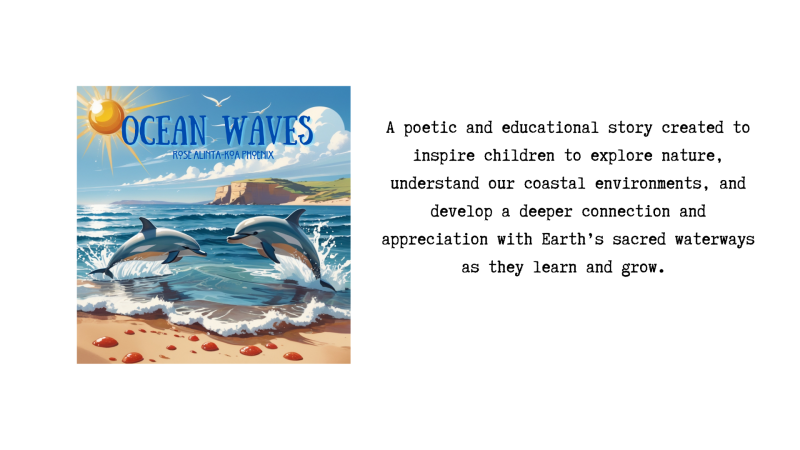

📚 Book Launch Announcement: Ocean Waves 📚
Today is the day… 🌊
The Story Corner is proud to officially announce the launch of Ocean Waves — a poetic and educational children’s story that celebrates the beauty, wisdom, and power of the ocean and the natural world around us.
Created to inspire young readers to connect deeply with Earth’s sacred waterways, Ocean Waves invites children on a heartfelt journey through diverse coastal landscapes, where they can explore, learn, and grow through nature’s gentle teachings.
This book encourages environmental awareness, emotional connection, and an appreciation for the ocean’s role in shaping our world and ourselves. Through rich storytelling and meaningful themes, children are introduced to coastal terminology and inspired to become caring stewards of the planet.
This special release is for every child who feels wonder in the waves, peace by the sea, and curiosity about the world around them.
We are so excited to share Ocean Waves with families, educators, and young readers everywhere.
The journey begins today 💙
Ocean Waves now available
👉https://amzn.asia/d/038j9BKN
or
👉 https://www.the-story-corner.com/our-stories
🌊🌏💙
1 Day to Go Until the Release of Ocean Waves
The wait is almost over — 1 day to go, until the official release of Ocean Waves, the newest children’s book from The Story Corner.
Across homes, classrooms, and reading spaces, anticipation is building for a story that invites children into the gentle rhythm of the ocean, where waves carry lessons of wonder, reflection, and connection to the natural world.
Ocean Waves has been created as a poetic and educational journey for young readers. It explores coastal landscapes, introduces ocean terminology in an engaging and natural way, and encourages children to see the environment as a living, breathing teacher.
At its heart, this upcoming release is about more than storytelling. It is about helping children develop environmental awareness, curiosity, and a deeper respect for Earth’s waterways. Through its calming narrative, the book encourages children to notice the rhythms of nature and understand their own inner world in new ways.
Teachers, parents, and caregivers will soon have a beautiful resource to share — one that supports learning, reflection, and meaningful conversation about the ocean, nature, and personal growth.
As the final day arrives, excitement continues to rise like the tide.
Tomorrow, Ocean Waves will finally be here. 🌊
The journey is about to begin. 💙


Only 2 Days to Go Until the Book Release
The countdown is on— only 2 days remain until the release of Ocean Waves, the latest children’s book from Story Corner.
Anticipation is building as families, educators, and young readers prepare to step into a poetic journey through the ocean, where oceanic landscape carry stories of wonder, learning, and connection to the natural world.
This upcoming release is more than just a book launch. It is the beginning of a story designed to inspire children to see the beauty in coastal landscapes, to understand the rhythms of nature, and to develop a deeper appreciation for Earth’s waterways.
In just two days, readers will be able to explore a world where the ocean becomes a teacher — guiding children through themes of curiosity, emotional awareness, resilience, and environmental respect.
Ocean Waves has been created to spark imagination while gently introducing children to coastal environments and ocean terminology, making learning both poetic and meaningful.
As the final countdown continues, for the next educational, and inspiring addition to conscious children’s literature.
The waves are almost here… 🌊
Being, Belonging, and Becoming 🧒
Children are not simply growing physically — they are continually discovering who they are, where they fit within the world, and who they are becoming. The concepts of being, belonging, and becoming remind us that childhood is not just preparation for the future; it is a deeply important stage of life in itself.
When we guide and support children through these three interconnected experiences, we help nurture emotionally secure, confident, and compassionate individuals.
Being: Honouring the Child in the Present Moment
Being is about recognising children as whole and valuable exactly as they are right now.
Children need time and space to simply exist — to play, wonder, explore, feel, and express themselves without constant pressure to achieve or perform. Through moments of play, imagination, creativity, and connection, children develop self-awareness and emotional understanding.
Supporting a child’s “being” means listening to them, valuing their thoughts and feelings, and creating environments where they feel safe to express themselves authentically.
When children are given permission to simply be, they develop confidence in their identity and trust in themselves.
Belonging: Helping Children Feel Connected
Belonging is one of the most important foundations for healthy development. Children thrive when they feel connected — to family, community, culture, nature, and relationships around them.
A sense of belonging gives children emotional security. It helps them feel accepted, valued, and supported as they grow. When children know they belong, they are more likely to build positive relationships, develop empathy, and feel confident participating in the world around them.
Belonging can be nurtured through meaningful relationships, shared experiences, cultural identity, storytelling, traditions, and connection with the natural environment.
Even small moments — shared meals, bedtime stories, outdoor exploration, or being truly listened to — help strengthen a child’s sense of belonging.
Becoming: Supporting Growth and Potential
Becoming refers to the ongoing process of growth, learning, and transformation throughout childhood.
Children are constantly developing new skills, understandings, emotions, and ways of seeing the world. Every experience contributes to who they are becoming.
Supporting a child’s becoming does not mean forcing them toward a fixed outcome. Instead, it means guiding them with patience, encouragement, and opportunities to explore their strengths, interests, and potential.
Children need space to make mistakes, solve problems, ask questions, and discover who they are over time. Growth happens gradually, and every child moves through this journey differently.
The Role of Adults in Guiding the Journey
Parents, teachers, and caregivers play an essential role in supporting children through being, belonging, and becoming.
This guidance is not about controlling every step of development, but about creating environments where children feel safe, respected, and inspired to grow.
Children learn most deeply through relationships. When adults model kindness, patience, curiosity, emotional awareness, and respect, children begin to develop these qualities within themselves.
Why These Concepts Matter
In today’s fast-paced world, there can be pressure to focus heavily on achievement and performance. But children need more than academic success alone.
They need opportunities to:
feel secure in who they are
feel connected to others
and feel supported as they grow into themselves
Being, belonging, and becoming provide a holistic approach to childhood development — one that values emotional wellbeing, identity, connection, and lifelong growth.
Every child deserves the opportunity to simply be, to deeply belong, and to safely become.
When we nurture these three experiences with care and intention, we support children not only in learning about the world — yet also in learning about themselves.
And within that journey, children begin to grow into grounded, compassionate, and capable individuals who feel connected to both their inner world and the world around them. 🌿💙


The Wisdom of the Ocean
The ocean has always been more than a body of water. For generations, it has been a source of life, mystery, reflection, and wisdom. Its waves move with rhythm and purpose, carrying lessons that speak quietly to those willing to listen.
There is wisdom in the way the ocean never remains still.
The tides rise and fall, reminding us that life moves in cycles. There are moments of calm, moments of uncertainty, and moments of great strength. Just like the sea, human life is constantly changing. The ocean teaches us that change is natural and that growth often comes through movement, experience, and adaptation.
The ocean also teaches patience.
Waves do not rush to reach the shore. They move in their own time, shaped by forces both seen and unseen. In a fast-paced world, the ocean reminds us that not everything needs to happen immediately. Some things are meant to unfold gradually, with trust and rhythm.
There is also wisdom in the ocean’s resilience.
Storms may disturb the surface, yet the ocean continues. It teaches us that strength is not always loud or forceful. Sometimes strength is found in persistence, in the ability to keep moving forward after difficulty has passed.
The ocean invites reflection.
Standing beside the sea often brings a sense of stillness and perspective. Its vastness reminds us that there is something greater than ourselves, encouraging humility, gratitude, and connection. In these quiet moments, many people find clarity, peace, and understanding.
For children, the ocean can become an especially powerful teacher. It encourages curiosity, imagination, emotional awareness, and respect for the natural world. Through observing waves, tides, marine life, and coastal landscapes, children begin to understand that nature itself carries important lessons about balance, responsibility, and interconnectedness.
The ocean also teaches care.
Every wave, shoreline, and ecosystem is part of a delicate balance that sustains life. When we learn to appreciate the ocean, we also learn the importance of protecting it. This awareness nurtures stewardship and a deeper respect for Earth’s sacred waterways.
Perhaps the greatest wisdom of the ocean is this: life is not meant to be controlled completely, but experienced fully.
Like the waves, we are meant to move, adapt, recover, and grow.
And if we listen closely enough, the ocean will always have something to teach us. 🌊💙
🥳 The Story Corner is Excited To Announce Another Book Release Called: Ocean Waves 🌊
This season, young readers and families will be invited to journey beside the sea with Ocean Waves — a poetic and educational children’s story that celebrates the beauty, wisdom, and power of our natural world.
Ocean Waves explores the sacred connection between a child growing up by the ocean, inspiring readers to slow down, listen, learn, and appreciate Earth’s precious waterways. Through lyrical storytelling and immersive coastal imagery, the book encourages children to recognise the environment as both teacher and companion.
More than a story, Ocean Waves nurtures curiosity, emotional growth, and environmental awareness. As children travel through diverse coastal landscapes, they’ll also discover rich ocean terminology and develop a deeper understanding of the natural ecosystems that shape our planet.
Ocean Waves is a reminder that nature holds space for us all — to grow, reflect, and step into responsible maturity with care and compassion.
Perfect for families, educators, and young ocean lovers alike, this upcoming release promises to be a timeless addition to every child’s bookshelf.
Stay tuned for the official launch date, exclusive previews, and special Story Corners announcements coming soon.
The waves are calling… 🌊


✨ The Story Corner has something magical coming… ✨
The Story Corners’ next release is a beautiful journey through waves, wonder, wisdom and the magic of Earth’s coastal treasures. A poetic new story designed to inspire young hearts to care for our waterways, our planet, and the world around them.
Coming soon… 💙🌊✨️
🌳 Our Latest Children’s Book: Caring For Country Supports Children to Walk with Beauty
In a fast-paced world filled with noise and distraction, there is a quiet, powerful idea that can guide children toward a more grounded and meaningful way of living: to walk with beauty. Our latest children’s book, Caring For Country, invites young readers to slow down, look closely, and build a deep, respectful relationship with the world around them.
“Walking with beauty” is about more than appreciating nature—it’s about how we move through life. It speaks to kindness, awareness, sacred stewardship and a sense of harmony with the Earth and with each other. Through gentle storytelling and thoughtful themes, Caring For Country encourages children to notice the small wonders: the rocks and the trees.
The book nurtures an understanding that caring for the Earth begins with connection and then nurture and care. When children feel that they belong to the land—not separate from it—they begin to act with greater care and intention. Whether it’s tending to a garden, respecting wildlife, or simply pausing to listen, these small acts become expressions of walking with beauty.
Caring For Country offers a message of hope and empowerment. It shows children that they can make a difference through their wise stewardship of earth care with curiosity, compassion, and a natural sense of wonder for earth beauty. By encouraging these qualities, the book helps young readers grow into individuals who move through the world with respect, gratitude, and purpose.
At its heart, Caring For Country is an invitation—to see beauty, to create beauty, and to carry it forward in everyday actions. In doing so, it supports children not only in caring for the Earth, it also supports children in learning how to walk gently and beautifully within it.
🌿🌏🌳


🌳 How Caring For Country Supports Children to Develop an Action-Oriented Approach to Earth Care for a Sustainable Future
Creating a sustainable future is not only about knowledge—it is about action.
While children today are growing up with increasing awareness of environmental challenges, awareness alone is not enough. What truly makes a difference is the ability to translate understanding into meaningful action. This is where Caring For Country plays a powerful role.
The story moves beyond simply teaching children to “care” about the Earth—it supports them in developing a sense of responsibility that naturally leads to action.
🌳 From Awareness to Action
Caring For Country introduces children to the importance of living in harmony with the Earth through values such as reverence, respect, and reciprocity. These values are not presented as abstract ideas, rather they are presented as ways of being that children can embody.
When children begin to feel connected to nature, their desire to care for it becomes intrinsic. This emotional connection is what transforms passive awareness into active participation.
Instead of asking, “Why should I care?”
Children begin to ask, “How can I help?”
🌳 Empowering Children as Contributors
One of the most important shifts in a child’s development is the movement from being a passive observer to an active contributor.
Caring For Country gently empowers children to see that their actions—no matter how small—have value. Whether it’s caring for a plant, respecting natural spaces, conserving resources, or helping their community, children begin to recognise that they can make a difference.
This sense of agency builds confidence and purpose, which are essential foundations for lifelong engagement in sustainable practices.
🌳 Building Sustainable Habits Through Meaning
Sustainable behaviours are most effective when they are rooted in meaning rather than obligation.
By fostering a sense of reverence and respect for the Earth, Caring For Country helps children understand why their actions matter. This deeper understanding encourages consistency and long-term commitment, rather than short-term compliance.
Simple actions—like reducing waste, caring for living things, or being mindful of resources—become expressions of care, rather than tasks to complete.
🌳 Encouraging Mindful Decision-Making
The story also supports children in developing awareness around the impact of their choices.
Through reflection and discussion, children begin to consider questions such as:
🌳 Is this choice and action I am taking kind to the Earth?
🌳 How does this action affect others?
🌳 What can I do differently next time?
This kind of thinking strengthens decision-making skills and fosters a mindset that naturally aligns with sustainable living.
🌳 Creating a Culture of Collective Care
Sustainability is not achieved individually—it is built through collective effort.
Caring For Country encourages children to see themselves as part of a larger community that includes people, animals, and the environment. This sense of belonging fosters cooperation and shared responsibility.
When children participate in group activities—whether in the classroom, at home, or within the community—they begin to understand the power of working together to care for the Earth.
🌳 Inspiring the Next Generation of Earth Guardians
At its core, Caring For Country is about nurturing children who are not only aware of the world’s needs, but who feel empowered to respond.
It supports the development of:
🌳 Confidence to take action
🌳 Responsibility for their environment
🌳 Commitment to sustainable practices
🌳 Hope for the future
These are the qualities that shape children into Earth Guardians—individuals who act with care, intention, and purpose.
🌳 A Future Shaped by Action
A sustainable future is built through everyday choices, guided by values and brought to life through action.
Caring For Country plants the seeds for this way of living—helping children understand that caring for the Earth is not something we do occasionally, rather it is something we live and do on going, moment by moment.
And when children grow up with this understanding, they don’t just learn about sustainability…
They become part of it.
🌿🌏🌳
🌳 Caring For Country Supports Children to Become Empowered Custodians of the Earth for a Brighter Tomorrow
In a world where environmental challenges are becoming more visible each day, nurturing a sense of responsibility and connection to the Earth in young minds has never been more important. Our latest children’s book, Caring For Country, is a heartfelt response to this need—an inspiring and accessible story that encourages children to see themselves as active participants in caring for the world around them.
Caring For Country introduces children to the idea that the Earth is not just a place we live in, but a living system that we are deeply connected to and dependant on so that we can thrive. Through engaging storytelling and meaningful themes, the book helps young readers understand that even small actions—like respecting nature, reducing waste, and showing kindness to all living things—can make a powerful difference.
The concept of “Caring For Country” goes beyond environmental awareness. It invites children to develop respect, empathy, and a sense of stewardship. By fostering this mindset early, the book aims to empower children to grow into thoughtful, informed individuals who value sustainability and community.
Caring For Country doesn’t overwhelm children with problems—it offers hope through a sacred approach for earth stewardship. It shows them that they are capable, that their choices matter, and that together, their actions can help shape a healthy sustainable future.
This book is a gentle call to action. By planting the seeds of care, respect, and responsibility, Caring For Country supports the next generation in becoming empowered custodians of the Earth—helping to create a brighter tomorrow for all.
🌱👣🌏


🌳 The Importance of Encouraging Children to Walk With and Care for Country
In an age shaped by rapid change and environmental uncertainty, helping children develop a meaningful relationship with the natural world is more important than ever. Encouraging children to “walk with and care for Country” offers a powerful way to nurture environmental awareness as well as respect, identity, and a sense of belonging.
“Country” is more than a physical landscape. It encompasses land, water, sky, plants, animals, and the deep cultural and spiritual connections that bind them together. When children are invited to walk with Country, they are encouraged to see themselves as part of this living system—not separate from it. This perspective fosters a sense of connection that is foundational to caring for the Earth in a genuine and lasting way.
Children who spend time engaging with nature—whether through outdoor play, storytelling, or observation—develop a natural curiosity and appreciation for the world around them. These early experiences shape how they think, feel, and act. When guided thoughtfully, they begin to understand that their actions matter: that caring for a plant, respecting wildlife, or reducing waste are all meaningful contributions to the health of the environment.
Importantly, walking with Country also supports children’s emotional and social development. Time spent in nature has been shown to reduce stress, improve focus, and enhance wellbeing. It invites children to slow down, to listen, and to become more aware of their surroundings. These moments of quiet connection can help build resilience, empathy, and a deeper sense of responsibility.
Teaching children to "Care for Country" is not about burdening them with the weight of global challenges. Rather, it is about empowering them with knowledge, respect, and hope. It is about showing them that they belong to something larger than themselves—and that their care, however small it may seem, is both valuable and necessary.
By encouraging children to walk gently, respectfully, and with awareness, we help cultivate a generation that understands the importance of balance and sustainability. These children grow into adults who are more likely to protect, preserve, and advocate for the natural world.
Ultimately, fostering this connection is an investment in the future. When children learn to walk with and care for Country, they carry forward a way of being that honours the Earth and all living things—helping to shape a more thoughtful, connected, and sustainable world for generations to come.
🌱👣🌏
🌳 How Caring For Country Supports Children to Care for Earth with Respect and Reverence
In a time of growing environmental concern, there is increasing recognition that sustainability is not only a scientific or political issue, rather it is a cultural and relational one. For children, developing a meaningful connection to the Earth begins not with abstract concepts, yet with lived experience, guided values, and respectful relationships. One powerful framework for nurturing this connection is the practice of Caring for Country.
Caring for Country is a holistic concept grounded in Indigenous knowledge systems, particularly those of Original and Torres Strait Islander peoples. “Country” is not merely land—it encompasses waterways, skies, plants, animals, stories, ancestors, and spiritual connections. It is alive, relational, and deeply interconnected. To care for Country is therefore not an obligation imposed from outside, but a reciprocal relationship based on respect, responsibility, and belonging.
When children are introduced to this way of thinking, their understanding of the environment shifts profoundly. Rather than seeing nature as a resource to be used, they begin to see it as a living system that cares for them, to which they belong. This fosters respect and reverence for the Earth and all that she provides.
One of the key ways Caring for Country supports children is by cultivating relationship over ownership. In many modern contexts, land is viewed through a lens of possession—something to own, develop, or exploit. Caring for Country offers an alternative perspective: the land is not owned, rather it is cared for as a steward and custodian. Children who learn this begin to understand that their role is not to dominate nature, rather to listen to it, learn from it, and protect it. This fosters humility and empathy—qualities essential for long-term environmental stewardship.
Another important aspect is learning through place. Caring for Country is inherently local and specific. It encourages children to engage with the particular landscapes they inhabit—the soil beneath their feet, the seasonal changes, the plants and animals that share their environment. This place-based learning grounds environmental care in tangible experience. A child who knows the birds in their area, who notices when a creek runs dry, or who participates in planting native species develops a personal connection that abstract environmental education often fails to achieve.
Storytelling also plays a vital role. Indigenous cultures have long passed down ecological knowledge through stories that encode lessons about balance, respect, and consequence. When children hear and engage with these stories (with cultural permission and sensitivity), they are not just learning facts—they are absorbing values. Stories invite emotional engagement, helping children internalize the idea that the Earth is worthy of care not just because it sustains us, rather because it is part of who we are.
Caring for Country also emphasizes responsibility across generations. Children are encouraged to see themselves as part of a continuum—receiving knowledge and care from those who came before, and holding a duty to pass it on. This long-term perspective counters the short-term thinking that often drives environmental degradation. It nurtures a sense of guardianship, where caring for the Earth becomes an ongoing commitment rather than a one-time action.
Importantly, this framework fosters reverence. Reverence goes beyond respect; it involves a sense of awe, gratitude, and deep appreciation. When children are guided to notice the beauty and complexity of the natural world—to sit quietly, to observe, to reflect—they begin to develop an emotional and even spiritual connection to the Earth. This connection is what ultimately motivates sustained care. People protect what they love, and they love what they feel connected to.
Incorporating Caring for Country into children’s lives does not require large-scale programs. Simple practices can have profound impacts: spending time outdoors regularly, involving children in caring for gardens or natural spaces, acknowledging the traditional custodians of the land, and modeling respectful behaviors toward nature. Educators and caregivers can also seek guidance from Indigenous communities to ensure that engagement is respectful, accurate, and culturally appropriate.
Caring for Country offers children a way of seeing and being in the world that is deeply needed today. It nurtures respect, responsibility, and reverence—qualities that extend beyond environmental care into all aspects of life. By fostering these values early, we support children in becoming not just caretakers of the Earth, yet participants in a living, interconnected system where care is both a duty and a gift.
🌳

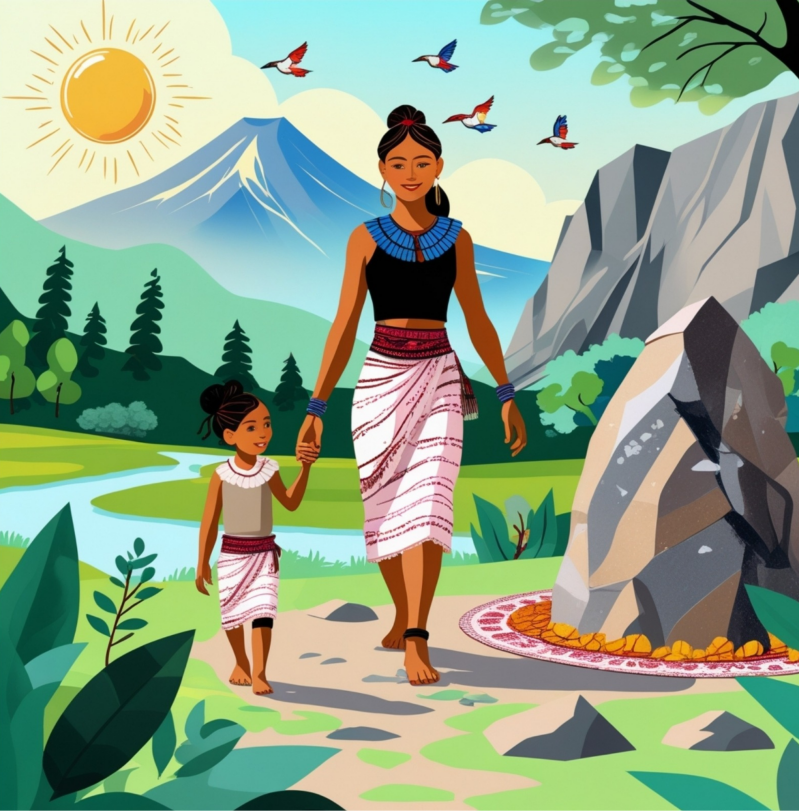
🌳 How Caring for Country Supports Positive Behaviour Guidance in Children
Caring for Country is a holistic way of relating to the Earth that naturally supports children in developing respectful, responsible, and emotionally regulated behaviour. Rather than relying on external control or punishment-based approaches, this framework encourages children to understand their place within a living system of relationships—with land, water, plants, animals, and people.
When integrated into early childhood education, parenting, or community learning, Caring for Country becomes a powerful foundation for positive behaviour guidance that is grounded in connection, not correction.
🌳 Behaviour is shaped by relationship, not control
At the core of positive behaviour guidance is the understanding that children behave in alignment with how connected, safe, and understood they feel. Caring for Country nurtures this connection by helping children feel part of something meaningful and alive.
When children feel a sense of belonging to the natural world, they are more likely to:
🌳 Show respect for their environment
🌳 Make thoughtful and considered choices
🌳 Respond with care rather than reactivity
Instead of asking, “How do we make children behave?”, Caring for Country shifts the question to, “How do we deepen their connection so behaviour naturally follows?”
🌳 Encouraging responsibility through real-world experience
Children learn responsibility best through lived experience. Caring for Country provides meaningful, hands-on opportunities where children can see the direct impact of their actions.
For example:
🌳 Planting and nurturing trees teaches care, nurture, patience and consistency
🌳 Caring for animals or gardens fosters empathy and responsibility
🌳 Cleaning natural spaces develops respect and stewardship
These experiences naturally reinforce positive behaviours because children can see and feel the outcomes of their choices.
🌳 Supporting emotional regulation through nature connection
Many behavioural challenges in children are linked to emotional overload, stress, or disconnection. Time spent in natural environments helps regulate the nervous system, reducing reactive behaviours.
Caring for Country supports children to:
🌳 Slow down and observe before reacting
🌳 Develop patience through natural rhythms (growth, seasons, cycles)
🌳 Self-soothe through sensory engagement with nature
A child who learns to sit quietly and observe a bird, or gently tend a plant, is also learning how to regulate their internal emotional world.
🌳 Building empathy and respect through interconnection
One of the most powerful aspects of Caring for Country is the understanding that everything is connected. This awareness naturally builds empathy, which is a key foundation for positive behaviour.
When children understand that:
🌳 The land provides for them
🌳 Animals depend on healthy ecosystems
🌳 Their actions affect other living beings
They begin to develop intrinsic motivation to act with care. Behaviour is no longer about external rules alone—it becomes an expression of respect for life.
🌳 Reducing conflict through purposeful engagement
Many behavioural disruptions in children arise from boredom, disconnection, or lack of meaningful engagement. Caring for Country offers purposeful, hands-on activities that channel energy into constructive action.
Children engaged in land-based care are often:
🌳 More focused and grounded
🌳 Less likely to display disruptive behaviour
🌳 More cooperative in group settings
When children feel needed and involved in something meaningful, they are less likely to seek attention through negative behaviour.
🌳 Teaching natural consequences, not punishment
Caring for Country gently teaches the principle of natural consequences. Instead of external punishment, children learn that actions have direct and observable outcomes in the environment.
For example:
🌳 If plants are not watered, they wilt
🌳 If litter is left, the land becomes unhealthy
🌳 If care is given, life flourishes
This approach supports children to develop internal awareness and accountability rather than fear-based compliance.
🌳 Strengthening connection-based guidance for caregivers
For parents, educators, and caregivers, Caring for Country offers a relational approach to behaviour guidance. Instead of focusing solely on correction, adults are invited to:
🌳 Model respect for nature and all living systems
🌳 Guide children through curiosity rather than control
🌳 Co-regulate emotions in calm natural environments
This creates a shared learning experience where adults and children grow together in awareness and presence.
🌳 Supporting identity, belonging, and purpose
When children are included in Caring for Country, they begin to develop a sense of identity that is rooted in contribution rather than compliance. They see themselves as caretakers, helpers, and participants in the wellbeing of the Earth.
This sense of identity supports positive behaviour because children are more likely to act in alignment with who they believe themselves to be.
A child who sees themselves as a “caretaker of Country” is more likely to act with care—even when no one is watching.
Caring for Country offers a deeply respectful and relational approach to positive behaviour guidance. It moves beyond managing behaviour and instead focuses on nurturing connection, responsibility, and emotional wellbeing.
When children feel connected to the land, they become more grounded in themselves. And from that grounded place, positive behaviour is not forced—it naturally grows.
🌱👣🌏
🌳 How Caring For Country Supports the Human Maturation Process in Children
Childhood is not only a time of learning—it is a time of becoming.
The human maturation process in children involves far more than physical growth or academic development. It includes emotional awareness, moral understanding, social responsibility, and the formation of identity. Caring For Country supports this deeper process by guiding children into a meaningful relationship with the natural world around them—one that innately strengthens who they are becoming.
🌳 Caring For Country is a story that nurtures a child’s sense of connection.
When children feel connected to the Earth, they begin to understand that they are part of something greater than themselves. This awareness helps shift their perspective from a self-focused view of the world to one that includes others—people, animals, and the environment. This is a key step in maturation: moving from “me” to “we.”
Through this connection, children begin to develop emotional depth and empathy.�As they learn to care for the land, they also learn to care for living things. They notice, they feel, and they respond. This strengthens their ability to empathise—not only with nature, but with other people as well.
🌳Caring For Country also supports the development of values and moral awareness.
By introducing principles such as reverence, respect, and reciprocity, this story helps children build an internal compass. Rather than simply being told what is right or wrong, they begin to understand why caring matters. This fosters intrinsic motivation—where children choose to act with care because it aligns with who they are becoming.
🌳Another important aspect of maturation is responsibility.
The story gently introduces children to the idea that their actions have an impact. It empowers them to see that even small choices—like caring for a plant, respecting a shared space, or helping protect nature—contribute to a larger whole. This builds a sense of agency and purpose, rather than overwhelm.
🌳 Caring For Country supports mindfulness and presence.
By encouraging children to slow down, observe nature, and engage with their surroundings, the story helps develop awareness and attentiveness. These qualities are foundational for emotional regulation, focus, and overall wellbeing—key elements in healthy human development.
🌳The book also nurtures a sense of identity and belonging.
When children see themselves as part of the Earth—as contributors and caretakers—they begin to form a more grounded and secure sense of self. They are not separate or insignificant; they are connected, capable, and needed. This sense of belonging strengthens confidence and supports positive self-worth.
🌳Caring For Country contributes to raising children who are knowledgeable and wise.
🌳Children who feel deeply.
🌳Children who think consciously.
🌳Children who act with care and intention.
By supporting connection, empathy, responsibility, and values-based living, the story plays a meaningful role in the human maturation process—guiding children toward becoming balanced, aware, and compassionate individuals.
And in doing so, it helps shape a generation who will care for the world they live in.
👣🌱🌏🫶

🌳 How Caring For Country Can Be Used as a Tool for Teachers, Parents, and Conscious Caregivers
Stories have always been one of the most powerful ways to guide, teach, and nurture children. Caring For Country is more than a book to be read—it is a tool to be experienced, explored, and integrated into everyday life.
For teachers, parents, and conscious caregivers, it offers a meaningful pathway to support children in developing connection, awareness, and responsibility in a way that feels natural and engaging.
🌳 A Tool for Building Connection
Caring For Country supports children to form a deeper relationship with the Earth. Adults can use the story as a starting point for conversations about nature and care for the environment, encouraging children to share what they notice, what they feel, and what they love about the world around them.
Simple questions such as “What did you notice in the story?” or “How do you think we can care for nature?” open the door for reflection and connection.
This creates space for children to not just understand the message, rather for them to feel it.
🌳 A Guide for Conscious Communication
For those who practice conscious parenting or teaching approaches, Caring For Country can be woven into everyday guidance. It aligns beautifully with communication frameworks that support emotional awareness and positive behaviour.
For example, when a child interacts with their environment—whether gently or carelessly—the story can be referenced to guide their understanding to:
🌳Acknowledge what happened
🌳 Validate their feelings or intentions
🌳 Observe the impact of the action
🌳 Offer a Solution that reflects care and respect
This approach helps children connect their actions with real-world outcomes, reinforcing values in a calm and supportive way.
🌳 An Invitation for Experiential Learning
The story comes to life when it moves beyond the page.
Teachers and caregivers can extend the message through hands-on, experiential activities such as:
🌳 Nature walks where children observe and collect natural materials
🌳 Gardening or caring for plants
🌳 Creating art using leaves, flowers, or natural elements
🌳 Participating in simple acts of environmental care, like picking up litter
🌳 Dancing and singing on the earth for enhanced environmental connection
These experiences allow children to embody what they learn, strengthening their sense of responsibility and connection.
🌳 A Foundation for Values-Based Learning
Caring For Country introduces core values such as reverence, respect, and reciprocity. These can be explored in practical ways through daily routines and interactions.
Adults can model these values by:
Speaking about nature with appreciation
Demonstrating care for shared spaces
Encouraging children to give back, even in small ways
Children learn not only through words, they learn through what they see and experience.
🌳 A Support for Emotional and Social Development
Connection to nature has a calming and grounding effect on children. Using Caring For Country as a regular part of reading or reflection time can support emotional regulation, mindfulness, and a sense of wellbeing.
It also encourages cooperation and shared responsibility when explored in group settings, helping children develop social awareness and teamwork.
🌳 A Bridge Between Home, Learning, and Community
One of the strengths of Caring For Country is its ability to create continuity between different environments. The same values can be reinforced at home, in the classroom, and within the wider community.
When children receive consistent messages about care, respect, and responsibility, these values become part of who they are—not just something they are told.
🌳 More Than a Story
Caring For Country is a living resource—one that can be revisited, reflected on, and woven into daily life, that is timeless in wisdom and application.
For teachers, parents, and conscious caregivers, it offers a gentle yet powerful tool to guide children toward:
🌳Deeper connection
🌳 Greater awareness
🌳 Meaningful responsibility
And ultimately, toward becoming individuals who understand the world and care deeply for it.
Because when we use stories with intention, we don’t just teach children…
We help shape the way they see, feel, and contribute to the world around them.
👣🌏🌳
🌳 How Caring for Country Supports the Overall Wellbeing of Children
Caring for Country is more than an environmental practice—it is a way of relating to the Earth as a living, interconnected system that holds us, teaches us, and sustains us. When children are introduced to this way of being early in life, it can profoundly support their emotional, social, physical, and spiritual wellbeing.
At its heart, Caring for Country invites children to develop a relationship of respect, reciprocity, and responsibility with the natural world. This relationship becomes a grounding force that helps shape how they see themselves and their place within the circle of life.
🌳 Emotional wellbeing: building safety, calm, and belonging
Time in nature has consistently been linked to reduced stress, anxiety, and emotional overwhelm in children. When Caring for Country is woven into a child’s lived experience, nature becomes more than a place they visit—it becomes a safe emotional anchor.
Children who regularly engage with land, water, plants, and animals often develop:
🌳 A greater sense of calm and emotional regulation
🌳 Reduced feelings of isolation or overstimulation
🌳 A stronger sense of belonging to something bigger than themselves
When a child learns that the land is not separate from them, rather it is apart of their extended family, it fosters deep emotional security.
🌳 Social wellbeing: connection, cooperation, and respect
Caring for Country is inherently relational. It encourages children to observe, listen, and respond thoughtfully to their environment. These same skills translate directly into healthier relationships with other people.
Children engaged in land-based learning and environmental care develops:
🌳Greater empathy and respect for others
🌳 Stronger cooperation and teamwork skills
🌳 An understanding of shared responsibility
Whether they are planting trees, tending a garden, or observing wildlife habitats, children learn that their actions affect the environment around them and the collective at large. This nurtures a natural sense of accountability and care for community.
🌳 Physical wellbeing: movement, sensory development, and resilience
Children learn best through embodied experience. Caring for Country naturally draws them outdoors, where the landcaope is the class room and teacher, their bodies can move freely and engage with diverse sensory environments.
This supports:
🌳 Physical activity and coordination
🌳 Sensory integration (touch, sound, smell, sight, movement)
🌳 Immune system development through exposure to natural environments
Digging in soil, climbing logs, collecting leaves, or walking through bushland strengthens not only physical health but also a child’s connection to their own body as part of the living world.
🌳 Cognitive development: curiosity, observation, and systems thinking
Nature is one of the richest learning environments available. Caring for Country encourages children to notice patterns, ask questions, and explore relationships within ecosystems.
This supports:
🌳 Curiosity and intrinsic motivation to learn
🌳 Early scientific thinking through observation and experimentation
🌳 Systems thinking (understanding how all things are interconnected)
For example, a child observing how bees interact with flowers begins to understand pollination, cycles of life, and interdependence in a very real and embodied way.
🌳 Spiritual wellbeing: connection, meaning, and purpose
One of the most profound aspects of Caring for Country is the sense of connection it fosters—not only to the Earth but also to meaning and purpose.
Children often begin to develop:
A sense of reverence for life
Gratitude for natural systems that sustain them
An intuitive understanding that they are part of something sacred and alive
This does not require a specific belief system. Rather, it is a felt experience of being connected to the land, to life, and to continuity. For many children, this becomes a quiet inner compass that guides their choices as they grow.
🌳 Developing responsibility and stewardship
When children are included in Caring for Country practices, they are not just learning about nature—they are learning how to care for it. This shifts them from passive observers to active participants.
They begin to understand:
🌳 Their actions have impact and what they do matters
🌳 The Earth needs their support and care
🌳 They are capable of contributing to positive environmental change
This fosters empowerment rather than helplessness in the face of global environmental challenges.
🌳 A foundation for future generations
When Caring for Country is embedded into a child’s upbringing, it lays the foundation for a generation that values sustainability, respect, and collective wellbeing. These children grow up not only knowing about the environment but feeling deeply responsible for it.
They are more likely to become adults who:
🌳 Make environmentally conscious decisions
🌳 Advocate for ecological protection
🌳 Live in alignment with values of care and reciprocity
Caring for Country is a practice of relationship—between children and the Earth, children and community, and children and themselves. It supports the whole child: heart, mind, body, and spirit.
When we give children the opportunity to care for the land, we are also giving the land an opportunity to care for them in return.
And in that reciprocal relationship, wellbeing naturally grows.
🌳
🌏🌳 Why Caring For Country Matters 🌏🌳
There is a quiet truth that lives beneath the surface of our everyday lives: that the way we care for the Earth shapes the future we all share.
Caring For Country matters because it brings us back to this truth—gently, simply, and powerfully.
In a fast-paced world where technology often pulls attention away from the natural environment, many children are growing up with less direct connection to the land, the seasons, and the rhythms of nature. Yet, this connection is not just something “nice to have”—it is essential. It influences how children understand life, how they relate to others, and how they see their place in the world.
When children develop a relationship with the Earth, something important happens. They begin to care.
Not because they are told to, rather because they feel connected and a sense of appreciation with love for all that Earth provides.
This is why Caring For Country matters. It nurtures that connection early, when it is most natural and most impactful, in laying the foudnations for a teacher and guide.
At the heart of this message are three powerful values: reverence, respect, and reciprocity.
Reverence teaches children to appreciate the beauty and wonder of the natural world—to pause, to notice, and to feel gratitude for what surrounds them.
Respect helps them understand that nature has its own balance and intelligence, and that their actions have an impact.
Reciprocity invites them into a relationship of giving back—recognising that as we receive from the Earth, we also have a responsibility to care for it in return.
These values go far beyond environmental awareness. They shape character. They influence behaviour. They guide children in becoming thoughtful, compassionate, and conscious individuals.
Caring For Country also matters because of the time we are living in.
Environmental challenges are becoming more visible, and the need for sustainable thinking and action is growing. Yet true sustainability is not built on information alone—it is built on connection. When children feel connected to the Earth, they are more likely to protect it, advocate for it, and make choices that support its wellbeing.
This book offers an approach that is not based on fear or urgency, but on love, belonging, and empowerment.
It reminds children that they are not separate from the Earth—they are part of it.
And within that understanding, there is hope.
Because when children grow up with a deep sense of connection and care, they naturally step into roles of responsibility. They begin to see themselves as contributors, protectors, and caretakers of the world around them.
They become Earth Guardians—not through pressure, but through purpose.
Ultimately, Caring For Country matters because it plants seeds.
Seeds of awareness.
Seeds of care.
Seeds of a future where humanity lives in greater harmony with the Earth.
And when those seeds are nurtured, they have the power to grow into something truly transformative—for children, for communities, and for the world we all call home.
👣🌳🌏🌱

Who Caring For Country Is For
Caring For Country was created with a simple yet powerful intention—to reach the hearts of those who love earth and feel called to nurture a deeper relationship with her.
Caring For Country is a children’s book with a message for children as well as adults, educators, and communities alike.
For Children
Caring For Country is for the next generation who will inherit the earth and shape the future of our world. It supports them in strengthening their natural connection to the Earth, encouraging reciprocity, respect, and care for the environment. Through its storytelling, children are invited to see themselves as part of nature, not separate from it, and to recognise that even small actions can make a meaningful difference.
For Parents and Caregivers
This book is also for parents and caregivers who want to raise children with strong values of environmental awareness, empathy, and responsibility. Caring For Country offers a gentle and accessible way to introduce important conversations about caring for the planet, while also nurturing emotional connection, mindfulness, and appreciation for the natural world.
For Educators
For early childhood educators and teachers, Caring For Country is a valuable resource that aligns with practices centred around holistic development, sustainability, and connection-based learning. It can be used to support discussions, creative activities, and learning experiences that encourage children to engage with nature in meaningful and respectful ways.
For Communities
Beyond the home and classroom, Caring For Country is for communities who are committed to fostering a culture of care and action. It supports collective awareness around environmental stewardship and highlights the importance of shared responsibility in protecting and nurturing the land for future generations.
For Those Seeking Connection
Perhaps most importantly, this book is for all ages—young or old—who feels the call to reconnect with the Earth. It is for those who believe that a sustainable future begins with a shift in how we relate to the world around us through awareness.
Caring For Country is more than a story. It is an invitation.
An invitation to slow down… to listen… to reconnect… and to remember that we are all part of something greater.
Because when we nurture this connection in children, we are not only supporting their growth—we are helping to shape a future grounded in respect, reciprocity, and harmony. 🌿🌏
Why I Wrote Caring For Country
There comes a time when a story doesn’t just feel like an idea—it feels like a responsibility.
Caring For Country was written from that place.
As someone who has worked closely with children, I have seen how naturally connected they are to the Earth. They are curious about the trees, drawn to the water, fascinated by animals, and deeply responsive to the beauty around them. Yet, I have also seen how easily that connection can fade when it isn’t nurtured, guided, and honoured.
I wrote Caring For Country because I believe that connection to the Earth is not something children need to be taught from the beginning—it is something that needs to be protected, strengthened, and brought into awareness.
This book was born from a desire to support children in remembering their relationship with the land.
Caring For Country is a medicine story—one that honours the Earth while shining a light on the wisdom of traditional Earth cultures. There is a deep intelligence in the way many cultures have lived in harmony with nature, understanding that the Earth is not simply a resource, but a living system that we are part of and need to care for. Caring For Country gently bring this awareness through a form that children can understand and connect with.
I also wrote this book because of the times we are living in.
We are facing growing environmental challenges, and the future will be shaped by the children of today. Rather than placing the weight of these challenges on them, I wanted to offer something empowering—something that builds love before responsibility, connection before action.
Because when children love the Earth, caring for it becomes natural.
Caring For Country introduces values that I believe are essential for both personal and collective wellbeing: reverence, respect, and reciprocity. These are not just environmental principles—they are ways of being that influence how children relate to themselves, others, and the world around them.
Through this story, I hope children come to understand that they are not small or separate—they are part of something vast, meaningful, and alive.
And within that understanding, there is power.
The power to care.
The power to make choices that support life.
The power to become Earth Guardians in their own unique way.
Ultimately, I wrote Caring For Country as an offering.
An offering to children, to families, to educators—and to the Earth itself.
A reminder that the way forward is not just through knowledge, its also through direct connection.
And that when we raise children who care deeply for the world around them, we are helping to shape a future grounded in harmony, sustainability, and love. 🌿🌏


Caring For Country Promo Video
There is a quiet wisdom...
that lives within the Earth.
That we can walk with gently...
while listening to her rhythms..
to honour her beauty and to care for all that lives and breathes with her
For generations, this wisdom has been shared—
through story,
through connection,
through care.
Caring For Country is a heartfelt children’s story...
that honours the Earth
and shines a light on the wisdom
of traditional Earth cultures.
It invites children to slow down...
to listen..
to feel her presence and pulse.
To walk softly.
To walk with her beauty.
To understand that the Earth is not separate from us—
we are interconnected with her...
Through this story, children are guided to grow in
reverence,
respect,
and reciprocity.
To not only receive from the Earth—
to also give back in return.
Because when children learn to care for the land…
they begin to care for each other
and for themselves.
They become the next generation...
of Earth Guardians.
Caring For Country—
is a story to inspire connection,
action,
and a future rooted in harmony.
Pick up a copy today for the little people you care about
in your life, to share a message that awakens connection,
inspires responsibility and plants seeds of change for generations to come.
Available now across all leading platforms...
Amazon,Apple Books, Kobo, Bookshop.org and Barnes & Noble
Caring For Country is now available
👉 https://amzn.asia/d/0g8hdrIc
or
👉 https://www.the-story-corner.com/our-stories
With Love
Rose
🙏💖🌹👣🌏🌱
📚 Book Launch Announcement 📚
Today is the day The Story Corner is excited to announce the release of another wisdom story for children called Caring For Country: A Story to Inspire the Next Generation of Earth Guardians
Caring For Country is a meaningful children’s story that invites young readers into a deeper relationship with the Earth and all that she provides.
Caring For Country is a gentle yet powerful medicine story that honours the Earth while shining a light on the wisdom of traditional Earth cultures. It offers children an opportunity to see the world through a lens of connection, respect, and responsibility—values that are needed now more than ever.
At its core, this story brings awareness and mindfulness to the importance of caring for our environment and living in alignment and harmony with the natural world. It encourages children to slow down, notice the beauty around them, and understand that the Earth is not something separate from us—but something we are interconnected with.
Through its message, children are supported to deepen their understanding of:
Reverence for the Earth and her living systems
Respect for nature, its rhythms, and its balance
Reciprocity, recognising that as we receive from the Earth, we also have a role in giving back
Caring For Country is an invitation. An invitation for children, families, and educators to nurture a culture of care, where the next generation grows up empowered to be part of the solution for a sustainabile,.
This story aims to inspire children to step into their role as Earth Guardians—young individuals who care deeply, act consciously, and believe in their ability to make a difference.
As we celebrate the release today, Caring For Country offers a simple yet profound reminder: when we teach children to care for the Earth, we are helping to shape a future grounded in harmony, sustainability, and love.
Now available— https://amzn.asia/d/0cnI0D00
Get ready to plant seeds of care in young hearts. 🌿🌏

Something inspiring is coming for the children who love and care for Earth 🌿✨
The next children’s book from The Story Corner is a wisdom story called Caring For Country.
This beautiful story invites children to deepen their connection with the land, nurturing a sense of respect, responsibility, and love for the natural world around them. Through meaningful storytelling and nature-based wisdom, Caring For Country encourages young hearts to listen, learn, and walk gently upon the Earth.
It’s more than just a story… it’s an invitation for children to become mindful caretakers, to understand that their actions matter, and that even the smallest hands can make a big difference.
Perfect for families, educators, and communities who value sustainability, connection, and raising the next generation of earth guardians 🌏💚
Coming soon… stay tuned for the release 🌱
🌳 The Importance of Encouraging Children to Have Persistence and Patience While They Grow in Their Value and Service to the World 🌳
In a fast-paced world that often celebrates instant results and quick success, teaching children the values of persistence and patience has become more important than ever. True growth—both personal and in service to others—takes time, effort, and dedication. When children are supported in developing these qualities, they learn to trust the process of their own development and recognise that their value is not defined by immediate outcomes, but by their willingness to keep showing up, learning, and contributing.
Encouraging persistence and patience in children lays a strong foundation for a life of purpose, resilience, and meaningful service to the world.
🌳 Understanding Growth as a Journey
Children naturally want to explore, create, and contribute. However, when things don’t happen quickly or easily, they may feel discouraged or doubt their abilities. Teaching children that growth is a journey helps them reframe challenges as part of the process rather than signs of failure.
When children understand that skills, confidence, and impact develop over time, they become more willing to stay engaged, even when things feel difficult. This mindset supports long-term growth and encourages them to remain committed to their goals and aspirations.
🌳 Building Resilience Through Persistence
Persistence is the ability to keep going, even when faced with obstacles. When children are encouraged to try again, adjust their approach, and continue forward, they develop resilience—the inner strength to navigate challenges without giving up.
Each time a child persists through difficulty, they strengthen their belief in themselves. They learn that setbacks are not the end, but opportunities to learn and grow. This resilience becomes essential as they begin to find ways to contribute their unique gifts in service to others.
🌳 Cultivating Patience in a Fast-Paced World
Patience is a quiet but powerful quality. It teaches children to trust timing, to allow things to unfold naturally, and to remain calm and grounded while working toward their goals.
In a culture that often prioritises speed and instant gratification, patience helps children develop a deeper appreciation for effort, process, and progress. They begin to value the small steps that lead to meaningful outcomes, rather than focusing only on the end result.
Patience also supports emotional regulation, helping children manage frustration, disappointment, and anticipation in healthy ways.
🌳 Supporting Children to Recognise Their Value
Every child has unique gifts, strengths, and qualities that can contribute positively to the world. However, discovering and developing these gifts takes time. When children are encouraged to be patient with themselves, they are more likely to explore, experiment, and grow without the pressure of needing to “get it right” immediately.
Persistence supports this process by encouraging children to continue refining their skills and expressing their abilities, even when they are still learning. Over time, they begin to recognise their own value—not based on comparison or perfection, but through consistent effort and authentic expression.
🌳 Encouraging Meaningful Service
As children grow in their understanding of themselves, they also begin to see how they can contribute to others. Service to the world does not need to be grand or complex; it can be as simple as helping a friend, caring for the environment, or sharing kindness within their community.
When children practise persistence and patience, they are more likely to stay committed to these acts of service. They understand that making a positive impact is not about one moment, but about ongoing care and contribution.
This perspective helps children develop a sense of responsibility and purpose, guiding them to use their gifts in ways that benefit both themselves and others.
🌳 Creating a Supportive Environment
Adults play a vital role in nurturing persistence and patience in children. This can be done by modelling these qualities, offering encouragement during challenges, and celebrating effort rather than just outcomes.
Providing children with opportunities to engage in activities that require time and dedication—such as creative projects, learning new skills, or participating in community initiatives—helps them experience the rewards of persistence firsthand.
It is also important to create a safe environment where mistakes are seen as part of learning. When children feel supported rather than judged, they are more willing to keep trying and growing.
🌳 Encouraging children to develop persistence and patience is a powerful way to support their growth in both personal value and service to the world. These qualities help children build resilience, trust in their journey, and remain committed to their development over time.
When children learn to be patient with themselves and persistent in their efforts, they grow into individuals who are not only capable, but deeply grounded in purpose and contribution. In nurturing these qualities, we are helping to shape a generation that understands that meaningful impact is not created overnight—but through consistent, heartfelt effort over time.
🌳

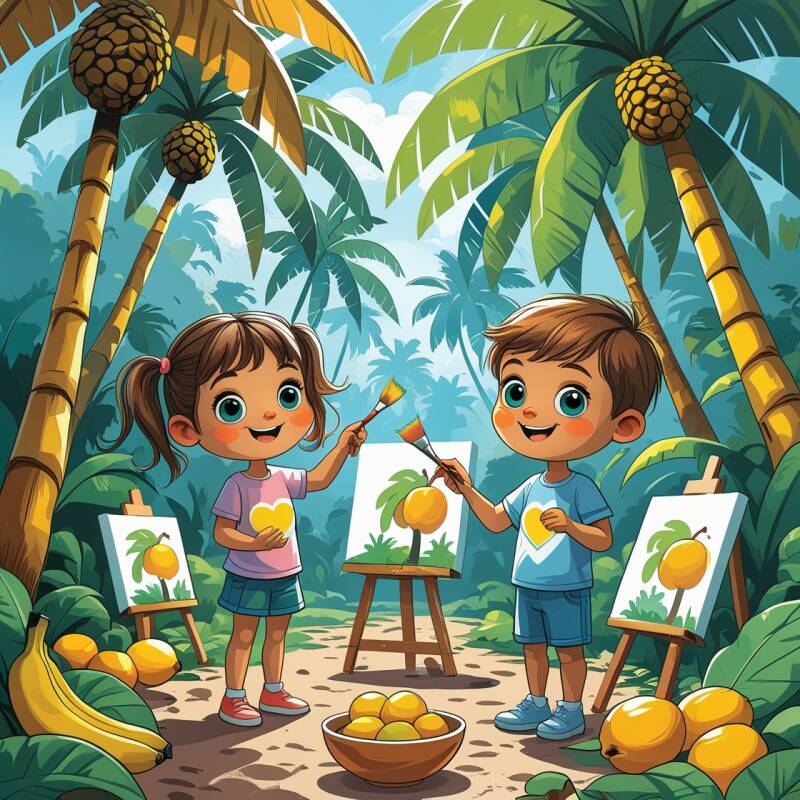
🌳 The Importance of Encouraging Children to Participate in Co-Creating a Heart-Centred Creative Culture Within Their Community Part 2 🌳
In a world that often prioritises achievement, productivity, and external success, there is a growing need to return to the heart and creativity—to values of kindness, connection, compassion, and authenticity. Children naturally embody these qualities, and when they are encouraged to participate in co-creating a heart-centred creative culture within their community, these innate gifts are nurtured, strengthened, and shared in meaningful ways.
A heart-centred creative culture is one where expression is guided not only by imagination, but by empathy, care, and a genuine desire to contribute to the wellbeing of others. When children are invited into this space, they learn that creativity is not just about what they can make, but about how they can make others feel.
🌳 Cultivating Emotional Awareness and Authentic Expression
Children experience a wide range of emotions, yet they are not always given the tools or spaces to express them in healthy and constructive ways. A heart-centred creative culture provides a safe and supportive environment for children to explore and communicate their inner world.
Through art, storytelling, music, movement, and play, children can express joy, sadness, curiosity, and wonder. When this expression is welcomed and valued, children learn to honour their feelings rather than suppress them. This fosters emotional awareness, resilience, and a deeper connection to self.
🌳Strengthening Connection and Compassion
Co-creating within a heart-centred environment encourages children to move beyond individual expression and into shared experience. As they collaborate on creative projects, they learn to listen deeply, respect one another’s perspectives, and support each other’s ideas.
This process naturally builds compassion. Children begin to recognise that everyone has their own story, feelings, and experiences. By engaging in creative collaboration, they develop the ability to connect with others on a deeper level, forming relationships rooted in understanding and care.
🌳 Empowering Children as Meaningful Contributors
When children are invited to help shape the culture of their community, they begin to see themselves as valuable contributors rather than passive participants. Their ideas are acknowledged, their creativity is celebrated, and their voices are heard.
This sense of empowerment strengthens their confidence and encourages a positive sense of identity. Children learn that they have something meaningful to offer, and that their contributions can make a difference. This awareness inspires them to participate more actively and responsibly within their community.
🌳 Encouraging Values-Led Creativity
A heart-centred creative culture is grounded in values such as kindness, respect, inclusivity, sincerity, authenticity and care for the environment. When children engage in creative activities that reflect these values—such as creating art with messages of wise solutions and kindness with participating in community care projects, or telling stories that inspire positive action—they begin to internalise these principles.
Creativity becomes a vehicle for expressing not just ideas, but values. Children learn that what they create can influence how others think, feel, and act, reinforcing the importance of using their creativity in conscious and meaningful ways.
🌳 Fostering a Sense of Belonging and Community
Participation in co-creating a shared culture helps children feel connected to something larger than themselves. They begin to experience community as a space where everyone’s contributions matter and where diversity is embraced.
This sense of belonging is essential for a child’s wellbeing. When children feel seen, valued, and included, they are more likely to engage positively with others and contribute to a supportive and harmonious the world around them.
🌳 Inspiring Future Generations of Heart-Led Leaders
Children who grow up in heart-centred creative environments carry these experiences into adulthood. They are more likely to become individuals who lead with empathy, communicate with compassion, and seek to create positive change in the world.
By encouraging children to co-create in this way, we are not only supporting their personal development—we are nurturing future leaders who prioritise connection, wellbeing, and collective growth.
Encouraging children to participate in co-creating a heart-centred creative culture within their community is a powerful and transformative practice. It nurtures emotional intelligence, strengthens relationships, and empowers children to express themselves with authenticity and purpose.
When children are given the opportunity to create from the heart, alongside others who value connection through the creative process and care, they develop into compassionate, confident, and creative individuals. In turn, they help shape communities that are not only imaginative and vibrant, but deeply connected and aligned with the values that support true human flourishing.
🌳
🌳 The Importance of Encouraging Children to Participate in Co-Creating a Creative Culture Within Their Community Part 1 🌳
In a rapidly changing world, the need for creativity, collaboration, and community-minded thinking has never been more important. Children are not just passive recipients of the world around them—they are active contributors with unique ideas, perspectives, and gifts to offer. Encouraging children to participate in co-creating a creative culture within their community empowers them to see themselves as capable, valued, and connected individuals who can positively influence the world around them.
🌳 Nurturing a Sense of Belonging and Contribution
When children are invited to take part in shaping their community—whether through art, storytelling, environmental projects, or collaborative problem-solving—they develop a deep sense of belonging. They begin to understand that their voice matters and that they have a role to play. This sense of contribution strengthens their self-worth and encourages them to engage more meaningfully with others.
Rather than feeling like observers, children become participants and valued contributors. They experience firsthand that community is something we build together, not something that simply exists.
🌳 Fostering Creativity as a Life Skill
Creativity is not limited to artistic expression; it is a way of thinking, problem-solving, and engaging with life. By involving children in co-creating a creative culture, we help them develop the confidence to explore ideas, take risks, and think outside the box.
When children collaborate on creative initiatives—such as community murals, storytelling circles, or nature-based projects—they learn that there are many ways to approach a challenge. This flexibility in thinking becomes a valuable life skill, supporting them in navigating both personal and collective experiences.
🌳 Encouraging Collaboration and Empathy
Co-creation naturally invites collaboration. As children work together, they learn to listen to others, respect diverse perspectives, and find common ground. These experiences cultivate empathy and emotional intelligence, as children begin to understand the feelings, ideas, and needs of those around them.
Through shared creative processes, children learn that differences are not obstacles, but opportunities for richer and more meaningful outcomes. They discover the beauty of combining ideas and the strength that comes from working as a collective with diversity.
🌳 Inspiring Responsibility and Stewardship
When children are involved in creating something within their community, they develop a sense of ownership and responsibility. Whether it’s caring for a community garden, contributing to a shared art space, or participating in local initiatives, they begin to understand the impact of their actions.
This fosters a sense of stewardship—not only for their immediate environment but for the wider world. Children who feel connected to their community are more likely to care for it, protect it, and contribute to its wellbeing.
🌳 Strengthening Cultural Identity and Expression
Creative culture allows children to explore and express their identities, values, and traditions. By participating in community-based creative activities, children can share their stories while also learning from others. This exchange strengthens cultural awareness, appreciation, and unity.
It creates a space where diversity is celebrated, and where each child’s background and perspective become part of the collective tapestry of the community.
🌳Building Future Leaders and Change-Makers
Children who grow up in environments that value co-creation and creativity are more likely to become confident leaders and proactive change-makers. They learn that they have the ability to influence outcomes, solve problems, and contribute to meaningful change.
By empowering children in this way, we are not only supporting their individual development—we are investing in the future of our communities. These children carry forward the values of collaboration, creativity, and care, shaping a more connected and compassionate world.
Encouraging children to participate in co-creating a creative culture within their community is a powerful way to support their growth and development. It nurtures confidence, creativity, empathy, and a sense of purpose, while strengthening the fabric of the community itself.
When children are given the opportunity to contribute, express, and collaborate, they don’t just grow—they thrive. And in doing so, they help create communities that are vibrant, inclusive, and full of possibility.
🌳


🌳 Our Latest Children’s Book Trees That Bear Good Fruits Supports Children to Nourish and Nurture the Goodness of What They Want to Grow in the World 🌳
In a world that is constantly shaping young minds, the stories we place in the hands of children matter more than ever. Trees That Bear Good Fruits is a heartfelt and meaningful children’s book designed to gently guide children toward understanding their inner world, their choices, and the impact they have on others. At its core, this story is about emotional, spiritual, and relational growth—along with how every child holds the power to cultivate goodness within themselves and in the world around them.
Using the timeless metaphor of a tree, the book invites children to reflect on the “seeds” they plant each day through their thoughts, words, and actions. Just as a tree grows from the nourishment it receives, children begin to understand that kindness, generosity, patience, honesty, and love are qualities that must be nurtured consistently in order to flourish. The story helps children recognise that what they choose to grow internally will eventually be expressed externally—through their behaviour, relationships, and contributions to the world.
One of the most powerful aspects of Trees That Bear Good Fruits is its ability to make abstract concepts tangible and relatable. Children may not always grasp lectures about “being good” or “making positive choices,” but they do understand the idea of caring for a tree. They understand watering it, nurturing it, and watching it grow. This simple yet profound analogy becomes a bridge for deeper emotional learning, allowing children to connect their inner experiences with real-world outcomes.
The book also supports emotional intelligence by encouraging self-awareness. It gently prompts children to ask themselves reflective questions such as: What am I growing inside me? Are my choices helping my tree thrive? What kind of fruit do I want to grow and share with others? These reflections empower children to take ownership of their behaviour in a way that feels inspiring rather than shame-based.
In addition, Trees That Bear Good Fruits promotes a solution-focused mindset. Instead of focusing on mistakes as failures, children are guided to see them as opportunities to plant the seed, nourish it, and grow again. This builds resilience and helps children understand that growth is a continuous process—not something that requires perfection, but rather intention and care.
For parents, caregivers, and educators, this book becomes a valuable tool for positive behaviour guidance. It opens the door for meaningful conversations about values, choices, and personal responsibility in a way that feels natural and engaging. Rather than correcting behaviour through control or discipline alone, adults can refer back to the story: “What kind of fruit is this choice growing?” This shared language creates a supportive environment where children feel guided, not judged.
Ultimately, Trees That Bear Good Fruits is more than just a story—it is an invitation. An invitation for children to see themselves as creators of their own inner garden. An invitation to nurture qualities that uplift not only themselves but everyone around them. And an invitation to grow into individuals who consciously contribute goodness, kindness, and positive change into the world.
Because when children learn to nourish what is good within them, they don’t just grow—they blossom into the very change the world needs.
🌳 🌱✨
🌳The Importance of Raising Creative Culture-Focused, Solution-Minded Children 🌳
In a rapidly changing world, the qualities children need to thrive are evolving. Beyond academic success, there is a growing need to nurture children who can think creatively, appreciate culture, and approach life with a solution-oriented mindset. These qualities not only support personal success, but also contribute to a more compassionate, innovative, and connected society.
Raising children in this way is not about adding pressure—it’s about expanding possibility.
🌳 Creativity: The Foundation of Innovation and Self-Expression:
Creativity is far more than art or craft—it is the ability to think differently, solve problems, and express ideas in unique ways.
When children are encouraged to be creative, they develop:
🌳 Confidence in their ideas
🌳Flexibility in thinking
🌳 A willingness to explore and take healthy risks
Creative children are not limited by “what is,” but inspired by “what could be.” This mindset becomes essential as they face challenges in school, relationships, and later in life.
Creativity also supports emotional wellbeing. Through drawing, storytelling, building, and imaginative play, children process their experiences and express feelings that they may not yet have words for.
🌳 Cultural Awareness: Building Identity and Connection
A culture-focused upbringing helps children understand both where they come from and how they relate to the wider world. Culture includes traditions, values, stories, language, and creative and wise ways of living.
When children are connected to culture, they develop:
🌳 A strong sense of identity and belonging
🌳 Respect for diversity and different perspectives
🌳 Curiosity about the world around them
They learn that there are many ways to live, think, and create—expanding their worldview and reducing fear of difference.
🌳 A Solution Mindset: Empowering Children to Navigate Challenges
One of the most valuable life skills a child can develop is the ability to approach challenges with a solution mindset.
Instead of becoming stuck in problems, solution-minded children learn to ask:
🌳 “What can I do about this?”
🌳 “What are my options?”
🌳 “What can I learn from this?”
🌳 “How can I do things differntly?"
This mindset builds resilience, independence, and confidence. Children begin to see challenges not as obstacles, but as opportunities for growth and creativity.
Rather than relying on adults to fix everything, they become active participants in finding ways forward.
🌳 Weaving It All Together
When creativity, cultural awareness, and a solution mindset are nurtured together, they create a powerful synergy.
🌳 Creativity gives children the ability to generate ideas
🌳 Cultural awareness provides depth, meaning, and perspective
🌳 A solution mindset helps them apply their ideas in practical, constructive ways
Together, these qualities prepare children not just to succeed—but to contribute.
They become individuals who can:
🌳 Think outside the box
🌳 Respect and collaborate with others
🌳 Solve real-world problems with empathy and innovation
🌳 Supporting These Qualities in Everyday Life:
Raising children with these strengths doesn’t require perfection—it comes from intentional, everyday moments.
Encourage Creativity:
🌳 Provide open-ended materials (art supplies, building tools, nature items)
🌳 Allow unstructured play and imagination
🌳 Celebrate effort and ideas, not just outcomes
🌳 Nurture Cultural Connection
🌳 Share stories, traditions, and family history
🌳 Explore music, food, and art from different cultures
🌳 Encourage respectful conversations about diversity
Foster a Solution Mindset
🌳 Involve children in problem-solving
🌳 Ask guiding questions instead of giving immediate answers
🌳 Model calm, constructive responses to challenges
🌳 The Role of Adults: Modelling What We Teach
Children learn more from what we do than what we say. When adults:
🌳 Approach problems calmly
🌳 Show curiosity and creativity
🌳 Respect different perspectives
🌳 …children naturally absorb these ways of being.
This is where conscious parenting and caregiving become powerful—by embodying the qualities we wish to see, we create an environment where they can flourish.
🌳 Preparing Children for the Future
The future will require thinkers, creators, and collaborators—individuals who can navigate complexity with both intelligence and heart.
By raising children who are creative, culture-focused, and solution-minded, we are not only supporting their personal development, but also contributing to a world that is:
🌳 More innovative
🌳 More inclusive
🌳 More compassionate
The importance of nurturing these qualities in children cannot be overstated. Creativity fuels imagination, culture grounds identity, and a solution mindset empowers action to create great change.
Together, they shape children into capable, confident, and conscious individuals—ready not just to face the world, but to positively influence it.
And perhaps most importantly, they remind children that they are not just participants in life—they are creators of it.
🌳👁️🧠👧


🌳 How Trees That Bear Good Fruit Supports Positive Behaviour Guidance in Children 🌳
Guiding children’s behaviour is one of the most important—and often most delicate—roles of parents, educators, and caregivers. Rather than focusing solely on correcting behaviour, positive behaviour guidance invites us to understand why children act the way they do, and to support them in making better choices from a place of awareness and connection.
Trees That Bear Good Fruit offers a nurturing and imaginative approach to this process, using the metaphor of a tree to help children understand their behaviour in a meaningful and empowering way.
🌳 Moving Beyond Punishment to Understanding
Traditional behaviour management often relies on rewards and consequences. While these can create short-term change, they don’t always support long-term understanding.
Trees That Bear Good Fruit shifts the focus from “What did you do wrong?” to “What is growing within you?
By relating behaviour to the “fruit” a tree produces, children begin to see that:
🌳 Their actions are expressions of their hearts inner landscape
🌳 Behaviour is something that can be nurtured and shaped
🌳 Change begins from within and they have the power to choose how they show up in life
This creates a foundation for intrinsic motivation—where children want to make positive choices, rather than simply avoiding punishment.
🌳 Teaching Cause and Effect in a Gentle Way
One of the most powerful elements of the story is how it illustrates cause and effect.
Just as a tree that is well cared for produces healthy fruit, children learn that:
🌳 Kindness is good for comunity connection
🌳 Generosity blossoms the heart of a caring comunity
🌳 Creative cultures inspire solutions mindsets
Rather than framing behaviour as “good” or “bad,” the story presents it as a natural outcome of what is being nurtured inside. This removes shame and replaces it with curiosity and learning.
🌳 Supporting Emotional Regulation
Behaviour is often a reflection of emotions. When children feel overwhelmed, tired, or misunderstood, their behaviour can become challenging.
Trees That Bear Good Fruit helps children understand that, like trees affected by weather, their emotions influence how they respond.
This opens the door to conversations such as:
🌳 “What were you feeling before that happened?”
🌳 “What kind of fruit do you want to grow next time?”
By linking emotions with behaviour, children begin to develop emotional regulation skills—learning to pause, reflect, and choose more constructive responses.
🌳 Encouraging Responsibility Without Shame
Positive behaviour guidance is most effective when children feel safe, respected, and capable of change.
The tree metaphor allows children to take responsibility for their actions in a way that feels empowering rather than blaming. They begin to understand:
🌳“I can choose what I grow and how I contribute to world around me”
🌳 “I can care for others through kind thoughts and loving actions”
🌳 “I can learn and do things differently next time”
This approach nurtures accountability while preserving the child’s sense of self-worth.
🌳 Aligning with Conscious Communication
For caregivers using approaches like conscious communication (such as AVOS—Acknowledge, Validate, Observe, Solution), Trees That Bear Good Fruit becomes a beautiful companion tool.
For example:
🌳Acknowledge & Validate: “I can see you were feeling upset, I can understand why you are upset because of (insert example here).”
🌳 Observe: “The fruit that came out was hurtful words.”
🌳 Solution: “What could you grow instead next time?”
This keeps the focus on growth, learning, and connection, rather than punishment or criticism.
🌳 Creating a Shared Language
One of the most practical benefits of the story is that it creates a shared, gentle and inspiring language between adults and children that resonates with future generations.
🌳 Instead of saying:
“Stop being mean,”
🌳 You can say:
“What kind of fruit are you growing right now?”
This softens correction and invites reflection, making children more open to guidance.
Over time, children begin to use this language themselves, developing self-awareness and self-correction skills.
🌳 Strengthening Positive Identity
Children tend to live up—or down—to the labels they are given. When behaviour is framed negatively (“naughty,” “difficult”), it can shape how children see themselves.
Trees That Bear Good Fruit helps shift identity from behaviour to potential. Every child is seen as a tree capable of producing good fruit, even if they are still learning how.
This reinforces:
🌳 “I am a good person learning to make good choices”
🌳 “I am growing, not failing”
Such beliefs are essential for long-term behavioural change and healthy self-esteem.
🌳 Encouraging Consistency and Practice
Just as a tree requires consistent care, positive behaviour is developed through ongoing guidance and practice.
The story reminds both children and caregivers that:
🌳 Growth takes time
🌳 Mistakes are part of learning
🌳 Consistency matters more than perfection
This reduces unrealistic expectations and supports a more compassionate approach to behaviour guidance.
🌳 A Tool for Everyday Moments
Trees That Bear Good Fruit can be used in everyday situations:
🌳 After a conflict between siblings
🌳 During moments of frustration or big emotions
🌳 As part of bedtime reflection
In classroom discussions about values and choices
It becomes a gentle anchor, helping children return to awareness and intention again and again.
Trees That Bear Good Fruit supports positive behaviour guidance by shifting the focus from control to connection, from punishment to understanding that children are learning, and from reaction to reflection.
By helping children see their behaviour as the “fruit” of their inner world, it empowers them to take ownership of their actions, develop emotional awareness, and choose responses that align with kindness and integrity.
In doing so, it doesn’t just guide behaviour—it nurtures the kind of character that naturally leads to positive behaviour, creating a foundation that can support children for a lifetime.
🌳🍊😇🍎🌳
🌳 How Trees That Bear Good Fruit Supports Children with Divine Character Development 🌳
We live in a fast-pasted, technologically dominated world where we are programmed by everything around us and nurturing a child’s inner world has never been more important. Trees That Bear Good Fruit offers a gentle yet powerful way for supporting children in developing what can be described as divine character—qualities rooted in love, joy, generosity, peace, patience, kindness and inner heart-wisdom.
Trees That Bear Good Fruit uses the natural metaphor of a tree to help children understand that who they are on the inside shapes what they create and express on the outside. Just as a healthy tree produces nourishing fruit, a child who is supported in cultivating positive inner qualities will naturally express those qualities through their thoughts, words, and actions.
🌳 Rooted in Inner Values
The story encourages children to develop strong “roots”—core values such as compassion, honesty, patience, and respect. These values are not taught through instruction alone, rather they are taught through imagery, storytelling, and emotional connection. Children begin to feel what it means to be kind, to act with integrity, and to care for others.
This approach is especially powerful because children learn best through experience and imagination. By identifying with the tree, they begin to internalise these values as part of who they are, rather than something they are told to do.
🌳Awareness of Thoughts and Actions
Trees That Bear Good Fruit also gently introduces the idea that our thoughts and choices matter. It helps children understand that “good fruit” doesn’t happen by accident—it comes from the work of nurturing positive thoughts, making thoughtful decisions, and choosing kindness even when it’s difficult.
This builds early self-awareness, a key foundation for emotional intelligence and conscious living. Children begin to recognise that they have the power to influence their own growth and the impact they have on others.
🌳 Encouraging Responsibility and Purpose
Through its storytelling, the book plants seeds of purpose within the child. It shows that each individual has something beautiful to offer the world. Just as every tree has its unique fruit, every child has unique gifts, talents, and qualities that are meant to be shared.
This fosters a sense of responsibility—not in a heavy or pressured way, but in an inspiring and empowering one. Children start to see themselves as contributors to the wellbeing of others and the world around them.
🌳 Emotional and Spiritual Connection
One of the most profound aspects of the story is its subtle support of spiritual awareness. Without needing to be tied to any specific belief system, it encourages children to connect with their heart as a compass and guide for curating a creative culture well worth their time.
This connection supports:
🌳 Inner peace
🌳 Compassion for others
🌳 A sense of guidance and trust in their intuition
These are essential elements of what many would call divine qualities/divine character—a way of being that is aligned with love, truth, and authenticity.
🌳 A Tool for Parents and Caregivers
Trees That Bear Good Fruit is not just a story—it becomes a tool for meaningful conversations. Parents, teachers, and caregivers can use the themes in the book to:
🌳 Reflect on behaviour in a positive way
🌳 Encourage creative expression for a positive community culture
🌳 Reinforce values without shame or punishment
🌳 Model the same “good fruit” in their own lives
It aligns beautifully with conscious parenting approaches, where the focus is on guiding rather than controlling, and nurturing rather than correcting.
🌳 Cultivating a Generation of Heart-Led Leaders
Trees That Bear Good Fruit contributes to raising children who are not only capable but also conscious. Children who:
🌳 Choose kindness and generosity
🌳 Understand the impact of their actions
🌳 Feel connected to themselves and others
🌳 Live with a sense of purpose and integrity
These are the children who grow into adults that lead with compassion, create with intention, and contribute positively to the world.
And when many children are supported in this way, the collective impact becomes something truly beautiful.
🌳👼🐣🍓

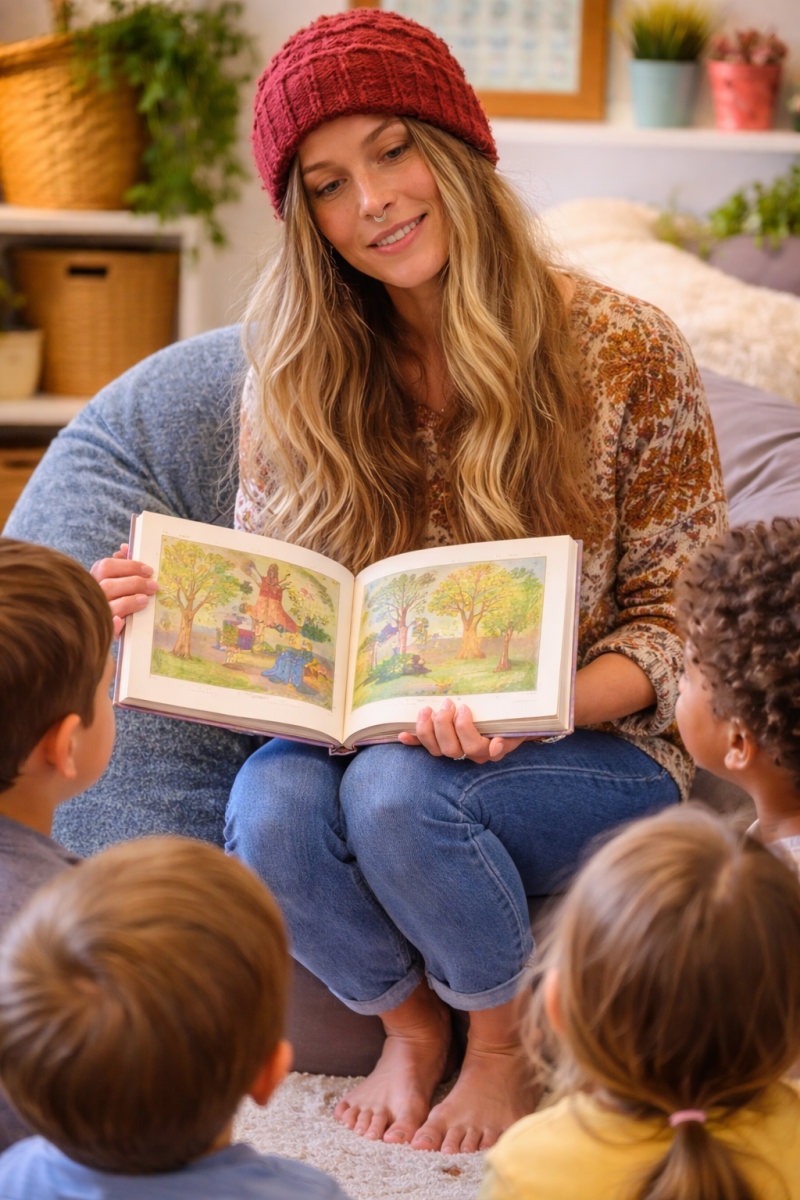
The Story Corner Kids Collection Now Available on Shopify
The Story Corner Kids Collection Now Available on Shopify
Exciting news for families, educators, and conscious caregivers—
📚 The Story Corner Kids Collection is now officially available to purchase online through a Shopify store 📚 🌿✨
This marks a beautiful new chapter in making heart-led, meaningful children’s literature more accessible to families everywhere.
🌐 Bringing Heart-Centred Stories Into the Digital World
With the launch of The Story Corner’s Shopify store, families can now easily browse and purchase their favourite children’s books from the comfort of home. Built on the trusted Shopify platform, the store provides a seamless, user-friendly experience designed to make discovering books simple, inspiring, and enjoyable.
📚 Offering A Conscious Kids Collection of Literature - Designed to Inspire and Uplift
The Story Corner Kids Collection is more than just a series of books—it’s a movement toward raising emotionally aware, creative, and heart-led children who care to make a difference.
Each book is thoughtfully created to:
📚 Support over all character development through self discovery and creative self expression
📚 Support emotional intelligence and self-awareness
📚 Encourage positive behaviour and conscious decision-making
📚 Inspire children to connect and play with nature while developing their virtuous gifts
📚 Nurture kindness, generosity, resilience, and purpose.
Now, with the collection available on Shopify, these powerful messages can reach even more children, homes, and classrooms across the world.
Shopify opens the door for a growing community of parents, teachers, and caregivers who are passionate about raising children with strong values and creative confidence.
Whether you’re looking for:
📚 A meaningful bedtime story
📚 A teaching tool for emotional development
📚 A gift that truly makes an impact
The Story Corner Kids Collection is now just a few clicks away.
👉 the-story-corner-3.myshopify.com
✨ Begin the Journey
The digital doors are now open
The stories we place in the hands of children today… help shape the world of tomorrow 🌍💫
🌳 How Trees That Bear Good Fruit Supports the Human Maturation Process in Children 🌳
The journey from childhood to maturity is not only about growing older—it is about growing deeper. True maturation involves the development of emotional awareness, moral understanding, self-regulation, and a sense of purpose. Trees That Bear Good Fruit offers a meaningful and imaginative framework to support this process in children, guiding them gently toward becoming grounded, thoughtful, and heart-led individuals.
Using the timeless metaphor of a tree, the story translates complex developmental concepts into something children can see, feel, and understand. It becomes more than a story—it becomes a reference for their own growth.
🌳 Understanding Growth as a Process
One of the most important lessons in maturation is that growth takes time. In a world that often encourages instant results, Trees That Bear Good Fruit reminds children that meaningful development—like the growth of a tree—happens gradually with the understand that is grows something with value that can be shared with others to support and benefit them on their journey.
Children learn that:
The growth of fruit bearing trees support the growth of fruitgul communities.
Growth is not always visible, but it is always happening
Dedication, devotion and action along with patience and care are essential parts of becoming
This perspective helps reduce frustration and builds resilience, allowing children to trust their own developmental timeline rather than compare themselves to others.
🌳 Developing Emotional Maturity
Emotional maturity is a cornerstone of human development. Through its storytelling, the book supports children in recognising and navigating their inner world.
Just as a tree is affected by its environment—sunlight, storms, seasons—children begin to understand that their feelings are natural responses to their experiences. The story gently reinforces that:
Emotions are not “good” or “bad,” but signals to be understood
It’s okay to feel deeply, while also learning how to respond wisely
Calm, grounded choices lead to “healthy fruit” in relationships
This lays the foundation for emotional regulation and empathy, both essential for mature functioning.
🌳 Building Moral Awareness and Integrity
As children grow, they begin to develop a sense of right and wrong—not just based on rules, but on internal values. Trees That Bear Good Fruit supports this transition by helping children connect their actions with their outcomes.
The idea of “fruit” becomes a powerful symbol:
Kind actions produce positive outcomes
Trees grow just like humans can grow goodness in what they share with others
Every choice contributes to the kind of person they are becoming
Rather than using fear or punishment, the story encourages reflection and personal responsibility. Children begin to act with integrity not because they are told to, but because they understand why it matters.
🌳 Encouraging Self-Responsibility
A key milestone in maturation is recognising one’s own role in shaping life experiences. The book empowers children to see themselves as active participants in their growth.
Through the tree metaphor, they learn that:
They can “nurture their roots” through positive thoughts and actions
They have the ability to participate in creating a culture they love that brings hope and light to their comunities
Their growth is influenced by both their environment and their choices
This fosters a healthy sense of responsibility without shame, helping children feel capable rather than controlled.
🌳 Strengthening Identity and Purpose
As children mature, they begin to ask deeper questions: How do I want to be in the world? What do I have to offer?
Trees That Bear Good Fruit supports this stage by affirming that every child is unique—like every tree in a forest.
Each tree produces different fruit, just as each child carries different gifts, strengths, and qualities. This understanding:
Builds confidence and self-worth
Encourages children to explore their natural abilities
Helps them appreciate diversity in others
Instead of striving to be the same as everyone else, children are guided to grow into the fullest expression of themselves.
🌳 Supporting Social and Relational Growth
Human maturation also involves learning how to relate to others. The “fruit” in the story can be seen as what we offer in our relationships—kindness, patience, honesty, and care.
By understanding this, children begin to:
Recognise the impact of their behaviour on others
Value cooperation and connection
Develop empathy and respect
These skills are vital for forming healthy, meaningful relationships throughout life.
🌳 A Foundation for Lifelong Growth
Perhaps one of the most valuable aspects of Trees That Bear Good Fruit is that its lessons grow with the child. What begins as a simple story in early years can continue to offer deeper meaning as the child matures.
It plants seeds of awareness that can evolve into:
Emotional intelligence
Strong moral character
Self-reflection and mindfulness
A sense of purpose and contribution
Trees That Bear Good Fruit beautifully supports the human maturation process by aligning developmental growth with a natural, intuitive metaphor. It helps children understand that who they are becoming is shaped over time through care, intention, and experience.
By nurturing the roots of emotional awareness, moral integrity, resilience, and self-worth, the story supports children in growing into individuals who are not only mature—but deeply grounded, compassionate, and aligned with their true nature.
And like any well-nurtured tree, when children are supported in this way, the fruit they offer the world becomes something truly meaningful. 🌿


🌳 How Trees That Bear Good Fruit Can Be Used as a Tool for Teachers, Parents, and Conscious Caregivers 🌳
Trees That Bear Good Fruit is more than a children’s story—it is a meaningful and practical tool that can be used by teachers, parents, and conscious caregivers to support children’s emotional, social, and character development in everyday life.
Through its simple yet powerful message, the book creates opportunities for guidance, reflection, and connection, making it a valuable resource across homes, classrooms, and childcare environments.
📚 A Tool for Meaningful Conversations
One of the most powerful ways this book can be used is as a starting point for deeper conversations. After reading the story, adults can gently ask reflective questions such as:
“What were the divine qualities the children were learning about in the book?”
“How does the goodness and care of the children in this book support their comunties to thrive?
“What kind of fruit would you like to grow?”
“Can you think of a time you showed kindness or patience?”
These conversations help children process the message, build self-awareness, and feel heard and understood.
👨👧Supporting Positive Behaviour Guidance
Rather than relying solely on correction, Trees That Bear Good Fruit offers a positive and empowering approach to behaviour guidance. When challenges arise, teachers and caregivers can refer back to the story’s metaphor:
“What kind of fruit are we growing and sharing right now?”
“What could we choose instead?”
This shifts the focus from punishment to learning, helping children take ownership of their actions in a supportive way.
🌼 Encouraging Reflection and Self-Mastery
The book can be used regularly as a reflection tool. Whether in a classroom circle, at bedtime, or during quiet moments, it invites children to pause and think about their choices and experiences. Over time, this builds emotional awareness, self-regulation, and the foundations of self-mastery for wise decision making and action taking.
👩🏫 Integrating into Daily Routines and Learning
For teachers and educators, Trees That Bear Good Fruit can be woven into daily or weekly routines:
As part of daily check in with the Children
As part of social-emotional learning sessions
During group discussions or circle time
Alongside creative activities such as drawing, storytelling, or role play
As a theme for exploring values like kindness, patience, and respect
For parents and caregivers, it can become part of bedtime reading, family discussions, or moments of gentle guidance throughout the day.
🎭 Modelling and Mirroring for Children
Children learn most powerfully through observation. This book serves as a reminder and invitation for adults to model the very qualities they wish to see. Teachers, parents, and caregivers can use the language of the book in their own behaviour:
Demonstrating patience in challenging moments
Speaking with kindness and calm
Showing empathy and understanding
In doing so, they bring the message of the book to life.
🌸 Creating a Shared Language and Culture
When used consistently, Trees That Bear Good Fruit helps create a shared language between adults and children. Phrases like “bearing good fruit” become gentle and familiar reminders that guide behaviour and choices across different environments.
This shared understanding fosters a culture of value, respect, awareness, and conscious growth—whether in a classroom, home, or community setting.
🌏 A Practical and Heart-Centred Resource
Trees That Bear Good Fruit is a tool that meets children where they are—through story, imagination, and gentle guidance—while also supporting the adults who guide them.
For teachers, it enriches learning environments.
For parents, it deepens connection at home.
For conscious caregivers, it offers a meaningful way to support children’s growth with intention and care.
Because when we guide children with clarity, compassion, and consistency…
we help them grow into individuals who naturally bear good fruit in all areas of life
✨️📚🌳🥭✨️
🌳 How Trees That Bear Good Fruit Supports the Overall Wellbeing of Children 🌳
A child’s wellbeing is not shaped by one single factor—it is the result of their emotional, social, and inner world being nurtured in a balanced, creative and meaningful way. Trees That Bear Good Fruit was created with this understanding at its core, offering children gentle guidance that supports their overall wellbeing from the inside out.
More than just a story, this book acts as a foundation for helping children feel safe within themselves, connected to others, and confident in the choices they make.
🎭 Supporting Emotional Wellbeing
Children experience a wide range of emotions, often without fully understanding them. At The Story Corner we love sharing shories that help children recognise that their feelings are valid, while also guiding them toward thoughtful responses. Trees That Bear Good Fruit introduce concepts like generosity, patience, kindness, and harmony, the story supports children in learning how to navigate emotions in a healthy and constructive way.
👨👧 Strengthening Social Wellbeing
Wellbeing is deeply connected to how children relate to others. Through its message, the book encourages positive interactions—teaching children the importance of kindness, respect, and empathy while being in service to the world around them, sharing what they have to offer. As children begin to understand how their actions affect those around them, they develop stronger, more meaningful relationships with peers, family, and their wider community.
🌼 Building Inner Confidence and Self-Worth
When children are guided to make positive choices and reflect on their actions, they begin to trust themselves. Trees That Bear Good Fruit empowers children to see that they have the ability to choose who they become. This sense of ownership builds confidence, self-worth, and a strong inner foundation.
🌳 Encouraging Mindfulness and Awareness
The simple yet powerful metaphor of a tree bearing fruit invites children to pause and reflect. It encourages mindfulness in a way that is easy to understand:
“What kind of fruit am I sharing right now?”
This awareness supports children in becoming more present, thoughtful, and intentional in their behaviour.
👩🎨 Promoting Positive Behaviour Through Understanding
Rather than relying on correction or discipline alone, the book promotes positive behaviour through understanding. Children are not told what to do—they are shown why their choices matter. This approach fosters intrinsic motivation, helping children naturally choose behaviours that support their wellbeing and the wellbeing of others.
🌞 Creating a Sense of Safety and Connection
Stories have the power to make children feel seen, understood, and supported. Trees That Bear Good Fruit offers a calm and nurturing message that reassures children they are always growing, always learning, and capable of making a different to create a culture they love being apart of . This creates a sense of emotional safety, purpose and belonging.
🌏 A Holistic Approach to Growing Well
Trees That Bear Good Fruit supports the whole child—mind, heart, and spirit.
It plants seeds of emotional awareness, nurtures healthy relationships, builds confidence, and encourages thoughtful, values-based choices. In doing so, it helps children develop a strong and balanced sense of wellbeing that will support them not just in childhood, but throughout their lives.
Because when a child feels grounded within themselves…
they naturally grow, connect, and thrive 🌱✨


🌳 How Trees That Bear Good Fruit Supports Children to Develop Self-Mastery 🌳
Self-mastery is not something that appears overnight—it is a skill that is gently cultivated over time. It begins in childhood, in the small, everyday moments where a child learns to understand themselves, manage their emotions, and make conscious choices.
Trees That Bear Good Fruit was thoughtfully created to support this journey.
The story introduces children to a powerful and relatable concept: just like a tree is known by the fruit it bears, we too are known by our actions, our words, and the choices we make. This simple yet meaningful metaphor allows children to begin developing awareness of themselves in a way that feels natural and engaging.
🧒 Encouraging Self-Awareness
The book invites children to reflect on their behaviours and emotions without judgment. Through storytelling, they begin to notice:
“What am I feeling?”
“How am I acting?”
“What kind of fruit am I sharing with others right now?”
This awareness is the first step toward self-mastery.
👩🎨Building Emotional Regulation
Rather than telling children to simply “be good,” the story helps them understand that their emotions are valid—but their actions are choices. It gently reinforces the idea that even when big feelings arise, they have the ability to pause, breathe, and choose a response that reflects kindness and care.
👩🏫 Empowering Conscious Choice
A key message within Trees That Bear Good Fruit is that children are not powerless—they are creators of their actions. The book encourages them to take ownership of their choices, helping them realise that they can choose to
cultivate their creative gifts, skills and abilities through the actions they take which can serve and support their communities with upliftment and wisdom.
This builds a sense of inner responsibility and confidence.
💪 Strengthening Inner Values
Self-mastery is deeply connected to values. Through its narrative, the book nurtures qualities such as kindness, integrity, compassion, and respect. Instead of presenting these as rules, it shows them as “fruits” that naturally grow when we nurture the right inner environment.
Trees That Bear Good Fruit opens up conversations that help children learn from their experiences, understand consequences, and continue growing without shame or criticism.
Self-mastery is one of the greatest gifts a child can develop. It influences how they navigate relationships, challenges, and their sense of self throughout life.
Trees That Bear Good Fruit plants the seeds for this journey early—helping children build awareness, emotional intelligence, and the confidence to choose who they are becoming through the action they take and the type of impact they want to have in the world.
Because when a child learns to guide themselves with kindness and intention…
they begin to grow into someone truly strong, grounded, beautiful and wise 🌱✨
🌳Why Trees That Bear Good Fruit Matters🌳
In a world that is constantly shaping young minds, the stories we place in the hands of children matter more than ever 🌏😇🫶🕊
Trees That Bear Good Fruit matters because it speaks to something deeper than entertainment—it speaks to the heart of who a child is becoming.
From a young age, children are forming their understanding of themselves, others, and the world around them. They are learning how to respond to challenges, how to treat people, and how to navigate their emotions. These early lessons quietly shape the foundation of their character.This is where Trees That Bear Good Fruit becomes so meaningful.
👩🍼 It Nurtures What Truly Matters
While many stories focus on external achievements, this book gently redirects attention inward—toward values, choices, and character. It reminds children that who they are on the inside is just as important, if not more important, than what they do on the outside.
🌳 It Builds a Foundation for Life
The messages within the story—about kindness, generosity and creative cultures who serve with compassion—are not just childhood lessons. They are life skills. By introducing these concepts early, the book helps children develop emotional intelligence and self-awareness that will support them throughout their lives.
🌱 It Encourages Conscious Living
Trees That Bear Good Fruit empowers children to recognise that their actions have meaning. That every choice they make contributes to the world becoming a better place. This awareness plants the seeds of responsibility, integrity, and self-mastery.
👨👧It Creates Opportunities for Connection
This book is not just read—it is shared. Between parent and child, teacher and student, caregiver and young learner. It opens the door to important conversations about feelings, behaviour, and values, creating deeper connection and understanding.
🌳 It Offers a Gentle Yet Powerful Message
The metaphor of a tree bearing fruit is simple, but deeply impactful. Children can easily understand and remember it, carrying its meaning into their daily lives. It becomes a quiet guide, helping them reflect on their choices in a way that feels empowering rather than overwhelming.
🥳 It Supports the Next Generation
Perhaps most importantly, Trees That Bear Good Fruit matters because it invests in the future.
When children are supported to grow with kindness, awareness, and strong inner values, they carry those qualities into their relationships, their communities, and the world around them. They become individuals who contribute positively, lead with compassion, and create meaningful change.
📚🌳🥑🍉✨️


🌳🥝Who Trees That Bear Good Fruit Is For 🌳🥝
Trees That Bear Good Fruit was created with a deep understanding that the most powerful lessons in life are often learned in the earliest years.
Trees ThatBear Good Fruit is for:
The child who are learning how to interact with others…
The child who is learning how to express themselves in the word…
The child who is discovering how their actions affect others…
The child who is beginning to understand what it means to be kind, patient, and true to themselves.
This story gently supports children in recognising that what they do and who they are becoming matters. That their choices, no matter how small, shape the kind of “fruit” they bring into the world. It encourages them to grow with intention, to choose kindness, and to feel empowered in the person they are becoming.
But this book is not only for children.
It is for parents and caregivers who want to raise conscious, compassionate, and emotionally aware young people. Those who understand that guidance goes beyond discipline—that it involves nurturing a child’s inner world, modelling positive behaviour, and creating environments where children can truly thrive.
Trees That Bear Good Fruit offers a beautiful opportunity for connection—moments of shared reading, meaningful conversations, and gentle reflection. It opens the door for parents and caregivers to explore important values with their children in a way that feels natural, engaging, and heartfelt.
👩🏫 It is also for educators.
Teachers, early childhood professionals, and mentors who are passionate about supporting children not just academically, yet also emotionally and socially. This book aligns with values of positive behaviour guidance, emotional intelligence, and conscious communication—making it a meaningful addition to classrooms, group settings, and learning environments.
And perhaps, in a quiet and unexpected way… this book is for adults too.
Because within its message is a gentle reminder that we are all still growing. That we are all, in some way, tending to the seeds within ourselves. It invites reflection on the kind of “fruit” we are bearing in our own lives—and the example we are setting for the next generation.
Trees That Bear Good Fruit is for anyone who believes in the power of kindness, the importance of conscious growth, and the beauty of becoming with in children.
It is for those who wish to plant seeds of goodness today…
and watch them grow into something truly meaningful for a brighter tomorrow 🌱✨
🌳 Why I Wrote Trees That Bear Good Fruit 🌳
There are moments in life where a message doesn’t just come as an idea—it comes as a calling.
Trees That Bear Good Fruit was written from one of those moments (as were all of the children's books i've authored and illustrated and published with The Story Corner).
As someone who has spent alot of time working with children (I have over 8 years experience as an early childhood educator and art therapist), I understand the importance of supporting a child to grow in their divine qualities and virtues for character development. I have witnessed that children are always learning, always absorbing, and always becoming who they are based on the presence, attention and embodiment of the caregivers and environment around them. The development of a Childs qualities and character through divine virtues is very important and needs nourishment, nurture, love and care. Not just through what they are told—yet through what they see, feel, and experience.
I wrote this book because I believe that every child is like a seed.
Within them lives incredible potential—kindness, creativity, compassion, care and courage. Yet like any seed, what grows depends on what it is nurtured with. The environment, the words spoken to them and the behaviours modelled around them—all shape who they become and what they do that results in the “fruit” they will one day bear.
In a world that can sometimes feel fast-paced, disconnected, or overwhelming, I felt a calling to create something that gently brings children back to what truly matters: how we treat one another, how we care for ourselves, the action we take and how our choices ripple out into the world.
Trees That Bear Good Fruit was written to help children understand that who they become and the action their taking in the world matters. That kindness is powerful. That patience, honesty, and love are not just nice ideas—they are qualities that grow into something meaningful over time.
It was also written for parents, caregivers, and educators.
Because children don’t just learn through instruction—they learn through observation and more often than not absorb their caregivers.
They mirror what they see.
This story is an invitation for adults to reflect as well:
What are we modelling?
What seeds are we planting?
What kind of “fruit” are we showing children through our own lives?
At its heart, this book is about conscious growth.
It’s about reminding children (and adults) that we each have the ability to choose who we become. That just like a tree, strong roots and good nourishment lead to something beautiful, life-giving, and lasting that blesses all.
I wrote Trees That Bear Good Fruit because I believe in children.
I believe in their capacity to grow into kind, wise, and heart-led human beings.
And I believe that stories have the power to guide that growth in a gentle, meaningful, and lasting way.
Lets nurture, love and care the seeds so something beautiful can grow
👩🎨🌱🥑👨👧✨️


📚🧒🌳🍎Trees That Bear Good Fruit: A Story of Growth, Goodness, and Purposeful Living 📚🧒🌳🥭
Trees That Bear Good Fruit is a playful and poetic children’s story that goes beyond simple entertainment, to deliver a deeply meaningful message about how children grow as individuals while they contribute to the world around them.
With its playful and poetic tone and uplifting spirit, the story invites young readers into a world where kindness, generosity, and creativity are not just encouraged—they are celebrated as essential qualities of a meaningful and flourishing life.
This book uses the metaphor of trees bearing fruit to explore the development of a child’s character. Just as a healthy tree produces nourishing fruit that feeds the people, the story suggests that when children are nurtured with care, wisdom, positive values, and a connection to the natural world around them, they too can grow into individuals who bring goodness into the world, where the fruits of their gifts can serve and nourish others in support of the community around them.
This metaphor is engaging and easily understood for children, allowing them to understand complex ideas about personal growth in a natural, fun and relatable way.
A central theme of the story is generosity and the creative culture. Through its characters and narrative, the book emphasises the importance of sowing seeds with a generous spirit—whether that be kindness, time, creativity, or care for others and the natural world. It portrays generosity not as an obligation, yet as a joyful and fulfilling way of living that strengthens relationships and builds a positive community and creative culture. Children are gently guided to see how their actions can positively impact others and how even small gestures can make a meaningful difference.
The story also highlights the value of participating in a “creative culture ,” encouraging children to embrace imagination, curiosity, and emotional expression. Rather than focusing solely on rules or instructions, it fosters a sense of wonder and exploration (with a sense of kindness and care), helping children connect with their inner selves to express who they are in an authentic way, while caring for and contributing to their community, as a blessing.
This approach supports emotional development and nurtures a sense of confidence and individuality while children learn how to unify within a group in contributing their gifts, skills and creative abilities in sharing with others.
Another important aspect of Trees That Bear Good Fruit is its emphasis on sustainable living and Earth care. The natural imagery woven throughout the story reinforces a connection to the environment and encourages children to respect and care for the our earth mother.
By presenting these ideas in a gentle and engaging way, the book helps instil an early awareness of ecological responsibility and the importance of living in harmony with nature.
In addition, the story offers positive behaviour guidance without being overbearing. It models constructive ways of interacting with others for an inspiring and uplifting creative culture and making wise and thoughtful choices, helping children develop a moral compass grounded in empathy, respect, and cooperation. This guidance supports their journey through the human maturation process, equipping them with the tools they need to navigate life with wisdom and integrity.
Trees That Bear Good Fruit is about calling children forward into their potential—their “greatness.” It encourages them to imagine who they can become and how they can contribute to a world that benefits everyone. By combining playful storytelling with meaningful life lessons, the book creates a nurturing space for children to learn, grow, and envision a future where their actions bear “good fruit” for themselves, their communities, and the Earth.
In this way, the story is not just about growth—it is about purpose and value, related to how children can be in the world. It inspires children to become thoughtful, creative, and compassionate individuals who are capable of making a positive impact in the world around them.
📚🧒🌳🥑✨
#TheStoryCorner #ChildrensBooks #ComingSoon #StorytimeMagic #kidsbooks #ConsciousKids #ConsioucsKidsLiterature #ChildrensBooks #LoveOfReading #Storytime #EarlyLearning #KidsWhoCare #FruitsofTheSpirit #DivineQualities #GodlyCharacter #KidsWithValue
Something Beautiful Is Growing
In a world where little hearts are learning who they are…
and discovering how they can contribute in making the world a better place
Something beautiful is growing
A story inspired by nature…
where trees don’t just grow…
they give
They give goodness
They give kindness…
They give love…
They inspire a creative heART
They grow and give the sweetest fruits of all…
And just like these trees…
our children are growing with them
trees that bear good fruit
To discover their gifts…
To grow in their value
To share their kindness…
To make a difference in the world
Trees That Bear Good Fruit
is A heart-led children’s story from The Story Corner…
Created to inspire young minds…
to nurture caring hearts…
and to remind every child…
That what they carry inside…
has the power to change the world
Pick up a copy today for the little people you care about in your life, to share a message of value, purpose and passion
Available now across all leading platforms.
Amazon,Apple Books, Kobo, Bookshop.org and Barnes & Noble
📚Trees That Bear Good Fruit is now available👇
https://www.amazon.com.au/dp/1764421000 👈
or👇
https://www.the-story-corner.com/our-stories👈
With Love
Rose
✨️📚👨🎨✨️
Let the seeds of something beautiful grow


Book Launch Announcement:
📚 Book Launch Announcement: Trees That Bear Good Fruit 📚
Today is the day….
With a full heart, we are excited to announce the launch of our latest children’s book:
🧒🌳🍎Trees That Bear Good Fruit 🧒🌳🍎
🥳🥳🥳
This beautiful story has been lovingly created to inspire children to understand the power of generosity, goodness, positive community and sustainable living. .
Trees That Bear Good Fruit supports a child to learn and grow with wisdom through their human maturation process, that calls them forth into their greatness, of how they could be in the world that benefits all.
Trees That Bear Good Fruit invites children to:
🍎Reflect on how they want to develop their gifts and abilities in service to community
🍎Reflect on how they want to grow their value to make the world a better place
🍎Understand the importance of generosity, kindness and a positive creative culture
🍎Feel empowered to make positive choices that nurture and care all that they love
🍎Connect deeply with nature and its wisdom while caring for the natural environment
🍎Through warm storytelling and meaningful messages, this book encourages children to grow into compassionate, thoughtful, and heart-led individuals.
At The Story Corner, our mission is to create stories that nurture emotional intelligence, inspire self-discovery, and plant seeds of wisdom in young hearts for a brighter tomorrow. Trees That Bear Good Fruit is a wonderful addition to our conscious kids collection of children's literature.
Today, we celebrate not just the release of a book, we also celebrate the planting of benevolent seeds in the minds and hearts of children everywhere.
Trees That Bear Good Fruit is ready to be read, shared, and cherished.
📚Trees That Bear Good Fruit is now available👇
https://www.amazon.com.au/dp/1764421000 👈
or👇
https://www.the-story-corner.com/our-stories👈
Let’s grow something beautiful together 🌱✨
✨️📚🌳🫐🍑🥑✨️
#IFeelMyFeelings #ChildrensBooks #ConsciousChildrensLiterature #ConsicousKids #EmotionalIntelligence #ConsciousParenting #HeartLedChildren #KidsWithValue #KidsWhoMakeADifference #LoveLiftsThemUp #TheStoryCorner
Something inspiring is coming...
Something inspiring is coming for children who care and want to make a difference in the world through their heART (hearts art)
💗👩🎨
A beautiful heart led story that weaves together kindness, creativity, and the power each child holds in making a meaningful difference 🌍✨
The Story Corner is so excited to soon share its newest children’s book:
Trees The Bear Good Fruits
This uplifting story inspires children to:
🌿 Develop they divine qualities and characteristics
🌿 Lead with kindness and compassion
🌿 Express themselves through creativity
🌿 Contribute and share their unique gifts to the world around them
Because when kindness and creativity come together… something truly magical begins to grow 🌳💫
Launching March 21 🌼
Stay close… a powerful story is about to bloom 🌸
#TheStoryCorner #ConsciousKids #CreativeCulture #KindnessMatters #ChildrensBooks #RaisingKidsWhoCare #KidsWithValue #KidsMatt
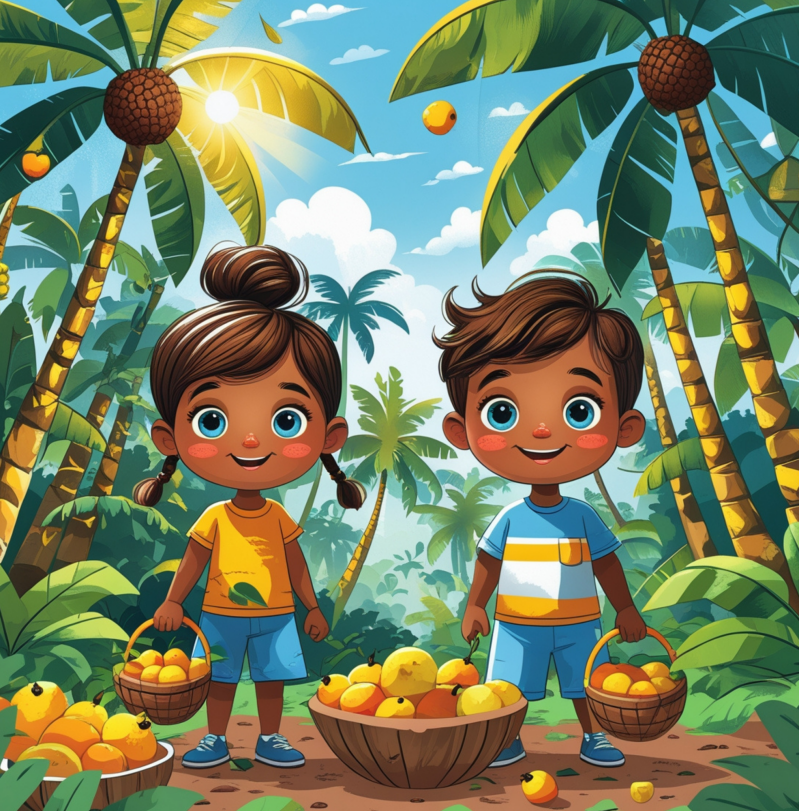

Something exciting is on its way… ✨📚
At The Story Corner, we believe stories have the power to inspire young hearts, spark imagination, and nurture the beautiful gifts within every child as they grow in their value and purpose.
And we have some exciting news…
A brand new children’s book is arriving March 21st! 🎉
We can’t wait to share this gorgeous story with you and the little readers in your life.
Stay tuned… something wonderful is coming. 💛
#TheStoryCorner #ChildrensBooks #ComingSoon #StorytimeMagic #kidsbooks #ConsciousKids #ConsioucsKidsLiterature #ChildrensBooks #LoveOfReading #Storytime #EarlyLearning #KidsWhoCare #FruitsofTheSpirit #DivineQualities #GodlyCharacter #KidsWithValue
The Story Corner Is Now on YouTube! 📚✨
We are excited to share some wonderful news with our readers — The Story Corner is now on YouTube!
Our mission has always been to create meaningful stories that support children's emotional wellbeing, creativity, and self-expression. Now, we are bringing those stories to life in a new way through our brand new YouTube channel, where families, teachers, therapists, and caregivers can enjoy our stories anytime.
A New Way to Experience Our Stories 📚🎥✨
Through our YouTube channel, children can now listen to and watch our stories being read aloud, creating a warm and engaging story time experience. Whether it's before bedtime, during classroom quiet time, or a peaceful afternoon at home, The Story Corner on YouTube is a place where children can relax, learn, and explore their emotions and sense of self through storytelling.
Discover the Conscious Kids Collection
On our channel, we will also be sharing insights into our Conscious Kids Collection — a growing range of children's books designed to help young readers:
🎭 Understand and express their emotions
🎭 Build confidence and self-awareness
🎭 Develop creativity through art and storytelling
🎭 Feel seen, heard, and empowered
Books like Art Making Is How I Express My Emotions and I Feel My Feelings encourages children to explore their feelings through creativity, reminding them that their emotions are valid and that art can be a powerful form of expression.
👩🏫 Perfect for Families, Educators, and Therapists
The Story Corner on YouTube has been created for:
🤱 Parents and caregivers looking for meaningful story time
👩🏫Teachers wanting supportive classroom resources
👩🎨Therapists using books to help children talk about emotions
👩⚕️Anyone who believes in nurturing conscious, emotionally aware children
Come Join Our Storytelling Community
We would love for our readers and supporters to follow us over on YouTube and become part of our growing storytelling community.
By subscribing, you'll be the first to:
📖 Listen to new story readings
🎨 Learn about books from the Conscious Kids Collection
🌱 Discover tools that help children express their emotions
✨ Enjoy uplifting and empowering children's content
Follow Us on YouTube 🎥
We warmly invite you to join us in The Story Corner on YouTube and continue the journey of nurturing creativity, emotional awareness, and imagination in children everywhere.
https://www.youtube.com/@TheStoryCorner_ChildrensTales
Subscribe, share with your friends, and let’s keep the stories flowing.
Because every child deserves stories that help them understand their heart, their creativity and their purpose in the world.
📚❤️🐝🌻👩🎨🖼️🎨🎭🌿

✨ Exciting News from Story Corner! ✨
We are excited 🥳 to announce the official launch of The Story Corner’s Online Retail Store on Shopify! 🛍️📚
Now you can explore and shop your favourite children’s books from our conscious kids collection, learning resources, and storytime essentials anytime, anywhere.
Our new online store makes it easier than ever for parents, educators, and little readers to discover inspiring stories and educational treasures with just a few clicks.
At The Story Corner, we believe every child deserves the magic of storytelling. Our carefully curated conscious kids collection is designed to spark imagination, nurture curiosity and care that supports early learning through the joy of storytelling.
🌟 What you’ll find in our online store:
• Beautiful collection of over 7+ children’s storybooks
• Poetry Books
Soon to be coming...
• Educational learning materials
• Storytime resources for parents and teachers
• Special items for young readers
Whether you're building a home library, looking for the perfect gift, or supporting your child’s love for reading, our new online shop is here for you!
🛒 Visit our online store today and start exploring:
the-story-corner-3.myshopify.com
Thank you for supporting The Story Corner and helping us share the love of stories with more families. ❤️📖
#TheStoryCorner #OnlineStoreLaunch #ConsciousKids #ConsioucsKidsLiterature #ChildrensBooks #LoveOfReading #Storytime #EarlyLearning #KidsWhoCare
How Conscious Storytelling Awakens Imagination and Creativity in Children 📚👩🎨
Children are naturally imaginative beings. Before the pressures of the world begin to shape their thinking, children live in a place of curiosity, wonder, and limitless possibility. One of the most powerful ways parents, caregivers, and educators can nurture this natural gift is through conscious storytelling.
Conscious storytelling goes beyond simply entertaining a child. It is the intentional sharing of stories that awaken curiosity, inspire creative thinking, and encourage children to explore the richness of their inner world. Through meaningful stories, children begin to imagine, create, and see the world through a lens of magic, miracles and unlimited-possibility.
📚👩🎨 The Imagination Is a Child’s First Classroom
Long before children fully develop logical reasoning skills, they learn through imagination. When a child hears a story, their mind begins to paint pictures, construct scenes, and bring characters to life.
Unlike watching a screen where images are provided for them, storytelling invites children to create the images themselves.
In their mind they see:
• Forests filled with talking animals
• Brave characters solving problems
• Magical adventures and discoveries
• Kind acts that transform situations
This mental imagery strengthens the brain's creative pathways and encourages children to think beyond what is immediately visible.
Imagination is not simply fantasy—it is the foundation of innovation, creativity, and problem-solving later in life.
📚👩🎨 Stories Open the Door to Creative Thinking
Conscious stories invite children to ask questions, explore possibilities, and think creatively about the world around them.
A powerful story naturally sparks curiosity:
What happens next?
Why did the character choose that path?
What would I do in that situation?
These reflections encourage children to think independently rather than simply being told what to believe or how to act.
Creative thinking develops when children feel safe to explore ideas, imagine different outcomes, and consider multiple perspectives.
📚👩🎨 Storytelling Encourages Children to Become Creators
When children regularly experience storytelling, something beautiful begins to happen — they start telling their own stories.
Children may:
• Invent new characters
• Create imaginary worlds
• Act out stories in play
• Draw scenes from the stories they love
• Make up alternative endings
This process strengthens both imagination and creative expression.
Storytelling becomes a doorway for children to express themselves through art, play, writing, movement, and conversation.
In this way, storytelling does not just fill a child's mind with ideas — it empowers them to become creators themselves.
📚👩🎨 Stories Expand the Possibilities of the Mind
Children who grow up immersed in inspiring stories learn that life contains endless possibilities.
Stories show them that:
• Problems can be solved creatively
• Courage can overcome challenges
• Small acts can create big change
• Unique gifts are valuable
• And what they do, matters in making the world a better place
When children see characters exploring the world with curiosity and courage, they begin to imagine themselves doing the same.
Stories give children permission to dream.
📚👩🎨 Creativity Builds Confidence
Imagination and creativity are closely connected to a child’s sense of confidence and self-worth.
When children are encouraged to imagine, create, and express their ideas freely, they learn that their thoughts and perspectives matter.
This builds inner confidence and helps children feel comfortable sharing their ideas, exploring new interests, and trusting their inner voice.
Creativity is not just about art or storytelling—it is about believing that one's ideas and contributions have value.
📚👩🎨 Conscious Storytelling Nurtures the Whole Child
Conscious storytelling supports many aspects of a child's development at once.
It nurtures:
• Emotional awareness
• Creative thinking
• Creative self expression
• Self-discovery
• Language development
• Curiosity and learning
• Confidence and self-expression
• Connection between parent and child
Through stories, children learn about the world while also discovering the depth of their own imagination.
📚👩🎨 Creating Space for Imagination in a Busy World
In today's fast-paced digital world, children are often surrounded by constant stimulation and pre-made entertainment. While technology has its place, imagination thrives best when children are given space to create images and ideas within their own minds.
Storytelling slows the moment down. It invites presence, listening, reflection, and wonder.
A simple story shared at bedtime, during quiet time, or in a classroom circle can open a doorway into the vast creative landscape of a child's imagination.
📚👩🎨 Planting Seeds for Future Creators
The innovators, artists, writers, leaders, and problem-solvers of the future all begin as children with active imaginations.
When parents and educators embrace conscious storytelling, they are not only entertaining children — they are nurturing the creative minds that will one day shape the world.
Every story shared is a seed planted in the fertile soil of a child's imagination.
And when imagination is nurtured, creativity begins to flourish.
Check out our conscious kids collection of children's stories at https://www.the-story-corner.com/our-stories
📚👩🎨
#ConsciousKidsLiterature #ConsciousParenting #StorytellingMatters #ChildDevelopment #ImaginationandCreativity #CreativeKids #CognitiveDevelopment #RaisingConsciousKids


📚How Storytelling Supports Cognitive Development in Children📚
Storytelling is much more than a pleasant exercise at bedtime or a fun classroom activity. It is one of the most powerful ways to support a child’s cognitive development—the growth of their thinking, learning, and problem-solving abilities.
When children listen to stories, their brains become highly active. They are not just hearing words—they are building images, connecting ideas, predicting outcomes, and making meaning from what they hear.
📚 Stories Strengthen Language and Communication
Through storytelling, children are exposed to rich vocabulary, sentence structures, and new ways of expressing ideas. This naturally strengthens their language development and communication skills. The more stories children hear, the more their ability to understand and use language grows.
📚 Stories Develop Memory and Attention
Following a story requires children to remember characters, events, and sequences. This strengthens memory and attention skills as they learn to track what is happening and anticipate what might come next.
📚 Stories Encourage Critical Thinking
Stories often present challenges, decisions, and consequences. As children listen, they begin to think:
What might happen next?
Why did that character make that choice?
What would I do in that situation?
These reflections support the development of reasoning, problem-solving, and independent thinking.
📚 Stories Expand Imagination and Mental Flexibility
When children listen to stories, they create pictures in their minds. This mental imagery strengthens imagination and cognitive flexibility—the ability to think creatively and see multiple possibilities.
📚 Stories Help Children Make Sense of the World
Stories introduce children to new ideas, environments, emotions, and experiences. Through characters and narratives, children begin to understand relationships, social situations, and how actions lead to outcomes.
In this way, storytelling gently supports children in building the mental frameworks they will use to navigate life.
📚 A Simple Practice with a Powerful Impact
Whether shared at home, in a classroom, or during quiet moments together, storytelling is a simple yet powerful way to support a child’s growing mind.
Every story strengthens a child’s ability to think, imagine, and understand the world around them.
And sometimes, the greatest learning happens while a child is simply sitting beside someone they love, listening to a story that ignites their imagination and creativity, that inspires their care to make a difference in the world.
Check out our conscious kids collection of children's stories at https://www.the-story-corner.com/our-stories
✨📚🤱🌏✨
#ConsciousParenting #StorytellingMatters #ChildDevelopment #CognitiveDevelopment #RaisingConsciousKids
The Powerful Role of Storytelling in Conscious Parenting to Raise Valuable Children in the World
Storytelling is one of the oldest and most powerful teaching tools known to humanity. Long before modern education systems existed, wisdom, values, and life lessons were passed from generation to generation through stories.
Today, storytelling remains one of the most effective conscious parenting tools for guiding children toward becoming emotionally intelligent, compassionate, kind, caring and valuable contributors in the world.
In a time where children are often surrounded by fast-paced digital media and materialism, storytelling invites something deeper — presence, imagination, inspiration, reflection, and creative connection.
📚 Stories Speak the Language of the Child
Children do not naturally learn through lectures, correction, or instruction alone. They learn through experience, imagination, and emotional connection. Stories speak directly to a child's inner world.
When a child listens to a story, they do not feel judged or corrected. Instead, they explore the experiences of characters and naturally reflect on the outcomes of different choices.
A story allows a child to ask internally:
What would I do in that situation? How did that character solve the problem? What happens when someone is kind?
In this way, stories guide children toward wisdom without resistance.
📚 Storytelling Teaches Values Without Preaching
One of the greatest challenges parents face is teaching values without sounding like they are constantly correcting or instructing their child.
📚Stories gently model important life qualities such as:
•Kindness •Courage •Responsibility •Honesty •Self-belief
•Creative •Compassion •Care for nature and community
Instead of telling a child “You should be kind”, a story shows them what kindness looks like and how it positively impacts others.
Children remember stories far longer than instructions.
Stories Develop Emotional Intelligence
Stories also help children understand and navigate their emotional world.
Through characters experiencing different feelings — happiness, sadness, fear, frustration, or excitement — children begin to recognise these emotions within themselves.
When a character learns how to move through a challenge or resolve a conflict, the child learns too.
This is why storytelling plays such an important role in supporting emotional intelligence and emotional mastery. It helps children see that feelings are a natural part of being human and that challenges can be worked through with awareness and support.
📚 Storytelling Strengthens the Parent–Child Connection
One of the most beautiful aspects of storytelling is the connection it creates between parent and child.
When a parent sits with their child and reads or tells a story, several important things happen:
•The child feels safe and connected •The nervous system relaxes •Imagination opens •Learning becomes enjoyable
These quiet storytelling moments often become some of the most cherished childhood memories.
They communicate something deeper than the story itself:"You matter. You are worth my time and presence."
📚 Stories Inspire Children to Discover Their Gifts
Conscious parenting is not only about guiding behaviour — it is also about helping children discover who they truly are.
Stories that highlight curiosity, creativity, courage, and following one's joy encourage children to explore their own gifts and interests.
Children begin to see that their uniqueness is valuable and that they too can contribute something meaningful to the world.
This helps cultivate confidence, purpose, and self-worth.
📚 Stories Shape the Future
The stories we share with children help shape the beliefs they carry into adulthood.
📚 Stories can nurture children who:
•Believe in kindness •Care for the Earth •Respect others
•Understand their emotions •Trust their inner voice •Use their creative gifts to help the world
In this way, storytelling is not simply entertainment — it is cultivating the qualities needed for leadership.
The stories we share today help shape the leaders, healers, creators, and caretakers of tomorrow.
📚 A Simple Yet Powerful Parenting Tool
You do not need to be a professional storyteller to use this powerful parenting tool.
Simply reading a story with presence, warmth, and curiosity can have a profound impact on a child's development.
The invitation is to ask questions like:
What part of the story did you like the most?
How do you think that character felt?
What would you have done?
These gentle reflections deepen a child's understanding of themselves and the world around them.
📚 The Stories We Tell Matter
Every story is a seed planted in the heart and mind of a child.
When we choose stories that uplift, inspire, and guide children toward compassion and self-awareness, creative expression and contribution we are doing more than reading a book.
We are nurturing the next generation of conscious, heart-led human beings.
And that is one of the most valuable contributions a parent can make to the world.
📚
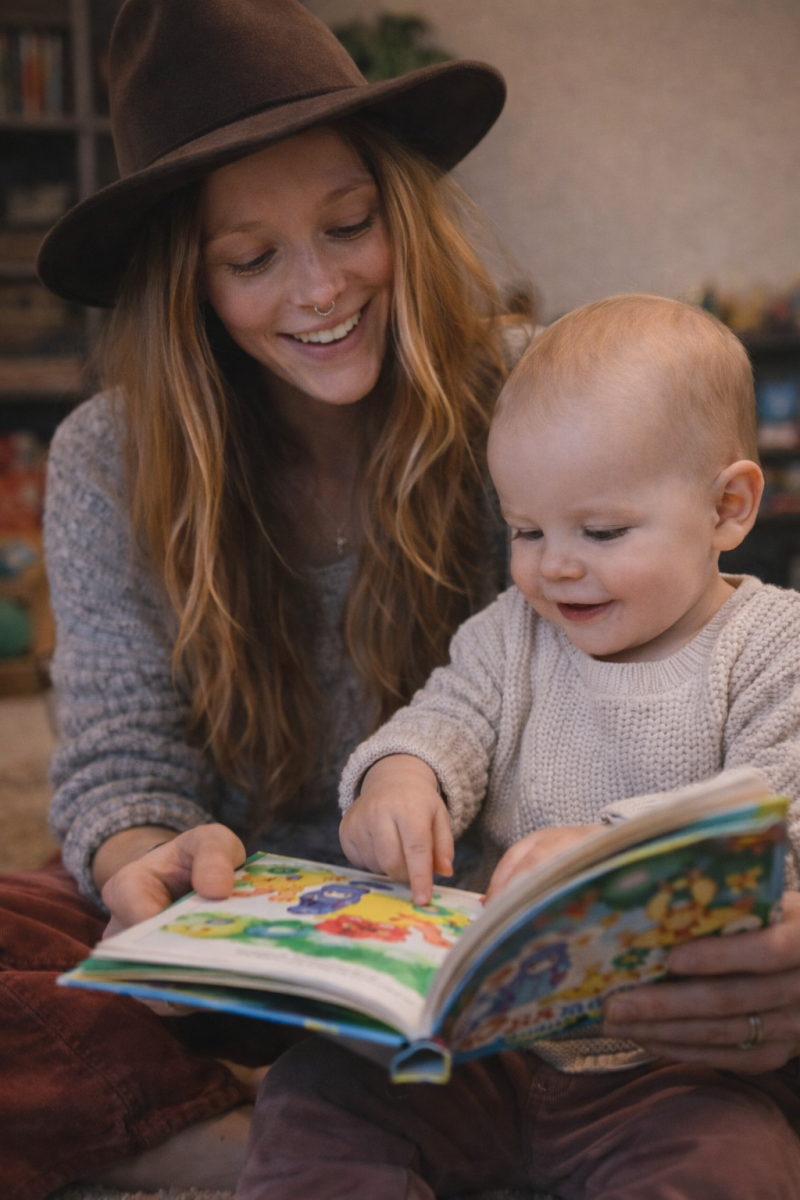
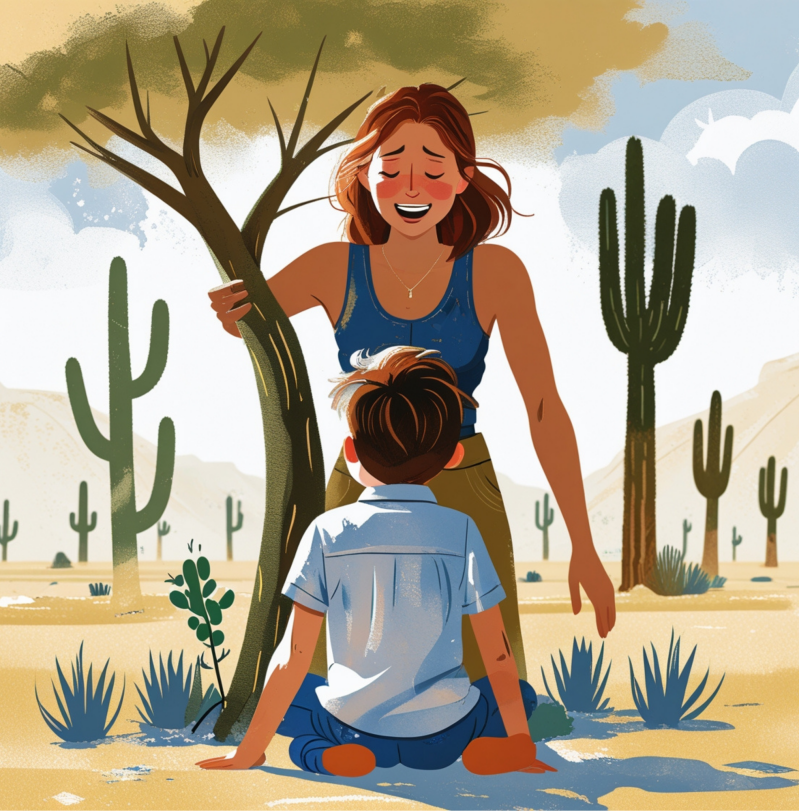
Why I Feel My Feelings Matters
There are many beautiful children’s books in the world.
Stories about adventure. Stories about courage. Stories about kindness.
Yet there are far fewer that teach a child how to be with themselves, to feel for self discovery and a deeper connection to themself.
That is why I Feel My Feelings matters.
It invites a child into their inner landscape, a place that shapes every other part of their life.
🎭 Because Feelings Don’t Disappear When Ignored
Children feel deeply.
🎭 They feel joy in big bursts.
🎭 They feel disappointment intensely.
🎭 They feel anger, confusion, excitement, jealousy, fear — sometimes all before morning tea.
When those feelings are dismissed with:
🎭 “You’re fine.”
🎭 “Stop crying.”
🎭 “Don’t be silly.”
🎭 “Big kids don’t get upset.”
The emotion doesn’t disappear.
It simply goes underground.
Undigested emotions often reappear as anxiety, shutdown, aggression, perfectionism, or people-pleasing.
I Feel My Feelings interrupts that pattern early. It gives children permission to experience their emotions safely, without shame.
And that changes everything.
🎭 Emotional Literacy Is Foundational
We teach children to read.
We teach them to count.
We teach them to tie their shoes.
Yet emotional literacy is just as essential.
When a child can say:
🎭 “I feel frustrated.”
🎭 “I feel left out.”
🎭 “I feel nervous.”
🎭 “I feel proud.”
They gain power — not power over others, yet power within themselves for self mastery which is empower as they become their greatest possible version.
They move from confusion to clarity.
From reaction to response.
From overwhelm to awareness.
This is the beginning of self-mastery.
🎭 Regulation Begins With Recognition
A child cannot regulate what they cannot recognise.
Before breathing techniques, before problem-solving, before conflict resolution — there must be awareness.
I Feel My Feelings supports children to pause and notice:
🎭 What am I feeling?
🎭 Where do I feel it in my body?
🎭 What might this feeling need?
This builds neurological pathways for self-regulation that serve them for life.
🎭 Because Behaviour Is Often a Cry for Understanding
Many challenging behaviours are unspoken emotions.
🎭 The hitting child may feel powerless.
🎭 The withdrawn child may feel overwhelmed.
🎭 The defiant child may feel unheard or misunderstood.
When children are given emotional language and validation, behaviour shifts naturally.
They no longer need to act out what they can speak out.
🎭 I Feel My Feelings Supports the Whole Child
Wellbeing is not just academic success.
True wellbeing includes:
🎭 Emotional safety and emotional mastery
🎭 Mental resilience
🎭 Social connection
🎭 Physical regulation
🎭 Healthy identity
When children feel safe to experience their emotions, their nervous systems settle. Learning improves. Relationships strengthen. Confidence grows.
They begin to trust themselves.
And self-trust is one of the greatest gifts we can give a child.
🎭 The World Needs Emotionally Intelligent Humans
We are raising the next generation of leaders, parents, educators, creative visionaries and change-makers.
If they are taught to suppress their feelings, they may grow into adults who:
🎭 Avoid conflict
🎭 Explode under pressure
🎭 Struggle with connection
Yet if they are taught to feel, process, and communicate their emotions, they grow into adults who:
👧 Lead with empathy
👧 Regulate under stress
👧 Build healthy relationships
👧 Make conscious decisions
I Feel My Feelings is a small book with a profound ripple effect.
📚 Why It Truly Matters
It matters because a child who feels heard learns to hear others.
It matters because a child who feels safe inside themselves becomes resilient in the world.
It matters because when we teach children that every emotion has a place, we are teaching them that they have a place.
And when a child knows they belong — within themselves and in the world — they thrive.
That is why I Feel My Feelings matters.
Not just for today, also for the adults these children will one day become.
✨️📚🎭📚✨️
📚 How I Feel My Feelings Supports Positive Behaviour Guidance in Children 📚
In early childhood settings and homes alike, behaviour is often the focus.
We correct it. Redirect it. Manage it.
But behaviour is only the surface.
Underneath every behaviour is a feeling.
I Feel My Feelings gently shifts the focus from controlling behaviour to understanding and processing emotion — and this is where true positive behaviour guidance begins.
As someone with experience in early childhood education and conscious communication, we understand deeply that children don’t “misbehave” without reason. They communicate through behaviour when they lack the language or safety to express what is happening inside them.
I Feel My Feelings supports a child's understanding of emotions and how to feel them, for self discovery and self regulation.
🎭 Behaviour Is Communication
When a child, hits, withdraws, shouts, refuses and cries intensely - they are not trying to be difficult. They are communicating.
Often the message sounds like:
🎭 “I feel unset”
🎭 “I feel frustrated.”
🎭 “I feel angry.”
🎭 “I feel misunderstood.”
🎭 “I don’t know what to do with this big feeling.”
I Feel My Feelings gives children emotional vocabulary and internal awareness so they no longer need to rely solely on behaviour to speak for them, they can safely feel them, be with them and express the through the creative process.
And when a child has language and healthy embodiment their behaviour softens.
🎭 Moving From Punishment to Understanding
Positive behaviour guidance is not about permissiveness.
It is about teaching.
When children are supported to:
🎭 Recognise what they are feeling
🎭 Name the feeling
🎭 Accept the feeling
🎭 Choose a creative and safe way to express it
They build self-regulation naturally.
This aligns beautifully with conscious communication approaches — like the AVOS framework (Acknowledge, Validate, Observe, Solution) — where children feel seen before they are redirected.
Instead of:
“Stop that right now.”
We can guide:
“I see you’re feeling really frustrated. Let’s find a safe way to show that.”
The shift is profound when it comes to successfully achieving positive behaviour guidances in children.
🎭 Emotional Regulation Precedes Behaviour Regulation
A dysregulated child cannot access logic.
They cannot “learn the lesson” in the middle of emotional flooding.
🎭 I Feel My Feelings supports children to:
✨ Pause
✨ Breathe
✨ Notice their body
✨ Recognise emotional cues
This builds the neurological pathways required for impulse control and reflective thinking.
In other words:
Emotional regulation becomes the foundation for behavioural regulation.
🎭 Strengthening Internal Motivation
When children are shamed or punished, they may comply — but they do not internalise understanding.
When children are guided to understand their emotions, they develop intrinsic motivation to behave in ways that feel aligned and respectful.
They begin to think:
🎭 “I don’t want to hurt my friend.”
🎭 “I can use my words.”
🎭 “I can ask for help.”
🎭 “I can go and bang my anger on a drum, dance out my frustration or paint away my anxiety.”
This is self-mastery in its early form.
🎭 Creating Safe Emotional Environments
Children thrive in environments where:
✨ Feelings are not judged
✨ Emotions are normalised
✨ Mistakes are seen as learning
✨ Repair is possible
- Children are empowered to choose how they would like to respond and resolve the situation.
I Feel My Feelings helps create this culture of conscious, self aware and self responsible children.
When a child knows:
“I am allowed to feel angry — I just can’t hurt others,”
they learn boundaries without shame.
That is positive behaviour guidance in action.
🎭 The Long-Term Impact
Teaching children to feel their feelings doesn’t just improve behaviour today.
It supports:
Healthy peer relationships
👫 Reduced anxiety
👫 Stronger resilience
👫 Clearer communication
👫 Emotional responsibility
It plants seeds for adulthood where individuals can navigate conflict, stress, and challenge without suppression or aggression.
Behaviour improves not because children are controlled —
but because they are understood, acknowledged and validated in their experience.
And understood children become regulated children.
Regulated children become compassionate leaders.
And that is the deeper work behind I Feel My Feelings.
Guiding behaviour through connection and expression not correction or suppression.
✨📚🎭✨

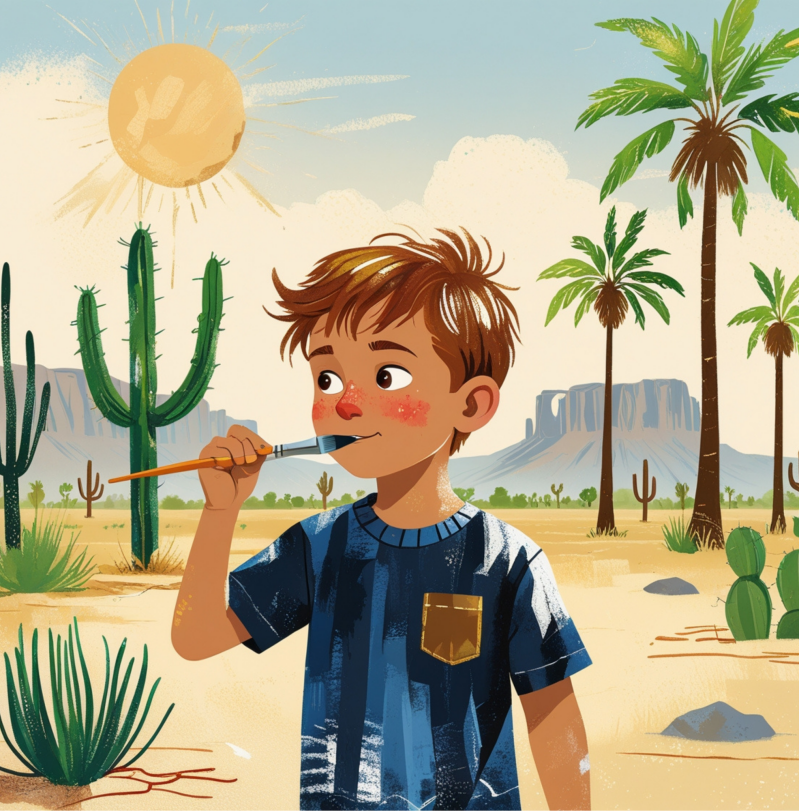
How I Feel My Feelings Supports the Overall Health & Wellbeing in Children
How I Feel My Feelings Supports the Overall Wellbeing in Children
In a world that often encourages children to “be good,” “be quiet,” or “behave” many young hearts are silently learning to suppress what they feel. Yet emotional suppression does not deepen a child into discovery or create resilience — emotional understanding does.
I Feel My Feelings is more than a children’s book. It is guidance that supports a child’s emotional, mental, social, and even physical wellbeing. It lays the foundation for wholeness by teaching children that their feelings are safe, valid, and meaningful.
Let’s explore how this supports overall wellbeing.
1. Emotional Wellbeing: Building Inner Safety
When a child learns to identify and name their feelings, something powerful happens — they begin to feel safe within themselves.
Instead of:
🎭 Acting out frustration
🎭 Shutting down sadness
🎭 Exploding in anger
They learn to:
🎭 Recognise the feeling
🎭 Sit with it
🎭 Express it in healthy ways
This process strengthens emotional intelligence, self-regulation, and self-awareness — core skills that protect against anxiety, behavioural challenges, and emotional overwhelm later in life.
I have said this many times before and I will say it agin
: "emotional literacy is not a luxury skill. It is a life skill."
2. Mental Wellbeing: Reducing Internal Stress
Unexpressed emotions don’t disappear — they go inward. For children, this can look like:
🎭 Tummy aches
🎭 Sleep struggles
🎭 Irritability
🎭 Difficulty concentrating
By encouraging children to feel and process emotions, I Feel My Feelings reduces internal stress. When feelings are acknowledged, the nervous system settles. The brain can return to learning, playing, and connecting.
A regulated child is a child who can thrive.
3. Social Wellbeing: Strengthening Relationships
Children who understand their own emotions are better able to:
Empathise with others
Communicate their needs
Navigate conflict
Build healthy friendships
When a child can say, “I feel sad,” instead of hitting… or “I feel frustrated,” instead of withdrawing… they are learning relational skills that will support them for life.
Emotional awareness fosters compassion — both for self and others.
4. Behavioural Wellbeing: From Reaction to Response
Many challenging behaviours are simply unexpressed emotions seeking attention.
When children are given language and tools to process feelings, behaviour shifts naturally. Instead of reacting impulsively, they begin to pause and respond.
This builds:
👫 Self-control
👫 Accountability
👫 Confidence
Not because they are forced to behave — but because they feel understood.
5. Physical Wellbeing: Supporting the Body
There is growing understanding of the mind-body connection in children. Emotional suppression can activate chronic stress responses in the body.
When children feel safe to experience emotions:
👩🎨 Cortisol levels stabilise
👩🎨 Nervous system regulation improves
👩🎨 Rest and digestion function more effectively
👩🎨 Feeling feelings is not just emotional work — it is physiological regulation.
6. Spiritual & Identity Wellbeing: Honouring the Whole Child
At its heart, I Feel My Feelings teaches children:
“You are allowed to be fully you.”
When a child feels accepted in their joy, anger, fear, and sadness — they develop a strong internal sense of worth. They learn that they are not “too much” or “not enough.”
This nurtures:
👧 Healthy self-identity
👧 Inner confidence
👧 Authentic expression
It supports the development of a grounded, heart-led human.
The Bigger Picture
When we teach children to feel their feelings, we are not making them “soft.”
We are making them strong in the truest sense.
Strong enough to:
👧 Sit with discomfort
👧 Communicate truthfully
👧 Regulate their nervous system
👧 Build healthy relationships
👧 Lead with empathy
Overall wellbeing in children is not achieved through control — it is achieved through connection.
I Feel My Feelings is a doorway to that connection.
And when children learn that their inner world matters, they grow into adults who honour the inner world of others.
That is how we raise emotionally intelligent, compassionate, resilient humans.
These are the children and future generation of adult that the world needs.
✨️📚🎭📚✨️
How I Feel My Feelings Supports Children to Develop the Qualities Needed for Self-Mastery
In a world that often teaches children to “be good,” “be quiet,” or “be strong,” emotional suppression can begin very early. Yet true strength is not found in pushing feelings down — it is found in learning how to understand, express, and integrate them.
I Feel My Feelings, offers children something profoundly different: permission, language and an invitation to be embodied with tools of awareness, presence and creativity. And through this process, it gently builds the inner architecture required for self-mastery.
As an educator and art therapist, I see self-mastery not as perfection or control — yet as the ability to consciously respond rather than react, to overcome any challenge. It is the capacity to feel deeply without being ruled by feelings. It is the alchemy of emotional intelligence in action.
I Feel My Feelings activates and nurtures essential qualities with in children that lead children toward that mastery.
1. Emotional Awareness - The Foundation of Self-Mastery
Self-mastery begins with awareness.
When children are invited to notice, name, and normalize their emotions, they build neural pathways of recognition. Instead of being overwhelmed by anger, sadness, excitement, or fear, they begin to identify:
“I am feeling frustrated.”
“I feel disappointed.”
“I feel proud.”
“I feel scared.”
This naming process strengthens the prefrontal cortex — the area responsible for reasoning and regulation — helping children pause before reacting.
I Feel My Feelings creates a safe mirror for children to see themselves reflected in emotional experiences. That mirroring builds consciousness — and consciousness is the first step toward mastery.
2. Emotional Regulation - Learning to Ride the Wave
Feelings are like waves — they rise, peak, and pass.
Children who are taught to suppress emotions often experience bigger outbursts later because those waves have nowhere to go. In contrast, when children learn that feelings can be felt safely, they begin developing regulation skills.
This book models:
🎭 Breathing through big feelings
🎭 Sitting with discomfort
🎭 Allowing tears or frustration without shame
🎭 Understanding that feelings are temporary
This builds resilience.
Over time, children move from impulsive reaction to thoughtful response — a hallmark of self-mastery.
3. Self-Compassion - Replacing Shame with Understanding
Many children internalize the belief that certain emotions are “bad.” Anger may be seen as wrong. Sadness may be seen as weakness.
When a child learns that all feelings are welcome and valid, they develop self-compassion.
Self-compassion allows a child to think:
“It’s okay that I feel this.”
“I am still good, even when I feel angry.”
“I can be kind to myself.”
Self-mastery without self-compassion becomes harsh control.
Self-mastery with compassion becomes wise leadership of the self.
4. Responsibility - Owning Feelings Without Blame
A powerful shift occurs when children understand:
“My feelings are mine. They are not someone else’s fault.”
This does not dismiss experiences — rather, it empowers children. When children learn they are responsible for how they respond to feelings, they step into personal power.
I Feel My Feelings gently guides children toward emotional ownership without shame, helping them:
🎭 Express feelings safely
🎭 Ask for help when needed
🎭 Make thoughtful choices
🎭 Responsibility is a core pillar of emotional maturity and future leadership.
5. Resilience - Building Inner Strength
Resilience is not about avoiding hardship — it is about moving through it.
Children who can process emotions rather than avoid them build psychological flexibility and emotional well-being. They recover more quickly from disappointment, conflict, or change.
They learn:
🎭 Feelings pass.
🎭 I can handle this.
🎭 I have tools.
🎭 I am supported.
These beliefs become inner anchors that support lifelong well-being.
6. Conscious Communication - Strengthening Relationships
Emotional mastery is not only internal — it affects relationships.
When children learn to articulate feelings clearly, they reduce reactive behaviours like hitting, yelling, withdrawing, or blaming. Instead, they begin to say:
“I felt hurt when that happened.”
“I need space.”
“Can you help me?”
This strengthens empathy and mutual understanding. It also supports peaceful classrooms and more connected families.
7. Inner Leadership - Becoming the Observer
Perhaps the most wonderful gift of I Feel My Feelings is that it introduces children to the idea that:
🎭 They are not their feelings — they are the one experiencing them.
This subtle shift builds the capacity to observe rather than be consumed. When a child can say:
“I feel angry”
instead of
“I am angry,”
they begin separating identity from emotion.
That separation is the beginning of self-mastery.
Why This Matters for the Future
Children who develop the alchemy of emotional intelligence early are more likely to:
🎭 Demonstrate empathy
🎭 Navigate conflict constructively
🎭 Lead with awareness
🎭 Build healthy relationships
🎭 Maintain mental wellbeing
In a rapidly changing world, academic knowledge alone is not enough.
Emotional regulation, resilience, and self-awareness are foundational life skills.
Reading I Feel My Feelings to kids contributes to raising children who are not just successful — but internally grounded, heart-led, and conscious.
I Feel My Feelings plants seeds of awareness, compassion, responsibility, and resilience — the very qualities that support children to grow into emotionally intelligent adults.
And when children master their inner world, they become capable of creating a more compassionate outer world.
✨️📚🎭📚✨️
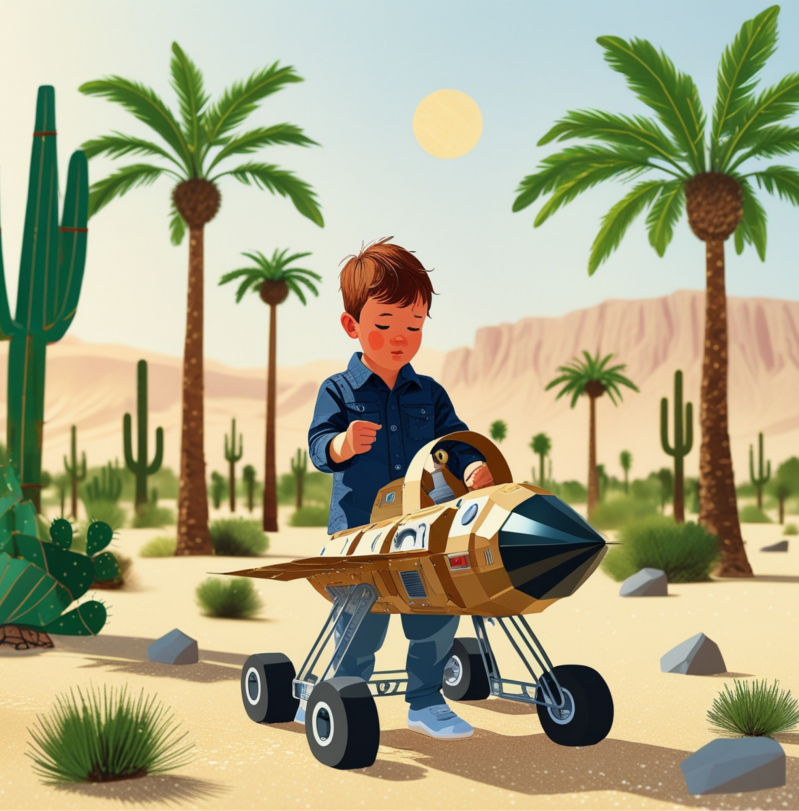
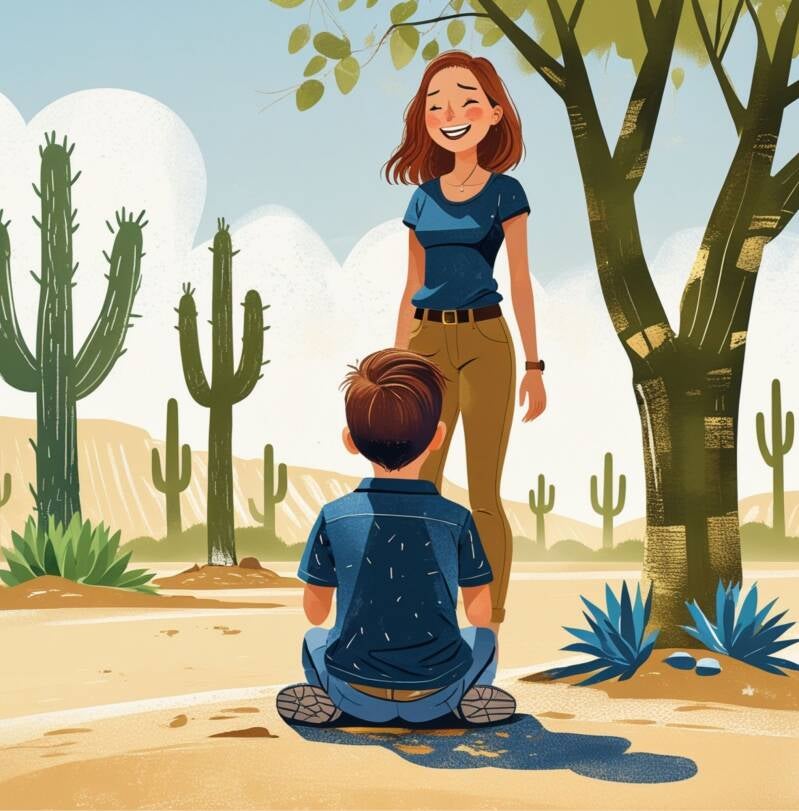
How I Feel My Feelings Supports a Child Through the Human Maturation Process
Human maturation is not just physical growth. It is emotional, neurological, relational, and spiritual development unfolding over time. A child does not simply “grow up” — they integrate experiences, build identity, develop regulation, and learn how to exist within themselves and in relationship with others.
I Feel My Feelings supports this maturation process at its roots: the emotional body.
As an educator and therapist, I see emotional development as the heart of healthy human growth. When feelings are supported early, maturation unfolds with greater stability, resilience, and authenticity.
Here’s how this book gently scaffolds that journey.
🧠 1. Supporting Neurological Development
During childhood, the brain is wiring itself at an extraordinary pace. Emotional experiences directly shape neural pathways.
When a child is guided to:
🎭 Notice what they feel
🎭 Name the emotion
🎭 Sit with it safely
🎭 Express it appropriately
they strengthen connections between the emotional centers of the brain (like the amygdala) and the regulating centers (like the prefrontal cortex).
This integration is maturation.
Instead of being ruled by impulse, the child begins developing the capacity to pause, reflect, and choose. I Feel My Feelings encourages this pause — which is a profound developmental milestone.
2. Building Emotional Identity
A core task of human maturation is identity formation.
Children slowly move from: “I am my feelings”
to
“I experience feelings.”
This subtle but powerful shift supports the development of a stable sense of self. When children understand that emotions are temporary experiences — not permanent definitions — they are less likely to internalize shame or self-judgment, reducing hindrance.
The book helps children integrate emotions into their identity without becoming overwhelmed by them. They learn:
I can feel anger and still be kind.
I can feel sadness and still be strong.
I can feel fear and still be brave.
That integration builds emotional coherence.
3. Supporting Relational Maturity
Human beings mature in relationship.
Children who learn to articulate feelings clearly are better equipped to:
Navigate friendships
Repair conflict
Ask for support
Set boundaries
When a child can say, “I felt hurt when that happened,” rather than acting out physically or withdrawing emotionally, they are demonstrating relational maturation.
I Feel My Feelings supports children in developing language for inner experiences — and language is what allows connection.
4. Strengthening Emotional Resilience
Maturation includes encountering disappointment, frustration, loss, and change. These experiences are inevitable.
Children who are taught to suppress emotions often develop avoidance patterns. In contrast, children who learn to process emotions develop resilience.
They internalize:
Feelings are temporary.
I can survive discomfort.
I have support.
I have tools.
This internal framework allows them to adapt as life becomes more complex.
Resilience is not toughness — it is flexibility. And flexibility is a hallmark of mature emotional development.
5. Encouraging Self-Responsibility
As children grow, they gradually assume responsibility for their choices and behaviors.
When emotional awareness is nurtured early, responsibility becomes empowering rather than shaming.
Instead of: “You made me angry.”
A child learns: “I felt angry, and I can choose what to do next.”
That shift fosters autonomy — a critical stage in human maturation. Children begin to experience themselves as active participants in their lives, not passive reactors.
6. Supporting Integration of the Whole Self
True maturation is integration — not fragmentation.
A child who feels safe to experience joy, anger, sadness, excitement, jealousy, pride, and fear without suppression grows into an adult who is emotionally whole.
When emotions are denied, parts of the self are denied.
When emotions are welcomed, the self becomes integrated.
I Feel My Feelings offers children permission to bring all of themselves forward — safely and consciously.
7. Laying the Groundwork for Adult Emotional Health
The emotional habits formed in early childhood often carry into adulthood.
Adults who struggle with emotional regulation frequently lacked early support in navigating feelings. Conversely, adults who demonstrate calm leadership, empathy, and psychological stability often had their emotional experiences validated and guided.
By supporting children through emotional awareness and expression now, we are investing in their future mental health, leadership capacity, and relational wellbeing.
A Gentle but Powerful Contribution
Human maturation is a layered and ongoing process. It is not rushed. It is not forced. It unfolds in safe, attuned environments.
I Feel My Feelings becomes part of that environment.
It reassures children:
Your feelings are welcome.
Your emotions are safe.
You are learning.
You are growing.
And when a child feels emotionally safe, maturation unfolds naturally — not from pressure, but from integration.
In supporting children to feel, process, and understand their inner world, this book quietly strengthens the foundation of who they are becoming.
And that foundation will carry them into adolescence and adulthood with greater clarity, resilience, and wholeness. 🌿
Pick up a copy today for the little people you care about
Available now:https://amzn.asia/d/0iAMaW85
With love,
Rose Alinta-Koa Phoenix
✨️📚👨🎨✨️
I Feel My Feelings Is A Tool For Early Childhood Educators, Primary School Teachers & Art Therapist
In classrooms, counselling rooms, and creative therapy spaces, one truth continues to emerge: children do better when they are supported to understand and regulate their emotions. Emotional literacy is not an “extra.” It is foundational.
I Feel My Feelings is more than a children’s book — it is a practical emotional regulation resource designed to support teachers, art therapists, school counsellors, and conscious parenting communities in nurturing emotionally intelligent, self-aware children.
🎭 The Importance of Developing Emotional Literacy in Education
Across Australia and Globally:
Educators are witnessing increased emotional dysregulation in children — anxiety, frustration, withdrawal, sensory overwhelm, and difficulty expressing needs appropriately.
Social-emotional learning (SEL) frameworks are now recognised as essential in early childhood and primary education settings.
I Feel My Feelings aligns beautifully with:
🎭 Trauma-informed education practices
🎭 Positive behaviour guidance approaches
🎭 Social-emotional learning frameworks
🎭 Conscious communication models
🎭 Strength-based child development
Rather than suppressing emotion I Feel My Feelings invites children to:
🎭 Notice their feelings
🎭 Name their feelings
🎭 Normalise their internal experiences
🎭 Express themselves safely and creatively
🎭 Develop emotional vocabulary
When children can name a feeling or creatively express it, they are far less likely to act it out in negative ways.
👩🎨 A Therapeutic Lens
From an art therapy and counselling perspective, emotional identification is the first step toward regulation. A dysregulated nervous system cannot always reason — yet it can be soothed.
I Feel My Feelings supports:
👩👧👧 Co-regulation between adult and child
👩👧👧 Emotional validation
👩👧👧 Reflective listening
👩👧👧 Nervous system awareness
👩👧👧 Creative expression integration
The language within the book mirrors therapeutic principles:
🎭 Feelings are neither “good” or “bad”
🎭 Emotions carry information
🎭 All feelings are welcome
🎭 Expression can be safe and constructive
For therapists and counsellors, the book can serve as:
📚 A session opener
📚 A group circle resource
📚 A prompt for art therapy exploration
📚 A tool for sand tray storytelling
📚 A bridge between child and caregiver conversations
👩🏫 Supporting Teachers in the Classroom
In busy classroom environments, emotional disruptions can impact the entire learning climate. A shared emotional language creates safety.
Educators can use I Feel My Feelings to:
👩🎨 Introduce feeling check-ins during morning circle
👩🎨 Develop a class “feelings wall”
👩🎨 Pair reading with drawing or journaling
👩🎨 Support children post-conflict
👩🎨 Reinforce restorative practices
The book offers children language for internal states that they may not yet understand — reducing shame and increasing confidence in normalising their humanness.
Emotionally safe classrooms are academically stronger classrooms because children are better behaved and are able to focus, concentrate and retain information they have learn.
👩👧👧 Conscious Parenting & Community Impact
Within conscious parenting communities, there is a growing understanding that behaviour is communication. Children mirror what is modelled.
I Feel My Feelings supports caregivers to:
👩👧👧 Validate rather than dismiss
👩👧👧 Respond instead of react
👩👧👧 Cultivate empathy
👩👧👧 Strengthen attachment bonds
👩👧👧 Build emotional resilience
When parents and educators share common language around feelings, children experience continuity — which strengthens their emotional security.
👩🎨 Integrating Art & Creativity
For Art Therapists and Creative Educators:
This book naturally extends into expressive modalities:
👩🎨 Painting emotions as colours
👩🎨 Creating “emotion creatures”
👩🎨 Clay sculpting feelings
👩🎨 Body mapping sensations
💃🏻 Movement-based Emotional Exploration
Creativity allows children to externalise internal experiences safely. Emotional literacy becomes embodied, not just intellectualised.
👩👧👧 Why This Matters
We are raising children in a fast-paced, overstimulated world. Screens are increasing. Nervous systems are taxed. Anxiety is rising earlier than ever before.
Children do not need perfection from adults.
They need presence.
They need safety.
They need language for what is happening inside them.
I Feel My Feelings is a gentle, heart-led resource designed to support the adults who hold space for children every day.
👩🏫 Teachers.
👩🎨 Therapists.
👩⚕️Counsellors.
👨👩👧👦 Parents.
When we help children feel their feelings — we are helping them with self discovery, emotional mastery, developing lifelong resilience, empathy, and emotional intelligence.
This changes how children are in the classrooms.
This changes how children are in families.
This changes how children are in communities.
This changes how children are in the world and the impact they can have, in making the world a better place.
Let support children feel their feelings.
📚👨👩👧👦👩🎨👩⚕️🌏
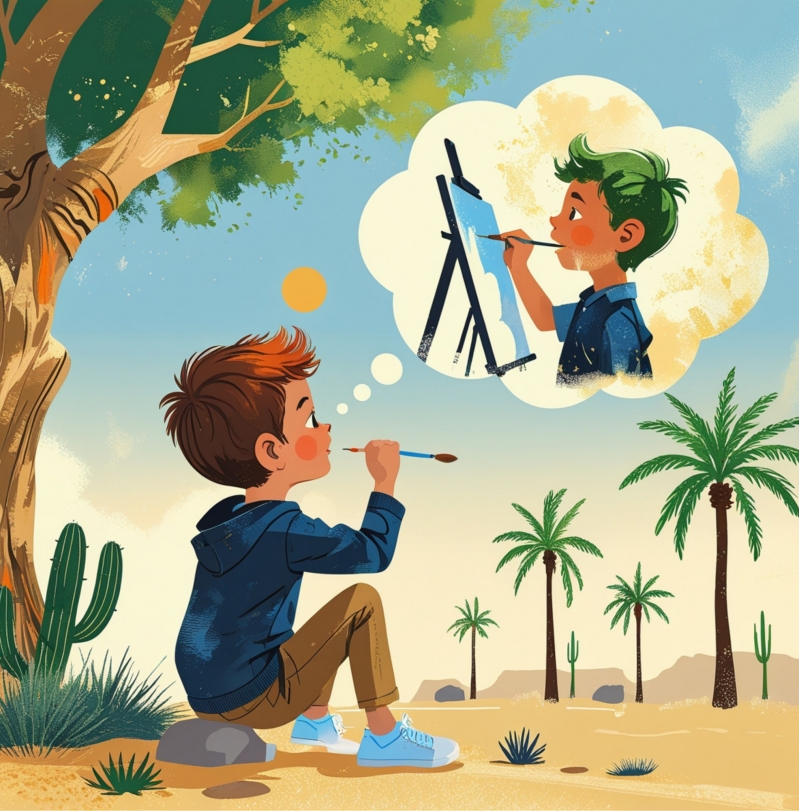

Blog
The Importance of Encouraging Children to Feel Their Feelings
Encouraging children to feel their feelings is not indulgent.
It is not permissive.
It is not “letting them get away with bad behaviour.”
It is foundational to their emotional health for emotional regulation, brain development, their human maturation process and positive behaviour embodiment for overall lifelong wellbeing.
When we teach children that their emotions are safe to experience, we are teaching them how to understand themselves. And when a child understands themselves, they move through the world with greater confidence, resilience, and compassion.
🎭 Emotions Are Biological — Not Behavioural Problems
Feelings are not flaws in a child’s character. They are biological responses.
When a child feels fear, their nervous system activates.
When they feel anger, their body mobilises.
When they feel sadness, their system slows down.
These are natural physiological states.
If a child is told: “Stop crying.”
“Don’t be angry.”
“You’re overreacting.”
Their nervous system does not magically calm down. Instead, the feeling gets suppressed — but the activation remains.
Encouraging children to feel their feelings allows the body to complete its natural stress cycle. This builds emotional regulation from the inside out.
🎭 Emotional Suppression Becomes Emotional Confusion
When children are not allowed to feel safely, they don’t stop feeling. They just lose language.
🎭 Suppressed sadness can turn into irritability.
🎭 Unexpressed fear can turn into avoidance.
🎭 Unheard anger can turn into aggression or shutdown.
Over time, children may disconnect from their emotional cues entirely. And when we disconnect from our feelings, we disconnect from our intuition, boundaries, and self-trust.
Encouraging children to feel is actually encouraging clarity.
It teaches them:
“I can identify what is happening inside me.”
“My emotions make sense."
"I can choose how I alchemise my emotions after I feel my feelings. They can be catalytic forces for creative expression or an invitation to take action to create change."
“I am not broken.”
🎭 Feeling Builds Regulation
Many adults were taught to override their emotions. As a result, they are now learning regulation skills later in life.
Yet children can learn this early.
When a caregiver:
Acknowledges (“I see you’re upset.”)
Validates (“That makes sense.”)
Observes (“Your body looks tense.”)
And then guides a child toward a solution
The child’s brain begins re- wiring regulation pathways.
This aligns beautifully with conscious communication approaches like AVOS — because regulation does not begin with correction. It begins with connection.
When a child feels seen, their nervous system softens.
Connection creates safety.
Safety creates regulation.
Regulation creates wise behaviour.
🎭 Emotional Intelligence Is Leadership Training
Encouraging children to feel their feelings is not just about preventing meltdowns. It is about shaping future adults.
Children who are allowed to feel safely are more likely to:
👩👧👧 Communicate clearly
👩👧👧 Set healthy boundaries
👩👧👧 Empathise with others
👩👧👧 Resolve conflict respectfully
👩👧👧 Stay connected to their values under pressure
In other words, they become emotionally intelligent leaders.
And in a world that desperately needs compassion, integrity, and grounded decision-making, this matters deeply.
🎭 Feeling Is a Gateway to Self-Worth
When we tell a child, “Your feelings are welcome here, you are safe to feel without condemnation” we are saying something much bigger:
👩👧👧 “You are welcome here.”
👩👧👧 Validation builds identity.
👩👧👧 Emotional safety builds self-worth.
A child who trusts their feelings learns to trust themselves.
And self-trust is one of the greatest gifts we can give so that they can wisely lead their life in a good direction.
🎭 Encouraging Feeling Does Not Mean Allowing Harm
It is important to clarify: encouraging feelings does not mean allowing harmful behaviour.
All feelings are welcome.
Not all behaviours are acceptable.
A child can be supported to feel angry — while also being guided not to hit.
They can feel disappointed — while learning respectful communication.
When we separate emotion from behaviour, we teach responsibility without shame.
🎭 Raising a Generation That Feels
We are living in a time of emotional awakening. Mental health conversations are expanding. Trauma awareness is growing. The science of the nervous system is becoming mainstream.
Encouraging children to feel their feelings is part of this cultural healing.
It interrupts generational patterns of suppression.
It fosters authenticity.
It nurtures empathy.
And most importantly, it helps children remain connected to their inner world with alchemy— instead of abandoning it to fit in.
🎭 The Invitation
Encouraging children to feel their feelings is an act of courage.
It asks adults to regulate themselves first.
It asks caregivers to sit with discomfort.
It asks us to model what we want to see.
But the reward is profound.
When children grow up knowing their emotional world is safe, they become adults who can navigate life with depth, compassion, and strength.
This is how we raise heart-led leaders
Who I Feel My Feelings Is For
I Feel My Feelings was written for children — the sensitive children who feel deeply with big emotions.
It was also written for the adults who love them.
Some children feel everything intensely.
They laugh loudly.
They cry deeply.
They get frustrated quickly.
They love fiercely.
These children are often told they are “too much.”
Too emotional.
Too sensitive.
Too dramatic.
But what if they are not “too much”?
What if they are deeply attuned to their energetic and emotional experience.
I Feel My Feelings is for the child who needs to hear: “You are not wrong for feeling.”
It gives language to what is happening inside their body.
It normalises emotions.
It offers reassurance that feelings are safe — and that they pass.
For the Quiet Child Who Holds It All Inside
Not all big feelings are loud.
Some children don’t scream or cry — they go silent.
They withdraw.
They shut down.
They try to be “good.”
This book is also for the child who doesn’t know how to express what’s happening inside.
The child who needs permission.
The child who needs a bridge.
By naming emotions gently and simply with an inviation to also get creative while doing it, I Feel My Feelings creates a doorway for conversation. It allows children to point, identify, and begin to speak and creatively express their internal world.
Sometimes a story can say what a child cannot.
For Conscious Parents and Caregivers
This book is also for the parent who wants to do things differently.
The parent who understands that behaviour is communication.
The caregiver who wants to acknowledge and validate instead of dismiss.
The adult who is learning to regulate their own nervous system so they can support their child’s.
It aligns beautifully with conscious communication practices like AVOS (Acknowledge, Validate, Observe, Solution), because it teaches children emotional literacy from the inside out.
When a child says, “I feel angry,” instead of acting it out, something powerful happens. There is space. There is awareness. There is choice.
And that is where growth begins.
For Educators and Therapists
I Feel My Feelings is also for classrooms, therapy rooms, and community spaces.
It supports:
📚 Emotional regulation skills
📚 Social and emotional learning programs
📚 Art therapy and creative expression
📚 Circle time discussions
📚 Conflict resolution conversations
For educators who know that academic readiness begins with emotional safety, this book becomes a practical tool.
When children feel safe in their bodies, their brains are ready to learn.
For a Generation Learning to Feel Safely
We are raising children in a world that moves quickly, stimulates constantly, and often leaves little room for processing.
This book is for this generation.
The children who are sensitive to environmental changes.
The children navigating social media, big global conversations, and shifting family dynamics.
The children who need grounding, language, and reassurance.
Teaching emotional intelligence is not just about managing behaviour. It is about raising future adults who can:
📚 Communicate clearly
📚 Lead compassionately
📚 Set healthy boundaries
📚 Empathise deeply
📚 Stay connected to themselves
And that matters.
Ultimately, It Is For the Child Who Needs to Know:
📚 Your feelings are not a problem.
📚 They are part of being human.
📚 They are safe to feel.
📚 And you are loved — in every emotion.
That is who I Feel My Feelings is for.


I Feel My Feelings is A Wisdom Story For Positive Behaviour Guidance
🥁📣📚✨ IT’S RELEASE DAY! ✨️📚🚀
We are excited to officially announce the release of another new conscious children’s book…
💛I Feel My Feelings 💛
This book has been written straight from the heart.
I Feel My Feelings is an empowering story that encourages children to understand, express, and honour their feelings in a safe, healthy and creative way with wisdom. In a world that often tells children to “be quiet,” “stop crying,” or “calm down,” this book lovingly reminds them:
✨ Your feelings are welcome here.
✨ Your feelings are important.
✨ You are allowed to feel
✨️You are safe to feel
This story supports emotional intelligence, self-awareness, and conscious communication — helping children build resilience, confidence, and self-mastery from a young age.
As someone who has worked closely with children doe over 10 years and witnessed how powerful it is when a child feels truly seen, heard, understood and validated, creating this book has been deeply meaningful to me.
My hope is that I Feel My Feelings becomes a tool for parents, caregivers, and educators to open up meaningful and wise conversations with the children in their lives as they grow and develope into their greatest possible version.
Because when children learn that feelings are safe and they can get creative with their feeling…
They grow into adults who are safe and clever within themselves. 💛
If you believe in raising heart-led, emotionally intelligent, creative children, this book is for you.
📚 I Feel My Feelings is now available👇
https://amzn.asia/d/0iAMaW85 👈
Let’s raise a generation that feels, heals, creates and leads with love. 🌿✨
#IFeelMyFeelings #ChildrensBooks #ConsciousChildrensLiterature #ConsicousKids #EmotionalIntelligence #ConsciousParenting #HeartLedChildren #KidsWithValue #KidsWhoMakeADifference #LoveLiftsThemUp #TheStoryCorner

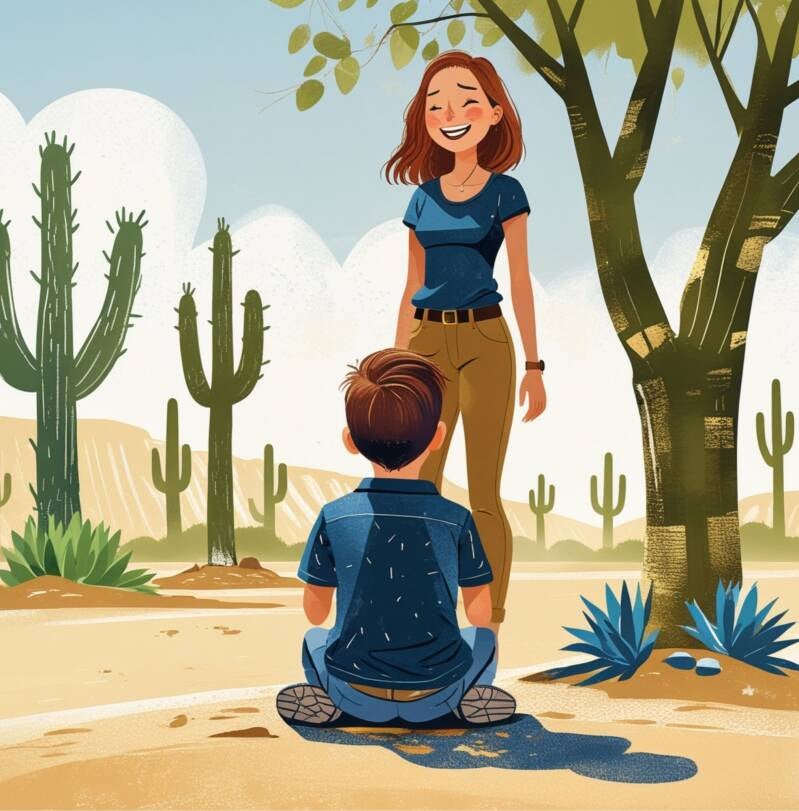
Why I Wrote I Feel My Feelings
I wrote I Feel My Feelings because I have seen what happens when children are not taught how to safely and masterfully feel and understand their emotions, I was one myself.
And I have seen the magic that unfolds when they are.
For many years, through my work with children, art therapy, and conscious communication practices like AVOS (Acknowledge, Validate, Observe, Solution), and my own lived experiece of growing up (and then having to do alot of emotional healing as an adult) I witnessed a simple truth: children do not need to be fixed. They need to be heard. They need to be guided. They need to be shown that their emotions are safe and supported to feel them and express them creatively, if they so desire.
Too often, children are told:"Your to deep""Your too sensitive" "Your to emotional"“Stop crying.”“You’re fine.”“Don’t be angry.”“Big girls don’t get upset.”“Good boys don’t feel scared.”
Yet feelings don’t disappear when we silence them. They go underground. And we learn they are not safe and that we deal with them by suppressing them. They become confusion, shame, behavioural challenges, or self-doubt and we can end up believing there is something wrong with us because of them.
I wrote I Feel My Feelings to give children permission.Permission to feel. Permission to explore and understand what is happening inside them. And Permission to express them creatively in a healthy manner.
Emotions Are Not Problems — They Are MessengersEvery feeling carries wisdom.Anger can show us where a boundary has been crossed.Sadness can show us what matters deeply to us.Fear can ask for reassurance and safety.And joy reminds us of who we truly are.
When children learn to feel their feelings, and then identify and name their feelings, their nervous systems begin to regulate. Their brains integrate experience more effectively. Their relationships become stronger. And their behaviour becomes more aligned with their higher self.
Emotional intelligence is not a - highly sophisticated developmental "extra.”It is foundational to leadership, resilience, empathy, and lifelong wellbeing.
This is especially important to me because I believe we are raising the next generation of heart-led leaders, who are empowered and wise in their embodiment and behaviour in how they show up in the world and contribute.
The Power of Feeling SafelyIn my work with children and families, I’ve seen that when a child feels emotionally safe, everything changes.When a caregiver says: “I see you.” “I hear you.” “It makes sense that you feel that way.”The child’s whole body softens and they become open and receptive to positive behaviour guidance. That moment of validation creates neurological safety. It builds self-worth and trust. It teaches the child:“My inner world matters and i'm not wrong while I make mistakes while I learn and grow.”
That is why this book is not just about feelings — it is about value.
When a child can say, “I feel my feelings,” they are also saying, “I trust myself in being able to overcome any challenge”
A Healing Book for This GenerationWe are living in a time where children are navigating big emotions — environmental concerns, social pressures, digital overstimulation, and changing family structures. They need tools. They need language. They need guidance.
I wrote this book as a gentle companion — one that can be read at bedtime, in classrooms, in therapy spaces, or during hard moments when emotions feel overwhelming.
It is a book for:The sensitive childThe big-feeling childThe quiet child who holds everything insideThe spirited child who expresses everything loudlyAnd the adults who want to support them with compassion.
From My Heart to TheirsI Feel My Feelings is a love letter to children.It reflects everything I believe about conscious parenting: Emotions are messengers. Behaviour is communication. Children mirror what we model.
When we regulate ourselves, we help them regulate.When we honour their feelings, we cultivate their value.
I wrote this book because I want children to grow up knowing that their emotions are not too much. They are not wrong. They are not inconvenient.They are wise in how they feel and what they do matters.
And when children are taught to feel safely, they grow into adults who can love deeply, lead courageously, and live authentically.
That is why I wrote I Feel My Feelings.
The Story Corner is delighted to announce the upcoming release of its newest children’s book -
I Feel My Feelings
🥁📣 The Story Corner is delighted to announce the upcoming release of its newest children’s book, I Feel My Feelings — an empowering story written to help children understand, embrace, and navigate their big feelings with confidence and compassion.
This new release continues The Story Corner’s mission of nurturing emotional intelligence, emotional regulation, emotional mastery through embodied practice and self-awareness, creative self expression and inner resilience in young readers for positive behaviour guidance and inner alchemy as children become there greatest possible version.
I Feel My Feelings is an invitation to nurture a generation that feels deeply and loves openly while transforming any emotional situation in through creatively expressing themselves courageously.
Release date coming soon.
Stay tuned for more information...


Something Exciting Is Coming…
Something empowering for sensitive hearts is coming…
A book for kids with big feelings...A book that gives permission...A book for a child's human maturation process...
Can you guess what it’s about?
How Art Making Prepares the Brain for Learning - Another Reason Why Art Making Is How I Express My Emotions Supports The Educational Development of Children.
Art making is often seen as an “extra” — something fun, expressive, or relaxing that sits alongside “real” learning. Neuroscience tells a very different story. Creative art processes don’t just support learning; they prime the brain for learning. When children (and adults) engage in art making, they activate the very neurological foundations that make learning possible.
Art is not a break from learning — it is preparation for learning.
Art Regulates the Nervous System First
Before the brain can absorb new information, it needs to feel safe, regulated, and present. Art making naturally supports this process.
When a person draws, paints, moulds, cuts, or creates:
👨🎨 The parasympathetic nervous system is activated
👨🎨 Stress hormones such as cortisol decrease
👨🎨 The body moves out of fight-or-flight and into a state of calm alertness
This regulated state is essential for learning. A dysregulated brain prioritizes survival; a regulated brain can focus, explore, and integrate new information.
Art provides a gentle, non-verbal pathway into regulation — especially powerful for children who may not yet have the language to express complex emotions.
Art Integrates Both Hemispheres of the Brain
Learning is most effective when the brain is integrated rather than fragmented.
Art making simultaneously activates:
👨🎨 The right hemisphere (emotion, intuition, imagery, creativity)
👨🎨 The left hemisphere (planning, sequencing, problem-solving, fine motor control)
When a child decides what to create, selects materials, plans steps, and adjusts along the way, both hemispheres are working together. This integration strengthens neural pathways and improves the brain’s ability to process information holistically. A brain that is integrated is more flexible, adaptive, and capable of deep learning.
Art Strengthens Executive Function Skills
Executive function skills are the brain’s “air traffic control system.” They include:
👨🎨 Focus and attention 👨🎨 Working memory 👨🎨 Emotional regulation
👨🎨 Cognitive flexibility 👨🎨 Impulse control
Art naturally develops these skills.
During art making, children:
👨🎨 Hold ideas in mind while creating
👨🎨 Follow sequences and adapt when things don’t go as planned
👨🎨 Make decisions and problem-solve in real time
👨🎨 Persist through challenges and mistakes
These are the exact same skills required for reading, writing, mathematics, and social learning. Art builds them in an embodied, joyful way rather than through pressure or performance.
Art Enhances Sensory Processing and Motor Development
The brain learns through the body.Art making engages:
👨🎨 Tactile input (touching textures, materials)
👨🎨 Visual processing (colour, shape, spatial awareness)
👨🎨 Proprioceptive input (hand strength, pressure, movement)
👨🎨 Fine motor coordination (hand–eye coordination, precision)
This sensory integration strengthens neural connections and supports readiness for academic tasks such as handwriting, reading fluency, and sustained attention. For young children especially, learning must move through the hands before it reaches the mind.
Art Supports Emotional Processing and Memory
Emotion and learning are inseparable. The brain remembers what is emotionally meaningful.
Art allows emotions to be:
👨🎨 Expressed safely
👨🎨 Externalized rather than suppressed
👨🎨 Processed without needing words
When emotional energy is released through creative expression, cognitive space opens up. Children are more available to learn because they are no longer carrying unprocessed feelings internally.
Additionally, learning that occurs in a creative, emotionally positive state is more likely to be stored in long-term memory.
Art Encourages Curiosity and Intrinsic Motivation
Learning thrives when driven by curiosity rather than compliance.
Art making:
👨🎨 Invites exploration rather than right-or-wrong answers
👨🎨 Encourages experimentation and discovery
👨🎨 Builds confidence through self-directed creation
When children experience learning as something joyful and self-led, their brains associate learning with pleasure rather than pressure. This intrinsic motivation becomes the foundation for lifelong learning.
Art Builds Neural Plasticity
Neuroplasticity — is the brain’s ability to change and adapt — is strengthened through novel, creative experiences.
Art offers:
👨🎨 Open-ended challenges 👨🎨 New sensory combinations
👨🎨 Opportunities for imagination and innovation
These experiences encourage the brain to form new neural pathways, enhancing adaptability, resilience, and creative problem-solving — essential skills in an ever-changing world.
Art Creates the Conditions for Whole-Child Learning
True learning happens when the child is engaged emotionally, cognitively, physically, and creatively.
Art making:
👨🎨 Regulates the nervous system
👨🎨 Integrates the brain
👨🎨 Strengthens executive function
👨🎨 Supports emotional wellbeing
👨🎨 Enhances memory and focus
When art is introduced before or alongside academic learning, it prepares the brain to receive, integrate, and apply new information more effectively.
Bottomline: art does not distract from learning, it prepares the brain for learning.
By honouring creativity as a foundational learning process rather than an optional activity, we support children in becoming regulated, curious, confident, and capable learners — from the inside out.
✨️📚👨🎨✨️

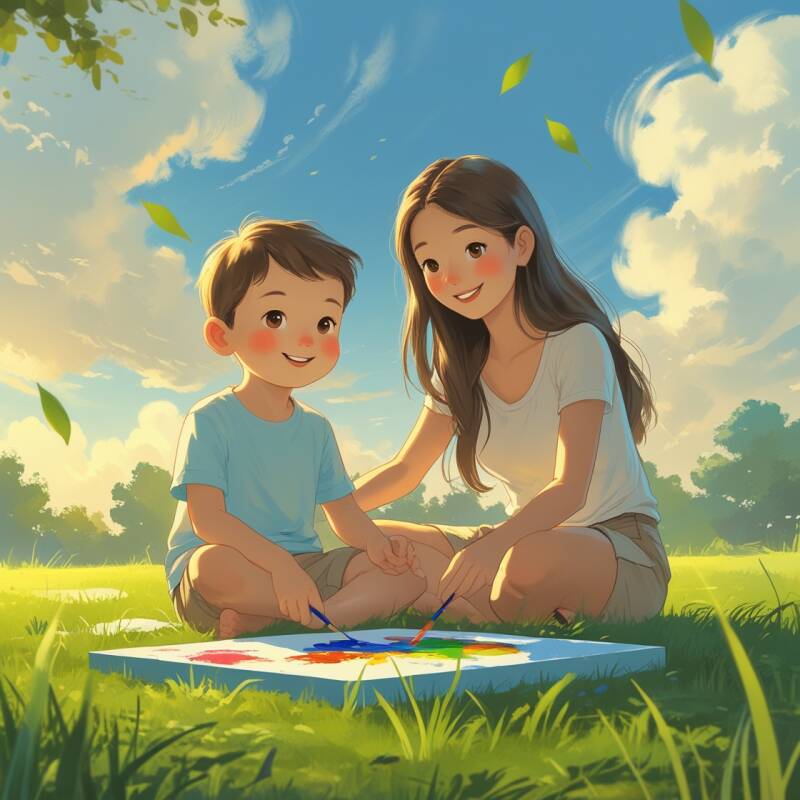
How Art Making Is How I Express My Emotions Can Be Used in Home Care
At home, children experience their emotions most fully—and often most intensely. Parents and caregivers may want to help yet feel unsure how to respond without escalating or shutting feelings down (which they shouldn't do, as children need the freedom to regulate emotions with out suppression)
Art Making Is How I Express My Emotions offers families a simple, compassionate alternative when responding to children's emotional needs, for positive behaviour guidance through creating together.
Strengthening Emotional Safety at Home
Art-making gives children a safe outlet for emotions without confrontation or pressure. It sends a powerful message: your feelings are welcome here and you can transform them into something creative with meaning and colour.
In in-home care settings, the book can:
Support children during emotional moments to:
👨🎨 Reduce conflict by offering a calming activity
👨🎨 Encourage emotional expression without forced conversation
👨🎨 Build trust and connection between child and caregiver
👨🎨 Creating Shared Moments of Connection
When adults sit alongside children while they create—without correcting, interpreting, or fixing them—it deepens emotional connection and appreciation, where children become more open to behaviour guidance.
Parents don’t need special skills. All they need to provide is:
👨🎨 Time
👨🎨 Art materials
👨🎨 Presence
This is all that is needed to curate spaces for children to express their emotions creatively, for emotional regulation while supporting emotional growth.
Supporting Long-Term Emotional Resilience
Over time, regular creative expression helps children:
👨🎨 Recognise and release emotions
👨🎨 Build self-awareness and confidence
👨🎨 Develop healthy coping strategies
👨🎨 Feel accepted for who they are
Art Making Is How I Express My Emotions becomes more than a book—it becomes part of a nurturing family rhythm and family creative culture.
When children are given permission to express emotions creatively, they learn that feelings are not something to fear or hide—they are something to understand.
Art making is not just play.
It is communication, regulation, and empowerment.
✨️📚👨🎨✨️
Using Art Making Is How I Express My Emotions in Therapy Sessions
In therapy, children are often asked to explore feelings they don’t yet understand or feel safe enough to talk about. Art-making provides a natural, non-invasive pathway into emotional expression.
Art Making Is How I Express My Emotions aligns beautifully with child-centred, trauma-informed, and play-based therapeutic approaches.
A Gentle Entry Point for Emotional Expression
The book reassures children that there is no “right way” to express emotions. This reduces pressure and performance anxiety, allowing feelings to surface organically.
In therapy sessions, art-making can:
👨🎨 Help children express emotions without verbal demand
👨🎨 Support emotional regulation before deeper work
👨🎨 Build trust and safety between child and therapist
👨🎨 Give children a sense of agency and control
Supporting Trauma-Informed Practice
For children who have experienced trauma, verbal expression may feel unsafe or overwhelming. Art-making allows emotions to be explored at the child’s pace, without re-traumatisation.
Therapists can use the book to:
👨🎨 Open or close sessions with grounding creative activities
👨🎨 Observe emotional themes through imagery and colour
👨🎨 Support processing without analysis or interpretation
👨🎨 Reinforce the child’s autonomy and voice
The focus remains on expression, not explanation.
Empowerment Through Choice and Creativity
By allowing children to choose materials, colours, and forms, art-making reinforces empowerment—an essential element of healing.
The book supports the message that children are capable, expressive, and worthy of being heard.
✨️📚👨🎨✨️


How Art Making Is How I Express My Emotions Supports Emotional Wellbeing in the Classroom
Classrooms are busy, stimulating environments where children are expected to learn, socialise, and self-regulate—often all at once. For many children, especially those with big emotions or limited verbal skills, this can feel overwhelming.
Art Making Is How I Express My Emotions offers educators a gentle, inclusive way to support emotional expression and regulation through creativity. Art making also prepares the brain for learning, meaning children become more focused and concentrated when listening to and engaging with their teacher in being able to retain information.
👨🎨 Creating Emotionally Safe Learning Spaces ✅️
Art-making allows children to process emotions without having to speak before they’re ready. In the classroom, this creates a sense of emotional safety and belonging—especially for children who struggle with verbal communication, anxiety, or emotional overwhelm.
Using the book as a foundation, teachers can:
👨🎨 Normalise emotional expression as part of learning
👨🎨 Reduce behavioural escalations by offering creative outlets
👨🎨 Support emotional literacy without forcing discussion
👨🎨 Foster empathy and understanding among peers
👨🎨 Supporting Focus, Regulation, and Readiness to Learn
When children are emotionally dysregulated , learning becomes difficult. Art-making helps calm the nervous system, allowing children to settle and refocus.
The book can be used during:
👨🎨 Morning emotional check-ins
👨🎨 Transition times between activities
👨🎨 Reflection after conflict or big emotions
👨🎨 Calm-down corners or wellbeing sessions
By integrating art into daily routines, educators support both emotional wellbeing and academic engagement.
👨🎨 A Tool for Inclusion and Empowerment
Art Making Is How I Express My Emotions supports inclusive education by valuing multiple forms of communication. It empowers children to express who they are, not just what they know—creating classrooms where every child feels seen.
📚👨🎨👩🏫 📚👨🎨👩🏫
Using Art Making Is How I Express My Emotions in Therapy Sessions
In therapy, children are often asked to explore feelings they don’t yet understand or feel safe enough to talk about. Art-making provides a natural, non-invasive pathway into emotional expression.
Art Making Is How I Express My Emotions aligns beautifully with child-centred, trauma-informed, and play-based therapeutic approaches.
A Gentle Entry Point for Emotional Expression
The book reassures children that there is no “right way” to express emotions. This reduces pressure and performance anxiety, allowing feelings to surface organically.
In therapy sessions, art-making can:
👨🎨 Help children express emotions without verbal demand
👨🎨 Support emotional regulation before deeper work
👨🎨 Build trust and safety between child and therapist
👨🎨 Give children a sense of agency and control
Supporting Trauma-Informed Practice
For children who have experienced trauma, verbal expression may feel unsafe or overwhelming. Art-making allows emotions to be explored at the child’s pace, without re-traumatisation.
Therapists can use the book to:
👨🎨 Open or close sessions with grounding creative activities
👨🎨 Observe emotional themes through imagery and colour
👨🎨 Support processing without analysis or interpretation
👨🎨 Reinforce the child’s autonomy and voice
The focus remains on expression, not explanation.
Empowerment Through Choice and Creativity
By allowing children to choose materials, colours, and forms, art-making reinforces empowerment—an essential element of healing.
The book supports the message that children are capable, expressive, and worthy of being heard.
✨️📚👨🎨✨️

How Art Making Is How I Express My Emotions Supports Emotional Wellbeing in the Classroom
Classrooms are busy, stimulating environments where children are expected to learn, socialise, and self-regulate—often all at once. For many children, especially those with big emotions or limited verbal skills, this can feel overwhelming.
Art Making Is How I Express My Emotions offers educators a gentle, inclusive way to support emotional expression and regulation through creativity. Art making also prepares the brain for learning, meaning children become more focused and concentrated when listening to and engaging with their teacher in being able to retain information.
👨🎨 Creating Emotionally Safe Learning Spaces ✅️
Art-making allows children to process emotions without having to speak before they’re ready. In the classroom, this creates a sense of emotional safety and belonging—especially for children who struggle with verbal communication, anxiety, or emotional overwhelm.
Using the book as a foundation, teachers can:
👨🎨 Normalise emotional expression as part of learning
👨🎨 Reduce behavioural escalations by offering creative outlets
👨🎨 Support emotional literacy without forcing discussion
👨🎨 Foster empathy and understanding among peers
👨🎨 Supporting Focus, Regulation, and Readiness to Learn
When children are emotionally dysregulated , learning becomes difficult. Art-making helps calm the nervous system, allowing children to settle and refocus.
The book can be used during:
👨🎨 Morning emotional check-ins
👨🎨 Transition times between activities
👨🎨 Reflection after conflict or big emotions
👨🎨 Calm-down corners or wellbeing sessions
By integrating art into daily routines, educators support both emotional wellbeing and academic engagement.
👨🎨 A Tool for Inclusion and Empowerment
Art Making Is How I Express My Emotions supports inclusive education by valuing multiple forms of communication. It empowers children to express who they are, not just what they know—creating classrooms where every child feels seen.
Empowering Children Through Creativity: Why Art Making Is How I Express My Emotions Matters
Children feel deeply—but they don’t always have the words to articulate what’s happening inside them with in their internal landscape.
Art Making Is How I Express My Emotions was created for children’s empowerment, emotional mastery and the development of their authentic creative expression.
This book offers children a powerful message: your feelings matter, and there is more than one way to express them.
Rather than asking children to translate big emotions into language before they’re ready, this book gives them permission to communicate through creativity—freely, safely, and without judgement.
Art making is a tool for empowerment. It reassures children that they are not “too much,” “too sensitive,” or “wrong” for how they feel. Instead, it frames emotions as valuable signals and art as a natural, empowering way to release and explore them.
Through its gentle message, the book encourages children to:
👨🎨 Trust their inner experiences
👨🎨 Express emotions without fear of correction
👨🎨 Develop confidence in their own voice
👨🎨 Feel capable, seen, and understood
This sense of empowerment lays a foundation for lifelong emotional resilience.
🎨 Supporting Emotional Regulation and Self-Awareness
Creative expression plays a vital role in helping children regulate their emotions. When children engage in art-making, their nervous system has an opportunity to settle, organise, and process feelings in a way that feels safe and accessible.
Art Making Is How I Express My Emotions supports this process by:
👨🎨 Normalising emotional expression
👨🎨 Encouraging self-awareness through creative play
👨🎨 Reducing pressure to “explain” feelings verbally
👨🎨 Helping children move through emotions rather than suppress them
This makes the book especially valuable for children who experience anxiety, overwhelm, big emotions, or difficulty with verbal communication.
🎨 Art Making Is How I Express My Emotions is a resource for homes, classrooms, and therapy spaces.
This book is more than a story—it’s a practical, heart-led resource. Parents, educators, counsellors, and therapists are embracing it as a tool that supports emotional development without force or performance.
It invites adults to:
👨🎨 Observe rather than correct
👨🎨 Listen without fixing
👨🎨 Hold space instead of rushing solutions
👨🎨 Build trust through shared creative moments
In doing so, it strengthens relationships while supporting children’s emotional growth.
🎨 Why This Message Is So Timely
In a fast-paced world that often prioritises compliance over connection, children need spaces where they can safely express who they are.
This book gently challenges the idea that emotions must be quiet, neat, or quickly resolved. Instead, it offers a compassionate alternative—expression before explanation, creativity before control.
That’s why Art Making Is How I Express My Emotions – for children’s empowerment is resonating so strongly with families and professionals alike.
It meets children where they are and empowers them to grow from the inside out.
This book is an invitation—to slow down, pick up the crayons, paints, or clay, and let creativity become a bridge to emotional understanding.
Because when children are empowered to express their emotions safely, they don’t just cope—they thrive.
Art making isn’t just something children do.
It’s how they learn to understand themselves.
✨️📚👨🎨🎭🎨📚✨️

Sometimes Word Are Not Enough...
Some children don’t yet have the words to communicate or express what they feel… or if they do, sometime words are not enough.
Yet through art making and the creative process they can always find a way to express their big feeling and emotions.
Art Making Is How I Express My Emotions is a fun and playful invitation for children to explore their inner world through creativity.
When a child paints, draws, or creates, they’re are not just making art —they’re learning how to feel safely, how to release emotions,
and how to understand themselves.
This book supports emotional regulation, self-expression, and children's empowerment, while building their confidence — as a path of self discovery, especially for sensitive and creative children who experience big feelings.
Art Making Is How I Express My Emotions helps children build emotional mastery through imagination, curiosity, and play.
Because when children are supported to express what they feel…
they grow into grounded, resilient, and emotionally aware humans.
This book is perfect for conscious parents, educators, and therapists who want to support children with emotional and nervous system regulation.
Pick up a copy today for the little people you care about in your life, to share a message of creative expression for children's empowerment and emotional mastery.
Available now across all leading platforms.
Amazon,Apple Books, Kobo, Bookshop.org and Barnes & Noble
https://amzn.asia/d/0YDWCFb
✨️📚👩🎨🐣✨️
Our Latest Children’s Book Release : Empowers Emotional Expression Through Creativity
🥁🥳 📚👩🎨🐣✨️
Art Making Is How I Express My Emotions offers a compassionate, colourful and creative approach to emotional intelligence and nervous system regulation for positive behaviour guidance in children.
This book has been written to support masterful emotional development and regulation, this story introduces children to art-making as a safe and effective tool for processing feelings, resolving inner conflict, and developing emotional regulation skills.
By engaging children through storytelling and creative exploration, the book encourages self-awareness, empathy, and confidence in emotional expression.
Designed as both a story and an educational resource, Art Making Is How I Express My Emotions is well suited for use in:
Early learning environments
Primary schools
Art therapy and wellbeing programs
Homes supporting emotional literacy
Community and healing spaces
The book aligns with contemporary approaches to social-emotional learning (SEL) and supports children in developing lifelong tools for emotional wellbeing through creativity.
✨️📚👩🎨🐣✨️

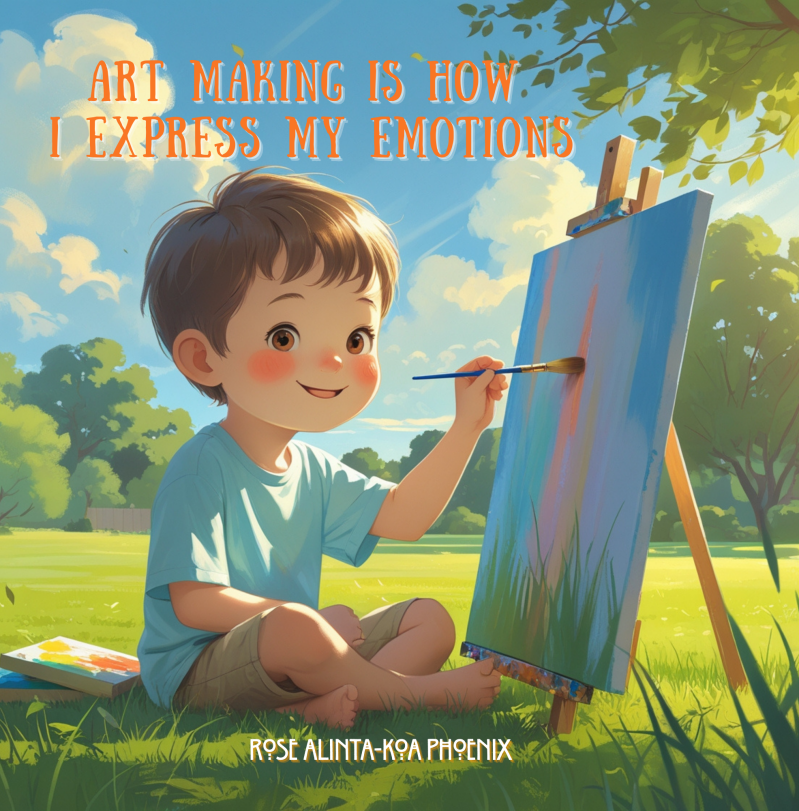
The Story Corner is excited to announce another "conscious kids" - children's book release.
🥳🥁Today is the day 🥁🥳
✨️📚👩🎨🐣✨️
The Story Corner is excited to announce another "conscious kids" - children's book release...
"Art Making Is How I Express My Emotions"
A Heart-Centred Children’s Story Supporting Emotional Regulation and Self Expression Through Creativity
This story is one that gently invites children into the world of emotional awareness, self-expression, and creative healing.
Art Making Is How I Express My Emotions is an empowering and educational story designed to support children in understanding, processing, and regulating their emotions through the creative process.
With colourful inspiration, wisdom, and playful creative guidance, this book empowers children to see art-making as a safe and healthy pathway for expressing feelings, conflict resolution, and discovering inspired solutions to life’s challenges.
In a world where emotions can sometimes feel overwhelming—especially for young hearts—this story offers a compassionate reminder: all feelings are welcome, and creativity is a powerful ally, here to support you and your process of self discovery along the way.
Through engaging storytelling and relatable experiences, children are encouraged to:
🧒 Recognise and name their emotions
🧒 Express feelings safely through art and creativity
🧒 Develop emotional regulation and self-trust
🧒 Use creative expression as a tool for problem-solving and communication
🧒 Build confidence in their inner world and unique voice
🧒 Positive and empowered character development
More than just a story, Art Making Is How I Express My Emotions supports positive behaviour guidance and emotional intelligence development, helping children grow into resilient, self-aware, empowered and masterful individuals.
This book is especially supportive for:
👩🎨Children navigating big feelings
👩🎨Families and caregivers seeking gentle emotional tools
👩🎨Educators, therapists, and healing practitioners
👩🎨Creative and sensitive children who thrive through artistic expression
Rooted in the belief that creativity is a natural language of the heart, this release continues the vision of nurturing children’s emotional wellbeing while honouring imagination, play, and inner wisdom.
Pick up a copy today for the little people you care about
Available now: https://amzn.asia/d/0YDWCFb
With love,
Rose Alinta-Koa Phoenix
✨️📚👩🎨🐣✨️
✨️👩🎨How Creative Self-Expression Supports Discipline and Emotional Mastery in Children🧘♀️✨️
Children experience big emotions long before they have the words to explain them. Creative self-expression—through drawing, painting, movement, music, or imaginative play—gives children a safe and natural way to release, explore, and understand those emotions.
When children are supported to express feelings creatively rather than suppress them, they begin to develop true emotional mastery.
Creativity helps calm the nervous system, improve focus, and strengthen the connection between emotions and thinking. This supports self-discipline, not through control, rather through understanding.
Creative activities teach children to pause, reflect, and respond rather than react. Over time, they learn that emotions are manageable and that they have healthy tools to self-regulate. When adults provide space without judgement or pressure, children build confidence, emotional resilience, and trust in themselves.
Supporting creative self-expression isn’t about making art—it’s about raising emotionally intelligent children who feel safe to be who they are and capable of handling life’s challenges.
Art Making Is How I Express My Emotions support children to develop and cultivate this discipline and emotional mastery.
Art Making Is How I Express My Emotions is The Story Corners next public rlease, watch this space.
✨️📚👩🎨🧘♀️✨️
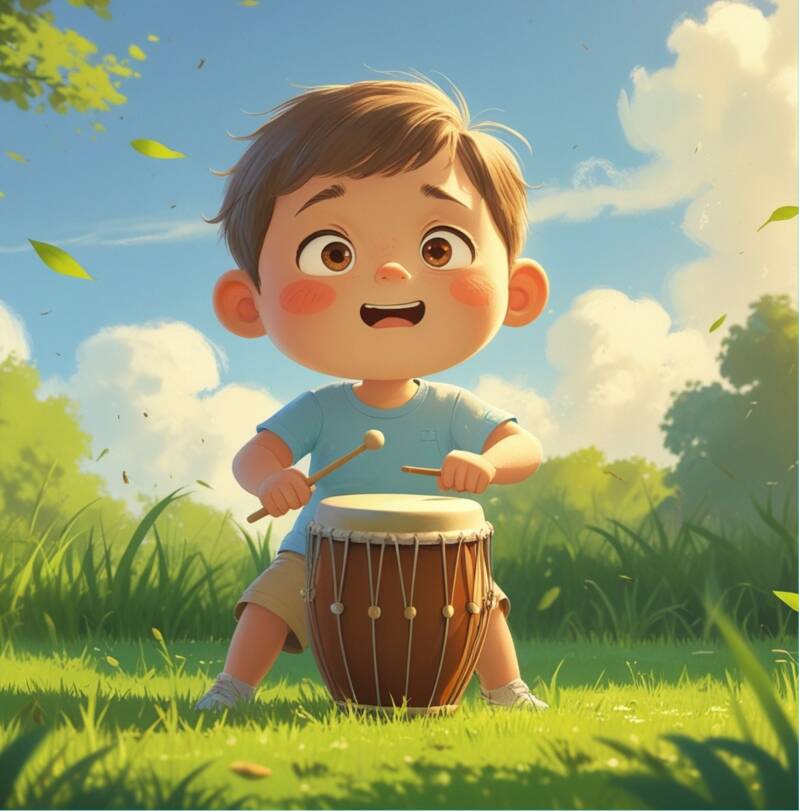
Who “Art Making Is How I Express My Emotions” Is For
Art is a universal language—especially when words feel hard to find.
Art Making Is How I Express My Emotions was created to support the people who nurture, guide, hold space for and participate in emotional expression through creativity.
✨ This book is for:
👨👩👦Parents
Who want gentle, meaningful ways to help their children understand and express big feelings, strengthen emotional bonds, and build confidence through creative play.
👩🏫Educators
Who value social–emotional learning and are looking for accessible, inclusive tools to support emotional literacy, mindfulness, and self-expression in the classroom.
👩🎨Therapists & Healing Practitioners
Who work with children and families and wish to integrate art-based approaches that feel safe, empowering, and developmentally supportive.
👩🎨Sensitive & Creative Children
Especially those who feel deeply, think imaginatively, or struggle to put emotions into words. This book honours their inner world and gives them permission to express it freely.
👩🎨 Art Making is How I Express My Emotions reminds us that art isn’t about being “good” at creating—it’s about being honest, playful, experimental, expressive and connected.
Art making becomes a bridge between feelings and understanding, between the inner world and the outer one.
Because sometimes words are not enough, and art becomes how we need to speak.
✨🧑🎨🎨🥁🪘🪇👩🎨✨
Why I Authored Art Making is How I Express My Emotions
As a child I was a sensitive who felt a lot as well as the world around me, I was an emotional child who had big feelings. I often found it difficult to put my feelings into words. Joy, sadness, excitement, curiosity, and even anger and frustration sometimes felt too big or too complex to explain. I always yearned for a deeper depth of expression beyond the very day to day verbal, yet I didn't know how. It was not encouraged or role modelled around me.
It wasn't until I started studying Art Therapy in my 20’s that I began on the journey of emotional healing, healthy self expression and personal empowerment through dance movement and art making.
I would engage in the simple act of putting colour, shapes, and textures onto a page—and discovered a colourful language beyond words, a way to play, explore and release my emotions safely and creatively. Finally I had found what I had always unknowingly been looking for.
Art Making is How I Express My Emotions was born from this deeply personal journey. My goal in writing this book is to help children—and even adults—discover that emotions are not something to hide or fear, but something to understand, express, and celebrate.
As an Early Childhood Educator I could see that my story was a common one amongst children and that this was a need for many children.
I wanted to create a space where children can feel empowered to explore their inner world, to acknowledge their feelings, and to communicate them in a healthy, imaginative, and joyful way.
In our modern world, children are often expected to conform to routines and rules, sometimes at the expense of acknowledging their emotional needs. Through this book, I aim to remind them that every feeling matters, and that creativity can be a bridge between their inner experiences and the world around them.
Each page encourages self-expression, reflection, and play—showing young readers that emotions are not just something we feel, but something we can explore and transform through art.
Writing this book was also a way for me to share a core truth I’ve learned through both personal experience and professional practice: art is more than just a hobby.
It’s a tool for healing, for self-discovery, and for connecting with others. By engaging in art, children develop not only their creativity but also emotional intelligence, resilience, and confidence. Art making is a path of self discovery. These are skills that will support them throughout life.
Ultimately, Art Making is How I Express My Emotions is my invitation to children everywhere to embrace their feelings, to pick up paint brushes or pencils, and create. It’s a celebration of the power of imagination, the beauty of self-expression, and the incredible ways in which art can help us understand ourselves and our world.
Through this book, I hope to inspire children to see emotions not as something to control, but as something to explore, express, and honour—and to remember that every line, colour, and stroke is a unique reflection of who they are.
✨📚 🎨✨
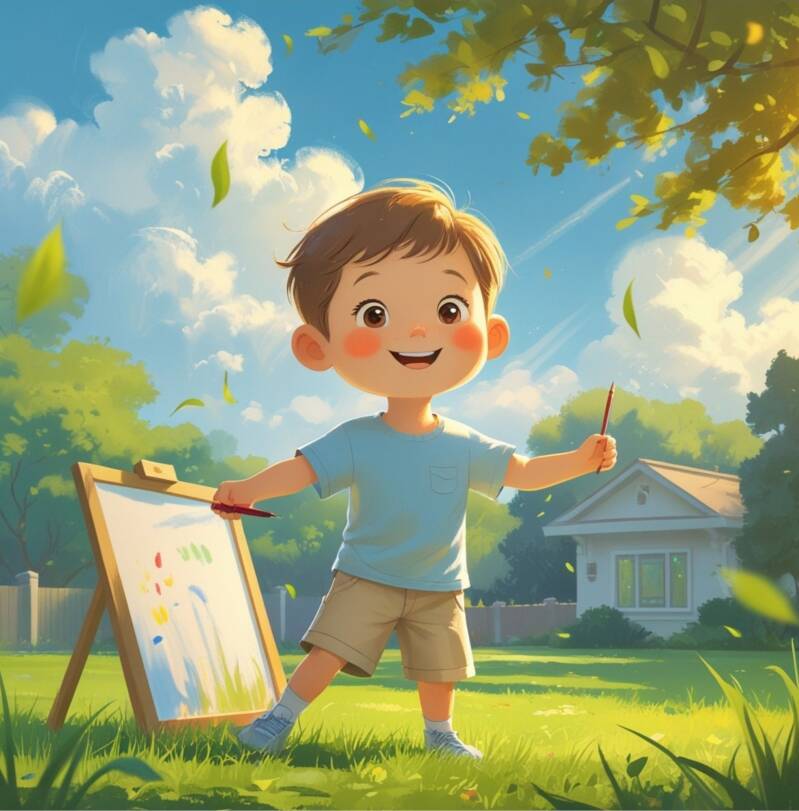
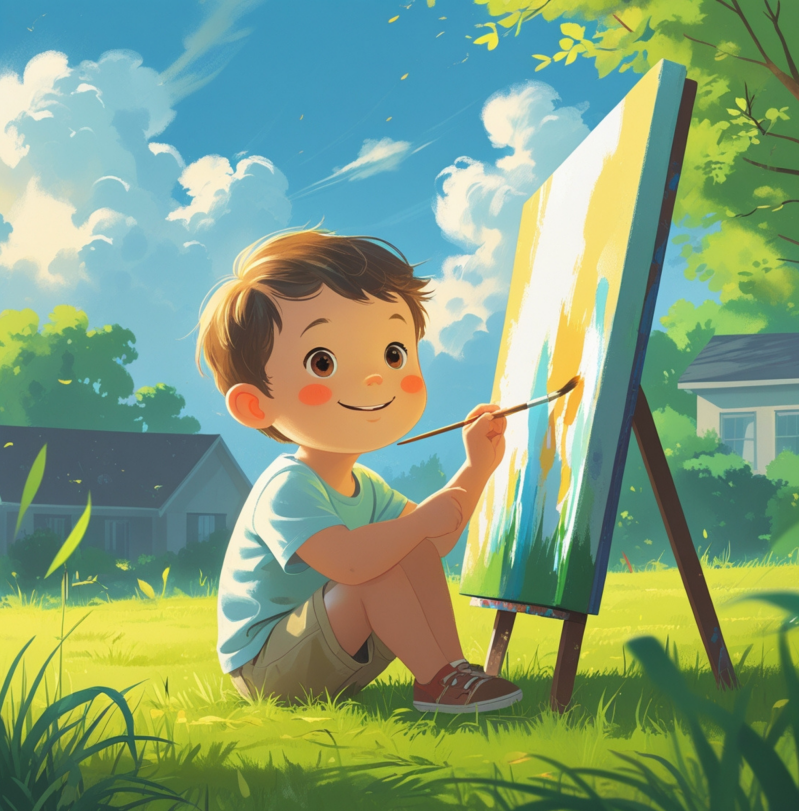
Something exciting is coming….
✨🎨📚Something exciting is coming…. 📚🎨✨
A new children’s book supporting emotional expression through creativity
🎨 Art Making Is How I Express My Emotions 🎨
Stay tuned for the official launch of Art Making Is How I Express My Emotions—a story that reminds children (and the adults who love them) that art is not just something we make, but a powerful way we understand ourselves.
Because when children are supported to express their emotions creatively, they are empowered to become their greatest possible selves 💛
✨📚🎨✨
The Importance of Raising Children to Develop Their Gifts, Skills and Abilities in Service of Community. ✨️📚👼🌏✨️
Every child arrives in the world with unique gifts, skills, and abilities waiting to be discovered and nurtured. When children are supported to recognise and develop these natural strengths, they not only grow in confidence and self-worth — they also learn how to contribute meaningfully to the communities around them.
Raising children to develop their gifts is not about pushing them to achieve or perform. It is about creating space for curiosity, play, learning, and self-expression, so each child can uncover what brings them joy and a sense of purpose, so this pathway can be encourage and supported to develop. When children are encouraged in this way, their talents become a natural extension of who they are, rather than something they feel pressured to become.
Children who know their strengths are better able to see how they can help others. A child who loves to listen becomes a compassionate friend. A child who enjoys building becomes a problem-solver. A child drawn to art brings beauty, healing, and new ways of seeing. A child who cares for animals becomes a protector of life. These gifts, when honoured, strengthen the fabric of community.
Developing gifts and abilities alongside values such as empathy, cooperation, and responsibility teaches children that their talents are not separate from the wellbeing of others. They learn that contribution is not about being the best, but about being of service — offering what they have in ways that uplift and support collective thriving.
Communities flourish when children are included as active participants rather than passive observers. When children are trusted with age-appropriate responsibilities and invited to contribute, they develop a sense of belonging and shared purpose. They come to understand that their actions matter, and that their skills can be used to create positive change.
Supporting children to grow their abilities in service of others also fosters resilience. When children see that their contributions make a difference, they develop motivation, confidence, and a healthy sense of responsibility. They learn that challenges are opportunities to learn, and that collaboration leads to stronger outcomes.
By raising children who are guided to develop their gifts with heart and intention, we are nurturing future leaders who value cooperation over competition, contribution over consumption, and connection over control.
These children grow into adults who understand that true success is measured not only by personal achievement, yet by how their offerings positively benefit others and contribute to the community health and wellbeing of everyone.
When we invest in the children’s gifts today, we invest in a thriving tomorrow. A world where each person does their best, knows their place, honours their strengths, and contributes with care.
This begins by raising children who are empowered to share their gifts in service to humanity for the greater good of all.
How we raise children matters. They are the change we have been waiting for.
✨️📚🌏👼✨️
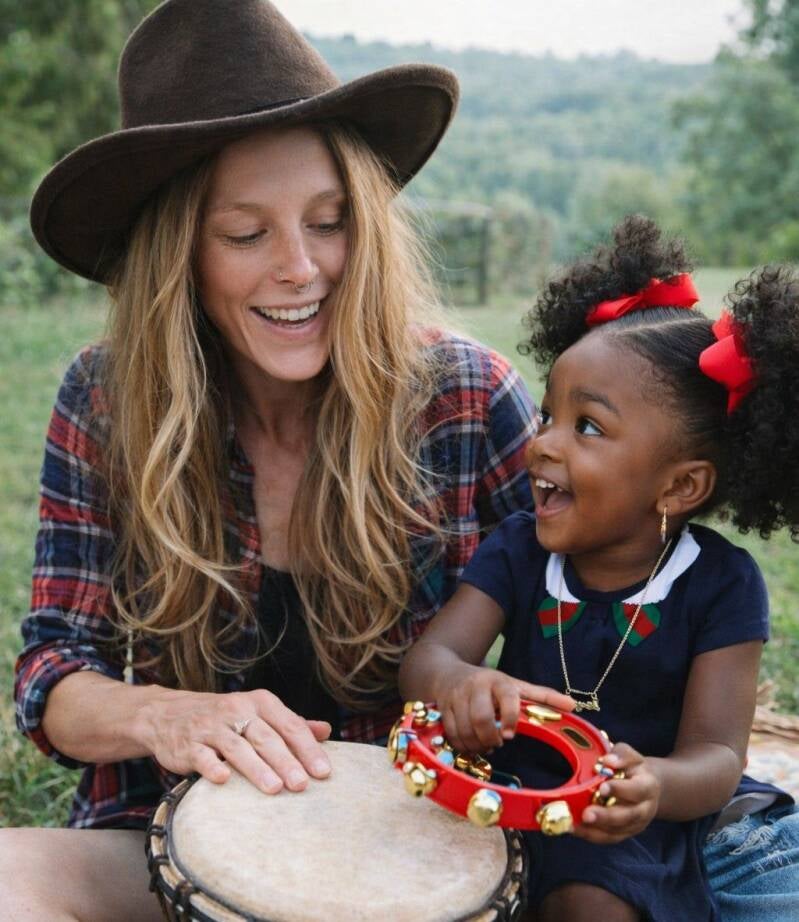
The Importance of Raising Children Who Know Their Value in the World 😇🌏✨
Raising children who understand how valuable they are to the communities around them (based on the actions they take and service they provide) is one of the greatest gifts we can offer the world.
When a child knows that their presence matters, that their actions have meaning, and that their heart has wisdom to share, they grow with confidence, compassion, and a natural desire to contribute and serve others.
Children are not meant to feel small or powerless in the face of the world’s challenges, they are mean to feel empowered that they can make a difference. When nurtured with care and guidance, they learn that even the smallest heart-led action — a kind word, a helping hand, a moment of listening, a creative idea or taking action on a passion project — can ripple outward and create real change.
A child who understands their value does not need to prove themselves through comparison or competition. Instead, they learn that their worth is inherent, and that who they are when they are doing what they love that lights them up, they are enough. From this place of inner security, children naturally begin to look beyond themselves and notice the needs of others.
Heart-based education and storytelling play a vital role in this process. When children are encouraged to listen to their feelings, trust their intuition, and act with kindness, they develop a strong inner compass. They begin to understand that their emotions are guides, pointing them toward empathy, fairness, and connection.
Children who are taught to value their role in community learn that:
🌏 Their voices matter
🌏 Their choices have impact
🌏 Their care for others strengthens the whole
🌏 Their creativity can solve problems
🌏 Their compassion builds belonging
When children experience being trusted, included, and respected, they develop a sense of responsibility that is rooted in love rather than fear. They learn that making the world a better place does not require perfection or grand gestures — it begins with everyday acts of care.
By raising children who understand their value, we raise future leaders who lead with their hearts. We raise creatives who become protectors of the Earth, bridge-builders in communities, and problem-solvers who seek harmony rather than dominance. These children grow into adults who know that true strength lies in kindness, cooperation, creativity, and conscious action.
The world does not change through force alone — it changes through people who care enough to act, in taking responsibility in their ability to respond . When children are supported to recognise their inner worth and are guided to take heart-centred action, they become living reminders that hope is not something we wait for.
It is something we grow, together, through how we cultivate our creative gifts, skills and abilities that can serve and support our communities to thrive - starting with our children.
✨👼🌏✨


The Importance of Raising Children Who Care and Can Make a Difference
The world needs children who care. Children who are inspired by the beauty and magic of life, children who notice when something needs to change, who feel compassion for others, and who believe that their actions matter and want to contribute to making the world a better place.
Raising and inspiring children to care is one of the most important responsibilities we hold as parents, educators, and community members.
Caring is not something children must be taught through rules alone. It is cultivated through connection, example, and meaningful experiences. When children feel cared for themselves, they naturally learn how to care for others. They begin to understand that kindness, empathy, and responsibility are powerful forces for change.
Children who are encouraged to care develop a strong sense of belonging. They learn that they are part of something larger than themselves — a family, a community, a living planet.
From this understanding comes responsibility, not as a burden, but as a heartfelt desire to contribute.
When children are inspired to believe they can make a difference, they grow with confidence and purpose. They learn that even small actions — helping a friend, protecting nature, speaking up for what is right, creating something meaningful — can create ripple effects far beyond what they can see. This knowledge empowers them to act rather than feel helpless.
Stories, fun, joy, and playful creative expression play a vital role in nurturing caring hearts. Through stories, children explore values, practise empathy, and imagine themselves as contributors to a kinder world. They learn that courage, compassion, and cooperation are strengths worth developing.
Children who care are not naïve or weak. They are emotionally intelligent, resilient, and deeply aware. They are capable of holding both hope and responsibility while taking action. When supported by adults who listen and guide with love, these children grow into leaders who act with integrity and heart.
Raising children who care is an investment in the future. These children grow into adults who protect the Earth, support their communities, and choose cooperation over conflict. They become change-makers not because they were forced to be, but because they were inspired to be.
The world does not change through indifference. It changes through people who care enough to act. When we raise children to care — and help them see that they can make a difference — we plant the seeds of a more compassionate, connected, and thriving world.
What kind of world do you want to be a part of co-creating?
What you do - matters.
🌱👼🌏✨
A Dedication to the Children of the Earth, Who Care and Can Make A Difference
Every story written and published by The Story Corner is created with deep love, intention, and reverence for the precious children of the Earth.
These stories are dedicated to the mission soul children, who feel deeply and who are here to create positive change.
The children who care about others, about animals, the sacred earth and their communities that support for people to thrive. For the children who ask big questions, who listen with their hearts, and who sense that they are here for a meaningful and intentional reasons.
At The Story Corner, we believe that children are not “too young” to understand kindness, emotional awareness, creativity, or Earth stewardship. They arrive into the world already wise, already connected, already carrying seeds of change within them. The stories simply help those seeds to sprout, grow and blossom.
Each book is written to gently support children in:
👩🎨 Understanding and expressing their emotions
🧘♀️ Trusting their inner guidance and intuition while following their hearts guidance
🎁 Celebrating and developing their unique gifts
🫶 Cultivating their value and service in the world
🌏 Develop compassion and care for themselves, others and the natural world
🫶 Remembering that their choices and what they do matters
Our stories honour childhood as a sacred time — a time of dreaming, imagining, exploration and play, as they become more of who the world is calling them forth into being. Through animal wisdom, creative expression, and heart-centred storytelling, we aim to nurture confident, caring, and conscious young humans.
We dedicate these stories to the children who care and can make a difference —because caring is not weakness, it is strength.
To the children who feel the world — because feeling is how change begins.
To the children who believe they can make a difference — based on who they become, their hearts love and the action they take.
May every child who opens a Story Corner book feel seen, supported, inspired and empowered to shine their light brightly in the world while sharing their gifts to service and support their communities.
In co-creation with God the future of our planet lives in their hands, their hearts, and their stories.
And we are honoured to write for them.
✨📚👼🫶🌏✨


Follow the Bread Crumbs for Universal Alignment and Heavens Agenda for Earth
🍞✨️🕊Follow the Bread Crumbs for Universal Alignment and Heavens Agenda for Earth 🍞✨️🕊
Follow the Bread Crumbs supports children to trust in life, follow their their intuition and whispers of the heart.
In a world that often prioritises speed, logic, and external validation, Follow The Bread Crumbs offers a gentle yet powerful reminder: children already carry a deep inner wisdom. When we support them to listen to their hearts, we help them navigate life with clarity, courage, and trust.
Follow The Bread Crumbs is a story about intuition and creative soul gift development — that quiet inner voice that guides us toward what is true, kind, and aligned. For children, intuition is not something to be learned; it is something to be protected, strengthened, and honoured.
💗🧠 ✨️ Why Heart Intuition Matters in Childhood:
A child’s heart intuition acts as an inner compass. It helps them:
💗 Sense what feels safe or unsafe
💗 Recognise what brings joy or discomfort
💗 Make choices aligned with their values
💗 Develop emotional intelligence and self-trust
When children are encouraged to follow their inner “breadcrumbs,” they learn that guidance doesn’t always come from outside authority — it also arises from within. This builds confidence, resilience, and a grounded sense of self.
And let’s be honest — children often know what feels right long before adults do. They just need permission to listen to it, while taking action on their northstar inner knowing.
✨️ Universal Alignment: Learning to Flow with Life
Universal alignment is the practice of moving in harmony with life rather than against it. For children, this means learning that:
✨️ Their feelings carry important information
✨️ Life offers signs, synchronicities, and gentle nudges
✨️ They are supported by something greater than themselves, like the wises sages say we are guided by the stars.
Follow The Bread Crumbs introduces these ideas in a child-friendly way, using metaphor and imagination to show that life unfolds step by step. You don’t need the whole map — just the next breadcrumb.
This teaches children patience, presence, humility and trust in the unfolding journey. (A valuable lesson for adults, too.)
👨👩👦 How Caregivers Can Support Heart-Led Development in Children
Supporting a child’s intuition doesn’t require big lectures or complex explanations. It begins with everyday moments:
👂 Listening deeply when children share their feelings or ideas with presence and respect
🫂 Validating emotions rather than dismissing them
👨👧 Asking reflective questions like, “What does your heart feel?”
👩🎨 Encouraging creativity through art, storytelling, and play
🤔 Allowing space for choice, even in small decisions
When children feel seen and heard, they learn to listen to themselves.
📚 A Story That Grows With the Child
One of the gifts of Follow The Bread Crumbs is that it grows alongside the reader. Younger children experience it as a magical adventure. Older children — and even adults — begin to recognise its deeper message about trust, alignment, and inner guidance.
It becomes a shared language between children and caregivers — a reminder that when we feel lost, we can pause, soften, and look for the next small step forward.
🌱 Planting Seeds for a Heart-Led Future
By nurturing children’s intuition, we are not just helping them make better choices today — we are shaping compassionate, conscious adults who trust themselves and honour life.
Follow The Bread Crumbs is an invitation to slow down, listen inward, and remember that the heart knows the way — one step at a time.
And if you ever forget? Don’t worry. The breadcrumbs have a funny way of reappearing right when you need them most 🍞✨
Grab a copy today for the little poeple you care about, for a brighter tomorrow ✨️ 📚✨️
https://amzn.asia/d/13pYr7P
✨️📚👼🌏🫶✨️
Eco Article: Conscious children’s books published by Byron author
Shout out to Byrons beloved local newspaper The Eco 🫶
Thank you for your interest and support in sharing the publication of the children's stories, to get the messages out there.
🙏📚👼🌏✨🩷
Check it out here 👇 its a good read ☺️
https://www.echo.net.au/2026/01/conscious-childrens-books-published-by-byron-author/
Local Byron Shire author, illustrator, and art therapist Rose Alinta-Koa Phoenix has launched a new series of conscious children’s books under her independent imprint, ‘The Story Corner’.
In a media release she says ‘The collection, designed to foster emotional intelligence, creativity, and a connection to nature, features four engaging titles: The Wonderful World of Bees, My Garden of Flowers, Do More of What Makes You Awesome, and Follow the Bread Crumbs. Another 10 books to be released over the next 12 months’, she says.
‘Drawing on over eight years of experience in early childhood education and art therapy, I combine storytelling, illustration, and therapeutic principles to create books that do more than entertain. Each story encourages children to connect with their heart and explore their feelings while discovering and developing their unique strengths, and creative gifts, skills and abilities that bless themselves, their community and the environment around them’.
‘The Wonderful World of Bees introduces young readers to the essential role bees play in the ecosystem, while My Garden of Flowers inspires curiosity about plants and nature. Do More of What Makes You Awesome is a playful journey into self-discovery, highlighting individual talents and personal growth through the guidance of wise animals, and Follow the Bread Crumbs invites children to engage in heart-led intuition, mindfulness, discipline, problem-solving, and creative exploration for their soul mission success.
‘The Story Corner is about more than just books – it’s about nurturing heart-led children who feel empowered, connected, and inspired,’ Phoenix says. ‘I want to create stories that spark awareness, imagination, and a deeper understanding of themselves and the value they hold through the development of their gifts and talents, that serve and support the world around them to thrive.’
‘The books are available online through The Story Corner website www.the-story- corner.com and all major online retailers. Phoenix also runs Ascension Art Therapy, offering creative programs that complement the messages of her books and support emotional wellbeing through art.
‘For Byron Bay families, educators, and caregivers, these titles provide an opportunity to share meaningful, conscious stories with children while encouraging a love for learning, creativity, and the natural world’, she says.


🥁 📢 Website Launch 🥳📚
✨Welcome to The Story Corner ✨
I’m excited to finally open the doors to our online bookstore platform called 'The Story Corner' — a magical home for all of the children’s books I’ve been writing and illustrating with such love and devotion 💛📚
The Story Corner was created as a inspiring and uplifting, imaginative space where stories support and promote emotional intelligence, environmental awareness, self-discovery, creative self expression, playful nature connection and character development in children.
Each book is an invitation for children (and the grown-ups who love them) to slow down, tune in, and remember the wisdom of the heart and the light filled magic of what is possible.
From animal medicine stories and joyful life lessons, to playful encouragement to do more of what makes you awesome through creative self expression, these books are written to be read, felt, and shared — not just placed on a shelf.
If you’re a parent, caregiver, educator, or a big kid at heart, I’d love for you to explore, read together, and become part of this growing community of conscious children's literature 🌱
✨ Visit the new website here:
👉 https://www.the-story-corner.com/
Thank you for being here and for supporting conscious storytelling for the next generation.
The adventure is only just beginning 💫🐝🌱
With love,
Rose
Founder, Author & Illustrator
The Story Corner
✨💛📚🌱👼🌏🫶
What if the smallest signs…
were guiding you to something magical?
📖 What if the smallest signs…
were guiding you to something magical?
What if listening to your heart
was the bravest thing you could do?
🍞Follow The Breadcrumbs is a fun and playful, uplifting love story that inspires and supports children to embody their hearts calling and mission on Earth, with great power, courage, determination and strength.
This story is green light support, for positive behaviour guidance on a child’s journey, nurturing emotional intelligence while encouraging the development of heart-based wisdom, discipline and aligned action rooted in kindness, self-belief and soul expression, with a message full of hope and harmony, Following The Bread Crumbs plants seeds for a bright, compassionate, and conscious future — one child at a time.
This is a story about remembering who you are…
why you’re here…
It’s an invitation for children to stay connected to their inner wisdom and to trust the gentle signs, when being guided by love, while taking notice of the breadcrumbs from God along the way, a series of small clues that can lead you toward a future filled with light, joy and possibility.
👼 For the children.
✨️ For the journey.
🌏 For their success
🍞 Follow The Bread Crumbs
by Rose Alinta-Koa Phoenix
Pick up a copy today for the little people you care about in your life, to share a message of hope, joy and love, through living in alignment with Gods blessing, for a bright and harmonious world.
Available now across all leading platforms.Amazon,Apple Books, Kobo, Bookshop.org and Barnes & Noble
Available now: https://amzn.asia/d/daPRZHQ
With love,
Rose Alinta-Koa Phoenix
✨️📚👼🌏🫶✨️
Check out the promo video via the click below 👇
https://www.facebook.com/share/v/1Tb4yoegcU/
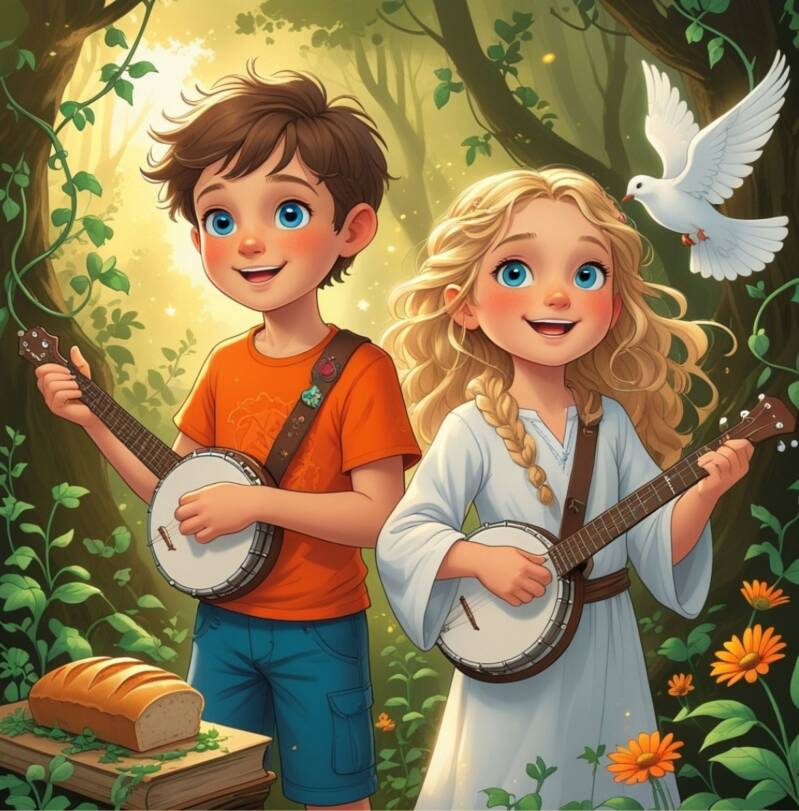

NEW BOOK RELEASE
✨ NEW BOOK RELEASE ✨
We are popping the book babies out fast at the moment 🤗 (even though the writing of the book and curation of illustrations have been incubating for the last 13 months) as it is Christmas time and want to share the stories to be read over the festive season. 🥳🎄🎁
I’m so happy to share the launch of my fourth children's book from a growing collection of conscious children’s literature.
📖 Follow The Bread Crumbs 🥖🍞 🌈
Follow The Bread Crumbs is a fun, playful, and uplifting love story that gently inspires children to listen to their hearts, trust their inner guidance, and follow their unique mission on Earth with courage, determination, and strength.
This story offers “green light” support for positive behaviour guidance, nurturing heart-based wisdom, emotional intelligence, kindness, discipline, and aligned action — shared through a message of hope, love, and light, while celebrating joy and possibility.
Follow The Bread Crumbs is about remembering who you are and why you’re here. It’s an invitation for children to stay connected to their inner wisdom, trust the gentle signs along the way, and step into a future guided by love rather than fear.
Written for children ages 4 - 13, parents, and educators alike, this book plants seeds for a bright, harmonious, and heart-led future, reminding young readers that the path unfolds one loving step at a time and to trust in it.
🌱 For the children
💛 For the future
✨ For a world led by the heart
Follow The Bread Crumbs plants seeds for a bright, compassionate, and conscious future — one child at a time.
Available now: https://amzn.asia/d/daPRZHQ
With love,
Rose Alinta-Koa Phoenix
✨️📚👼🌏🫶✨️
What if every child knew just how truly awesome they are?
🦋 📚✨What if every child knew just how truly awesome they are?🦋 📚✨
What if their natural gifts… their kindness… their creativity… their devotion with passion to their purpose
were celebrated every single day as they followed doing what brings them joy and lights them up as their service to the world around them?
We are excited to announce the release of Rose’s third book, Do More of What Makes You Awesome—is a fun and playful animal medicine story for children, with an uplifting message for positive behaviour guidance and character development.
This story aims to empower and support children as they grow and develop, while connecting them to the wisdom and harmony of nature, for inspired environmental care, while weaving together the magic of animal wisdom and the beauty of the natural world, to gently guide children toward understanding their unique strengths, while following their joy, inspiring their purpose and embracing what makes them truly awesome.
Do More of What Makes You Awesome is more than just a story—it's a reminder to children (and the grown-ups who love them) that their gifts matter, their actions make a difference, and they are deeply connected to the world around them.
Do More of What Makes You Awesome is a heartfelt invitation to thrive.
Book available now via Amazon, pick up a copy today because the world needs more of what makes you…
AWESOME.
📚Available now!
🌐 https://amzn.asia/d/79A0ooV
🌸 Share the magic with your little ones and help plant seeds of care, connection, and hope for a bright future.
✨🦋🐝🐸✨

Book Launch Announcement
✨🦋🌼️📚Book Launch Announcement🦋🌼️📚✨
🥳🥳🥳
Do More of What Makes You Awesome
by Rose Alinta-Koa Phoenix is out now!
Do More of What Makes You Awesome is a fun and playful animal medicine story for children, with an uplifting message for positive behaviour guidance and charter development.
This story aims to empower and support children as they grow and develop, while connecting them to the wisdom and harmony of nature, for inspired environmental care. It weaves together the magic of animal wisdom and the beauty of the natural world to gently guide children toward understanding their unique strengths, while following their joy, inspiring their purpose and embracing what makes them truly awesome.
Do More of What Makes You Awesome is filled with vibrant energy and heartfelt messages, this story aims to:
✨ Empower children as they grow and develop to follow their joy and do what lights them up.
✨ Encourage confidence, purpose, passion and heart-led leadership ✨ Connect young readers to the harmony and wisdom of the natural world
✨ Inspire caring behaviour toward themselves, others, and the environment.
Do More of What Makes You Awesome is more than just a story—it's a reminder to children (and the grown-ups who love them) that their gifts matter, their actions make a difference, and they are deeply connected to the world around them.
🦋 Do More of What Makes You Awesome is more than a story—it’s a heartfelt invitation to thrive.
#ConsciousKids#ChildrensEmotionalWellbeing#ConsciousPositiveParenting #DoMoreOfWhatMakesYouAwesome #RosePhoenixBooks#ChildrensBooks #NatureWisdomForKids #HeartLedKids
📚Available now!
🌸Share the magic with your little ones and help plant seeds of care, connection, and hope for a bright future.
✨🦋🌼️📚✨
My Garden of Flowers
🌿✨ 📚🌸 NEW BOOK ALERT!🌿✨ 📚🌸
Say hello to My Garden of Flowers by Rose Alinta-Koa Phoenix – a playful and poetic celebration of nature, flowers, and the magic of biodiversity This beautiful children’s book empowers the next generation of Earth Guardians and shows how every flower plays a part in healing the Earth.
🌿✨ 📚🌸
Perfect for ages 3–13Available Now on Amazonhttps://amzn.asia/d/d5VexXi
#MyGardenOfFlowers #ChildrensBooks #NatureLovers #EarthGuardians #KidsBooks #ReadToYourKids #PictureBooks #EcoKids

Book Launch Announcement
🌿✨ 📚🌸 Book Launch Announcement 🌸📚 ✨🌿
I’m super excited to share the official launch of my new children’s book — My Garden of Flowers is here! 🌼💛
My Garden of Flowers is a fun, poetic and playful educational story, about the role and responsibility that flowers play, in nature’s intelligent and biodiverse ecosystem.
This colourful and inspiring story invites children into a magical world where nature reveals her mystical intelligence, bees buzz, butterflies flutter, and nature speaks in vibrant colours, sounds and wisdom. Every blossom plays a vital role in the great web of life for the upliftment and health and wellbeing of all.
My Garden of Flowers celebrates the gift of nature, aiming to ignite a child’s love and passion for flowers, while connecting them to the wisdom and harmony of the natural world for the next generation of Earth Guardians who care and can make a difference.
Through playful storytelling and vibrant imagery, young readers discover how flowers feed the bees, nurture the Earth, and bring beauty and balance to the world around us. 🌍✨
Perfect for children aged 3–13, this story is both educational and soul-nourishing — a celebration of beauty, responsibility, and wonder.
📖 Available now!
🌸 Share the magic with your little ones and help plant seeds of care, connection, and hope for a bright future.
Thank You God
✨🐝🌻🌿✨Dear God ✨🐝🌻🌿✨
Thank you for gifting me the opportunity to scribe the 12 book series of animal medicine storie for the children.
They were an absolute delight to write, through the practice of deep listening, they brought alot of joy to me as the channel and vessel that birthed them into the world as a gift from spirit, thank you
My prayer is that they bring as much joy and enlightenment to all that read them, as they did to me when I wrote them from the heart
To purchase a copy click the link below
✨🐝🌻🌿✨


The catalyst for what inspired the writing of The Wonderful World of Bees..
✨🐝🌻🌿✨The catalyst for what inspired the writing of The Wonderful World of Bees... check out the video here via the link below:
https://www.facebook.com/share/v/1DGVt3MAVy/
"Hello beautiful family,
I thought that I would just jump on here today to share with you all a little bit of the background story, in relation to what was the catalyst for writing The Wonderful World of bees, it was due to this amazing experience that I got to have back in September/October 2024 I moved in with an amazing bee Sharman called Deb and her son Spencer (big shout out to Deb and Spencer) during the three months I got to live with them I got to have really deep and intimate experiences with the Hives, and I got to have really deep and intimate experience meditating with the hives for at least an hour every single day.
And during this time, through meditation I became very telepathic with the bees, I became very telepathic and very at one with the bees.
Previously to meeting Deb and Spencer and spending time with the bees, I was living with a lot of nuns and monks and learning the art of meditation.
I was initiated on to the path of meditation with Ananda Marga, who are a universal light lineage who originated from India and this experience really developed my deep meditative capacity to sit for really long periods of time and this us when I began to dvelope telepathy, and this experience was what developed a really deep meditative practice for me where I became really immersed in highlight universal consciousness.
And so it was like, fine tuning my instrument to be able to not only hold high states of frequency of consciousness but also to be able to fine tune my instrument to be able to dial in to any consciousness channel and so when I sat with the bees it was a very natural and organic experience of tuning into the hive and becoming one with the hive.
So the other thing that was really supportive about being initiated on to the path of mediation with this light lineage was the frequency that I would receive....
So the thing that you should know about these is that they only sting because of one of three reasons - number one because they want to give you a healing, they have an incredible capacity to intuit where there is sickness in the body and they will sting the body where there is sickness or disease to release peptides into the body that are anti inflammatory, the second reason is if they perceive you to be a threat they will sting as an expression of their boundaries and the third reason is because they want to communicate with you telepathically.
Deb the bee lady, the bee Sharman that I was living with - she was blown away she was like "how is it that you can sit there with your face right in the hive?" I would sit for hours a day and I would never get stung and Deb was just like "how are you doing this ? ", she was blown away - she was like "how is it that you can sit there with your face right in the hive?
They found that the loving energy was a benefit for them and so they didn't find me as a threat and they experienced for the loving energy to be of a benefit for them and so they welcomed me into the hive.
And this is where I learned a lot about bees. I learned that they were dedicated and devoted and community minded or they would operate and function for the highest good of the hive. I learnt that they were passionate and actually very loving little creatures.
They would often sit on my lips on my nose or kiss my ears for long periods of time and we would talk and they would flirt and they were very hypnotic and they were very intoxicating actually.
This was when i fell in love with the bees, also another thing to note was that I was recovering from PTSD and what I experienced was that the bees vibration and frequency was weaving an energetic tapestry - an energetic tapestry around my consciousness, that became like an energetic forcefield a shield that did something to my brain waves and my neurology and it helped with my healing process and I was able to integrate into social situations again without feeling anxiety, the bees vibration and frequency were very grounding, and I felt really nourished and nurtured by their presence, and they were grounding and calming while being soothing for my nervous system.
I will be forever grateful and for all that I go to experience and what I got to learn from my time in sitting with the bees and so the book The Wonderful World of Bees is a testimony, and an ode to the bees as well as Deb and Spencer to say thank you, thank you for welcoming me into the hive and letting me learn from you, we have so much to learn from bees, they are such fascinating creatures in teachers."
✨🐝🌻🌿✨
Meet The Bees, Nature's Tiny Teachers....
Have you ever wondered what it means to live with purpose joy and harmony?
Meet the bees Nature's fascinating, tiny creatures and wise teachers.
The bees pollinate life, dance in rhythm and serve their hive with hear
The Wonderful World of Bees is a celebration of these incredible beings.
The Wonderful World of Bees is a story of teamwork, healing, beauty and purpose.
This book is a heartfelt invitation for children and the child within us to care, connect and make a difference.
Order a book today to discovered the magic and bee inspired
Available across various leading online platforms https://amzn.asia/d/6Tqc576


BOOK LAUNCH ANNOUNCEMENT!
The Story Corner is so excited to announce the release of The Wonderful World of Bees by Rose-Alinta Koa Phoenix — a magical, medicine story for children ages 4–10.
The Wonderful World of Bees is a fun and playful educational, medicine story about bees and the role they play within the deep ecology of nature.
This story aims to ignite a child's love and care for bees and their environment.
The Wonderful World of Bees also encourages positive behaviour guidance within children, as they learn about a bees character and purposeful qualities, that contributes to their overall success within a hive.
This book is dedicated to the Guardians of the Earth, who care and can make a difference, with the inspired action they take.
This playful and poetic tale will help kids connect to nature, care for the planet, and embody the inspiring qualities of bees — community, dedication, and joyful action!
Available on Amazon, IngramSpark, Barns & Noble,
Buy a copy today
Perfect for Earth-conscious families, educators, and little nature lovers.#TheWonderfulWorldOfBees #KidsBooks #EcoKids #BeesMatter #HeartLedLearning #NatureLovers #ChildrensBookLaunch
Bees Are Such Fascinating Creatures & Teachers.
Bees are such fascinating creatures and teachers.
They are responsible and great at taking action.
With an amazing ability to respond to the environmental needs of a hive, to keep it healthy and well.
Honey bees work in community, weaving together in harmony, for the greater good of the hive.
Their calling and role as pollinators of nature's beauty, opens them up to the fulfillment of their highest joy.
Each member of the hive gives 100% effort to everything they do.
Bees are rhythmic, joyful, creative, expressive, clever, kind, giving, responsible and productive little creatures, that are passionate, dedicated, devoted, driven, determined which is detrimental in fulfilling their role and responsibility.
Their qualities and characteristics that lead them to success.
They demonstrate inspired action that holds great value, as they embody being their best.
They produce a sweet nectar and carry a message that calls, of how you could beee, that benefits all.


The Wonderful World of Bees is Soon to be Released
We are excited to announce that The Wonderful World of Bees is soon to be released
The Wonderful World of Bees is a fun and playful educational, medicine story about bees and the role they play within the deep ecology of nature.
This story aims to ignite a child's love and care for bees and their environment.
The Wonderful World of Bees also encourages positive behavior guidance within children, as they learn about a bees character and purposeful qualities, that contributes to their overall success within a hive.
Blending nature-based learning with positive behaviour guidance, this story invites children to fall in love with bees while learning from their responsibility, teamwork, and purposeful living.
Through the lens of bee life—pollination, hive harmony, and honey-making—children are inspired to care for the environment and embody qualities such as kindness, dedication, and service. With vibrant storytelling, this book nurtures a child’s connection to nature and encourages empowered, heart-led leadership for a better world.
This story highlights bees as wise teachers, pollinators of beauty, and keepers of harmony—reminding us all to be our best for the good of the whole.
This book is dedicated to the Guardians of the Earth, who care and can make a difference, with the inspired action they take.
Why stories and storytelling matters...
Why stories and storytelling matters...
We make sense of our lived experiences and find meaning through the stories we learn, or tell ourselves and others.
Research actually shows that using expressive writing can help us deal with stressful and traumatic events, while positively impact our health and overall wellbeing.
The benefits of story creation and telling includes;
- Develops communication skills. Storytelling provides opportunities to practice and develop communication skills, including expressing thoughts and feelings.
- Fosters cognitive development like critical thinking. Storytelling engages the brain in processing information, predicting outcomes, and making connections, which strengthens critical thinking and problem-solving skills.
- Improves memory and focus: following a story requires sustained attention and concentration, enhancing memory and focus.
- Inspires and awakens imagination and creativity. Storytelling allows for the creation of mental images, fostering imagination and creativity.
- Enhances language skills and improves communication through exposure to new vocabulary. Through the exposure of different stories, a person's vocabulary is enriched. This helps a child to internalize language patterns.
- Improves oral language development. Telling and listening to stories is a natural way for children to develop their oral language skills.
- Developes emotional intelligence and social skills. Stories often explore character emotions and experiences, helping to build empathy and understanding.
- Builds social connections. Sharing stories creates a sense of connection and community. Story-creation and storytelling is a way to pass on knowledge which shapes understanding, and connect people to one another.
- Moral Development: Stories can introduce ethical dilemmas which helps children to.develop a sense of right and wrong.
Story creation and story telling are imortant acts of expression, in supporting a childs overall growth amd devlopment.
Storytelling is crutial for the positive human maturation of a child.
Get reading to inspire and empower the next generation, for curiosity, awe and wonder, of how truly amazing it is to be human.

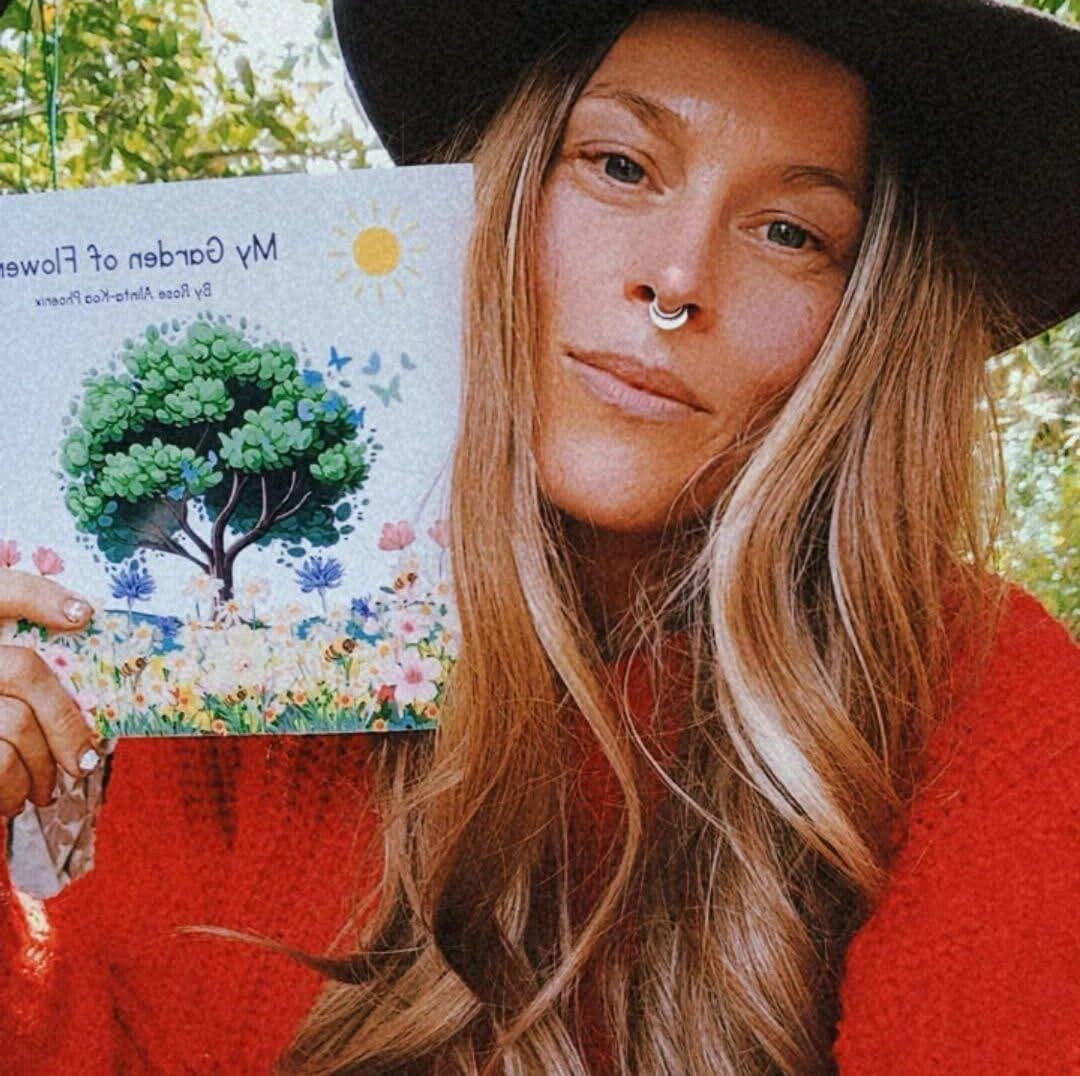
Welcome to The Story Corner
Welcome to The Story Corner Where Stories Inspire, Nature Nurtures, and Children Thrive
The Story Corner is a magical space where imagination, wisdom, and nature come together to inspire young hearts and minds
Based in Australia, The Story Corner is an online sanctuary for children’s storytelling, created by author, illustrator, early childhood educator, and art therapist Rose Alinta-Koa Phoenix.
The Story Corner is home to a beautiful collection of animal medicine stories crafted especially for children, yet they are also educational for adults. These playful, heartwarming and uplifting tales are filled with meaningful messages that nurture emotional wellbeing, creative expression, and inspire positive behaviour and character development in children – all while connecting children to the harmony and wisdom of the natural world.
These beautifully illustrated books encourage environmental care in the young readers.
With over 8 years of experience working with children in the Byron Bay Shire, Rose brings her passion for art, dance, movement, music, nature-based learning, to every story she tells — helping children grow in confidence, imagination, and to care deeply for the connection to the world around them, while leading with kindness and heart
At The Story Corner, we believe in raising a new generation of heart-led leaders, where every child deserves to be seen, heard, and celebrated. Children are empowered to thrive and encouraged to make a difference.
Join us on this journey of joyful discovery, nurturing a love of reading, storytelling, and soulful learning — for a brighter, more connected future, where stories become tools for empowerment, healing, and connection.
Let the adventure begin!
Create Your Own Website With Webador